





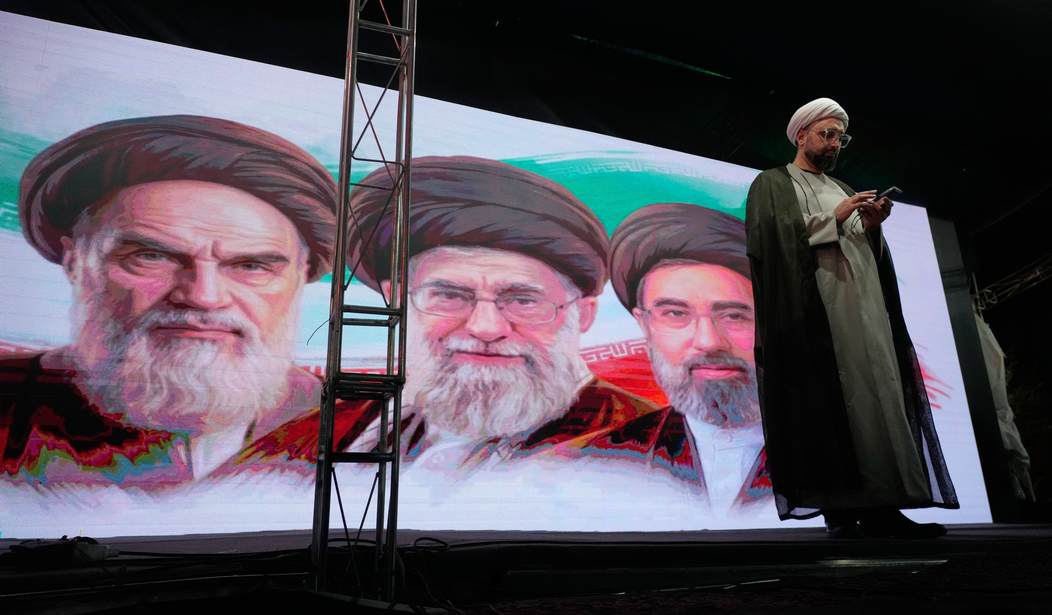
How does it all end for the bad guys?
I always have questions for generals and admirals who are no longer among us. In the movie "MacArthur," there is a scene in which the general is informed of the atomic bomb project. He is livid that he was unaware of its existence. His aide tries to calm him by saying, “But what if it doesn’t work?” MacArthur, who at the time in the movie was preparing for a massive amphibious assault on the Japanese main islands in the Fall of 1945, replied, “But what if it does!” Was MacArthur relieved when the war ended in September 1945, or was there some lingering desire to lead a landing bigger than the Normandy effort?
If one looks at the end of World War II, not only did the theaters end at different times, but they also ended in quite different ways. For Americans, Brits and others, it really didn’t matter. Dancing on Broadway or in Piccadilly Circus was not dependent on exactly how the enemy decided that the game was up. But in larger terms, there were differences. The Germans were finished. Hitler was dead, Berlin was captured, the Wehrmacht was broken. And while there were fears of continued fighting from SS units in Bavaria, the Germans no longer had any forces that could be armed, supplied, or led into battle. The same was not necessarily true in Japan. Tojo’s government wanted to keep fighting after the atomic bombs and the entry of the Soviet Union into the Pacific war. The Japanese people had been trained in defending their home islands, and casualty estimates for MacArthur’s planned landing involved millions of dead and wounded on both sides. On the command of the emperor, played on loudspeakers throughout the devastated country, Japan surrendered. Because it was the emperor who ended the war and supported MacArthur’s rebuilding effort, U.S. forces experienced very little trouble with the defeated Japanese population.
While Palestinians, Muslims in general, and Jew-haters everywhere rejoiced in the October 7, 2023, massacre of 1,200 Israeli soldiers and civilians, in many ways, the attack is reminiscent of the Battle of the Bulge. The German surprise attack was well-planned and executed. Though the Germans succeeded in keeping their attack secret and wisely attacked in a thinly guarded area of the front, their goals were delusional. They were dependent on grabbing Allied fuel and reaching Antwerp. So while the German Army inflicted heavy losses in men and equipment, the arrival of General Patton’s Third Army to relieve Bastogne ended the final major German offensive. The war did not end for several more months, but Germany’s ability to project power was over.
Hamas’ attack also caught Israel by surprise. Their leadership succeeded in planning and hiding its preparations, though warning signs were passed up from border observers—and were promptly ignored or considered unimportant. What was Hamas thinking? That they would make it to Jerusalem? That they would hold the entire south of Israel for weeks or months? That Hezbollah would attack from the north and Iran via missiles, and that Israel would be toast? Hitler did not expect to win the war, but he figured that the “Ardennes Offensive” would possibly offer him a better peace. Israel was definitely flat-footed at the outset, and many died or were taken captive due to a lack of an IDF response. But within a few days, the terrorists were all captured and killed. Within a few weeks, an offensive in Gaza began that left much of the enclave destroyed. Today, Israel holds over 60 percent of Gaza, including the key Egyptian border in Rafah. There is no metric that would suggest that Gaza or Gazans won or are better off today than they were the day before the attack. Workers no longer come to Israel to make great salaries. It will take years to rebuild Gazan towns. The Hamas leadership has been and continues to be decimated.
One could make similar arguments regarding the Houthis, Hezbollah, and Iran. Each can claim some “victory” in Jews killed or Israel damaged. But is any of them stronger or better off today than before the fighting began nearly three years ago? Knowing their maniacal egos, I know that they would say, “Of course!” But all of them have had their leadership wiped out, their fighters killed, their infrastructure destroyed. In the first minute of the present Iran War, Iran lost its ayatollah and his top 40 officials. They are not selling oil. Their missile stocks and their ability to produce more of them are significantly damaged. Notice that Iran has been firing on Jordan, Kuwait, etc., in response to U.S. attacks: she is not attacking Israel because she knows that whatever she sends over will return in a 100-fold harder strike. But ultimately, how does it all end?
It’s hard to imagine a German surrender scenario. Without intense violence and boots on the ground in Iran, there is no basis for saying that the bad guys are whipped and done. Israel could destroy Hamas and Hezbollah, but not in the present age. The violence required and the number of civilians who would die are things that our modern sensitivities will not tolerate. On the other hand, I don’t expect some religious Muslim leader to stand up, like Hirohito, and tell his followers that the war is over and we have lost. They are in it for the destruction of the West and Israel. Ideologically, they cannot admit defeat or suggest that their side lost. Have you noticed how Iran and the whole lot always say that they are winning? They can lose all of their ships and planes, and they will declare victory. So we have neither the German model of total destruction nor the Japanese approach of a supreme leader calling off the war.
So what are the prospects if there is no driver for acceptance of defeat? Constant vigilance and periodic war-making. Hamas and Hezbollah will not be destroyed anytime soon. Their peers don’t have the internal fortitude to finish them off or drive them away. So they will exist, and their only goal will be the destruction of Israel. The implication is that Israel will have to periodically deal with them. Iran might be damaged enough militarily and economically that its people feel an uprising can succeed. In the short term, there will be an IRGC-based government, with or without an agreement with Donald Trump. There is no leader in the Muslim world whose word would be accepted by the belligerents to lay down their arms and end their war against the Jews and the West. And there apparently is no leader who thinks that way. It would be nice to believe that the good guys could simply blast the bad guys until the latter give up and surrender. The U.S. is wisely not putting boots on the ground in Iran, and Israel will not fully destroy Lebanon and Gaza. This reality means that the outcome will once again be inconclusive, with a possible tilt in favor of Israel and the U.S.
The Germans could not have continued the war in a meaningful way, even had they wanted to. The new Führer, Admiral Karl Dönitz, was arrested eight days after he replaced Hitler. The Japanese, on the other hand, planned to fight to the last man. Only the actions of the emperor ended the war without a bloodbath on the Japanese beaches. We take the surrender ceremony on the deck of the USS Missouri for granted, but this outcome was not a given. The military wanted to keep fighting but was overruled by a power that even they dared not buck. The enemy today is not defeated or told to stand down. Thus, we keep fighting.
Editor's Note: For decades, former presidents have been all talk and no action. Now, Donald Trump is eliminating the threat from Iran once and for all.
Help us report the truth about the Trump administration's decisive actions to keep Americans safe and bring peace to the world. Join Townhall VIP and use promo code FIGHT to get 60% off your VIP membership.


Join the Conversation
VIP members get the ability to comment on articles.