





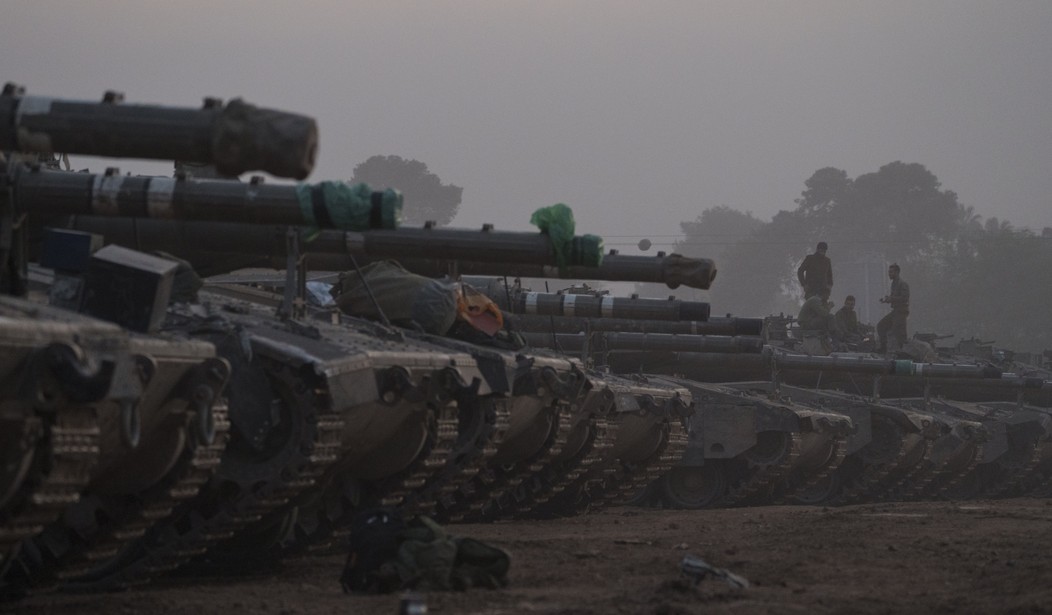
In the past, a country at war felt the conflict at home as on the battlefield. Today, only a small percentage of a population participates in our wars and it affects the way we fight as a country.
A cousin came in from New York and met me in the open-market “shuk”. As it was Friday, the place was packed and noisy. The cousin, who is an Israeli living in the US now for two decades, commented, “You don’t feel the war here.” And on the surface of it, he was right. Sure, there were soldiers here and there, but that is the normal state of affairs in Israel. In Jerusalem, during the first few weeks, one “felt” the war due to sirens and intercepted rockets as well as shortages in the stores as there was no manpower to produce and/or transport goods to market. 300,000 people had been called up and Palestinian labor was shut down. After a few weeks, the shelves were stocked and life seemed to go on as before. But obviously, not for everyone.
Everywhere you go, you see signs with “Together We Will Win” in Hebrew or some variation of the same. On buses, on store receipts, in newspapers—this phrase has become the rallying cry for Israel, with “Am Yisrael Chai”, which means, the Jewish people live. The first few weeks and months of the conflict definitely seemed to get everybody involved. Besides those fighting, many prepared and sent food, others sent clothes and specific items that we were told soldiers needed in the field. For a while, you could not find black heavy masking tape if you tried. Everyone was chipping in. Then for many, the war moved to the background.
Those who cannot escape the reality of the war are many:
*Soldiers fighting or supporting those in battle.
*The families of the soldiers, including those of the 250 killed in action and the thousands wounded in battle.
*Israeli security services who are on alert for any escalation in the country or from the West Bank.
*Those removed from their homes in the south and north of the country, measured in the several hundred thousand now spending months in hotels in the center of the country.
*The hostages and their families.
In the past, for large-scale wars, everyone felt a personal impact. Women by the millions went to wartime production during World War 2 to replace the men shipped off to fight. There was rationing, so every family felt that it was limited in what it could purchase. People bought war bonds in order to support the enormous expenditure for ships, tanks, and planes. The war was a national effort and it tied the people together in the fight for victory. More recent US wars such as in Iraq and Afghanistan involved dedicated volunteer soldiers and their families. I know of no one whose diet was changed because of these conflicts. I do not remember Hollywood stars commanding us to buy bonds to keep the war effort going. In point of fact, a relatively small percentage of the US population had “skin in the game”. And that may be one more reason why those wars were so badly prosecuted. We left Afghanistan after two decades and lost 13 brave Marines and billions in equipment on the way out. Iraq is no more stable today than it was when George W. Bush went in to get rid of Saddam. Today, we have veterans in Congress, but I believe that at the time of those wars, no one in Congress had a son or daughter in theater.
While the likelihood of reinstating the draft is as low as changing Medicare and Medicaid so as to reduce the national deficit, there is a need for wars to be national concerns. We are so rich a nation that we no longer have the “guns or butter” paradox that I learned in sixth grade. Today, we just print more money so as to have both and even send additional weapons to Ukraine and Israel. There must be a way for all citizens to feel a part of a conflict and not just those who are fighting and their worried parents and friends back home. The rest of us may not be fighting but the outcome of the war and the safety of those who risk their lives fighting it must be a concern for us all.
A friend of mine confided that he moved neighborhoods because of the war. He has multiple children fighting in Gaza, yet those around him seemed more concerned to know if there would be flights to the US or where to go out to eat. He and his family obviously live the lives of many military families here and think about their loved ones nonstop, especially when they cannot be in contact due to operational requirements. While the purpose of this war is to allow Israelis to live normal lives, those of us who are not fighting must make the war a part of our lives by concerning ourselves with those who fight and their families. No one has a get-out-of-conflict card to simply ignore soldiers, men and women, risking their lives so that we can live in peace. Not all of us have to grab a rifle, but those of us who do not must also make the war a concern and ask, “What am I doing today to help bring victory?” And may that victory come soon to Israel.

Join the Conversation
VIP members get the ability to comment on articles.