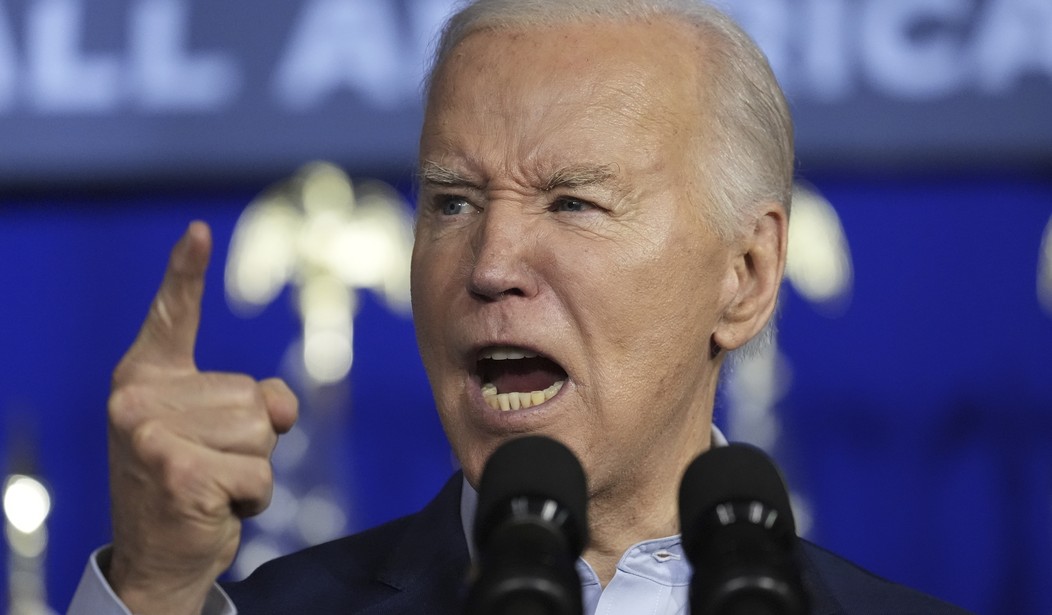
The last week of April saw a disaster of a Q1 GDP report in which inflation surged more than expected and economic growth slowed more than projected. By not-insignificant margins, economists' estimates were off and two of the three components of "stagflation" (high inflation, slow economic growth, and high unemployment) were on the radar. The report was another rubber-meeting-the-road rebuke of "build back better," "Bidenomics" or whatever the White House calls its economic policy now. Likely to the chagrin of the Biden administration — and re-election campaign — the first week of May did not bring any better news.
First, the Federal Reserve announced on May 1 that it would again leave interest rates unchanged after raising them to the highest level since early 2001 in response to inflation's spike to 40-year highs. The Fed admitted that inflation "remains elevated" and said "there has been a lack of further progress toward the Committee's 2 percent inflation objective" — seen clearly in that GDP report at the end of April. By keeping rates elevated, the Fed (rightly) denied the Biden administration its desired rate cut that could be used to (falsely) claim the president's economic agenda is working.
In a related development, the April 25 failure of Philadelphia-based Republic First Bank — the first forced closure by the FDIC in 2024 — spurred a report this week that found hundreds of small and regional banks in the U.S. are at risk of failing under "the dual threat of commercial real estate loans and potential losses tied to higher interest rates," according to CNBC. Not for nothing, the Federal Reserve's press releases about interest rate decisions dropped the boilerplate line insisting that the "U.S. banking system is sound and resilient" starting with its January 2024 release.
By Friday, the April employment situation report dropped with a huge miss — just 175,000 jobs were added instead of the more than 240,000 estimated. Previous months were revised down by 22,000 jobs, the labor force participation rate didn't increase, the average hours worked in a week fell, and the unemployment rate ticked up to 3.9 percent. More bad news to end a bad economic week for Biden with fewer than 190 days until the election.
All this mess — slowing job growth, surging inflation, a slowing economy, and banks on the brink — means that few Americans can honestly say they're better off, just economically speaking, than they were four years ago. This reality has not stopped President Biden and his administration from cherry-picking the lone positive-looking number to take a victory lap, but Americans haven't been buying it. With more weeks like this on the horizon between now and November, his 2024 campaign ought to stock up on heartburn meds.