The pandemic affected nearly every facet of life—college included. The changes are going beyond what seems to be an endless freeze on student loan payments and virtual learning. It's also upended the traditional admissions process, which of course, determines who has the privilege of stepping foot on campus.
And despite health restrictions getting rolled back in most places in the country, this looks to be a change that could last well beyond the pandemic.
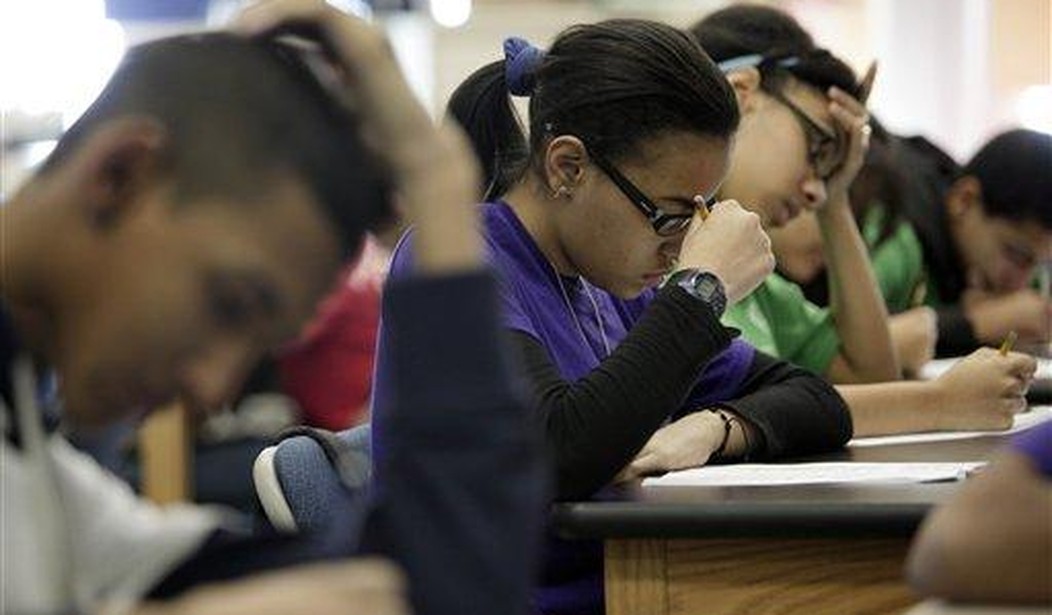
According to the nonprofit that publishes the Common Application, only 4 percent of colleges now require applicants submit SAT or ACT test scores, which has long provided colleges and universities with a standard metric with which to evaluate academic ability and, in some cases, scholarship eligibility. And fewer than half of early applicants submitted them this fall.
This is a significant change from where things stood pre-pandemic.
The data point could mark a watershed moment in admissions, college advisers say, when a pandemic pause in SAT and ACT testing requirements evolved into something more permanent.
Just three years ago, 78 percent of applicants included test scores in their early Common App submissions, a round of admissions that ends Nov. 1.
The share of applicants reporting SAT or ACT scores plunged in 2020, as COVID-19 shuttered testing sites and drove hundreds of colleges to adopt “test-optional” admissions.
Many observers expected the testing requirement to return as restrictions lifted. It hasn’t.
“We’ve actually seen an increase in the share of colleges on the Common App that don’t require a test score,” said Preston Magouirk, senior manager of research and analytics at Common App.
More than 1,800 colleges are “test-optional” this year, including most elite public and private campuses, according to the National Center for Fair and Open Testing, or FairTest.
Common App data shows that only 4 percent of colleges require test scores for applications this fall, down from 55 percent in pre-pandemic 2019. The group includes a handful of technical universities and Florida’s state university system. (The Hill)
Admissions experts don't think the trend will reverse course, either.

"I think it's harder to go back," Jed Applerouth, founder of Applerouth Tutoring Services in Atlanta, told The Hill. "When you go test-optional, you have the freedom to build the class you want to build."
While the "test-optional" movement began long before 2020—Bowdoin College started it back in 1970—it picked up steam in the 2000s "amid concerns about equity," according to The Hill.
The trend has also gone beyond undergraduate schools. A council of the American Bar Association voted last month to scrap the LSAT and other standardized testing requirements for admissions starting in 2025.
Diversity has emerged as a central focus of the current testing debate, with the ABA receiving nearly 120 public comments on the matter. Some have called the LSAT a roadblock to building a diverse legal profession while others argued that it is an equalizer that helps underprivileged aspiring lawyers.
Without the testing requirement, admissions offices might place more weight on undergraduate grade-point averages, recommendations or the prestige of an applicants' undergraduate university — which are more subjective factors that could hurt the chances of diverse candidates, the 60 law deans warned in their letter to the ABA. (Reuters)
The proposed rule change heads to a vote in February before the ABA's House of Delegates.