


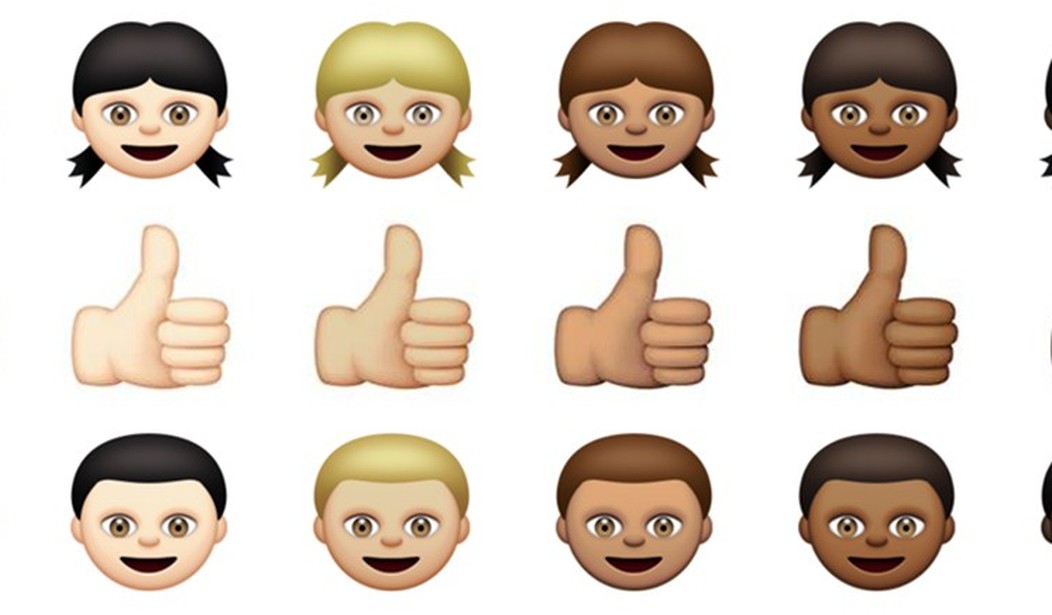
The taxpayer-funded dumpster fire that can't even get its facts straight on matters concerning the Supreme Court is now warning its audience that using the default emoji skin tone (yellow) might be a sign of racism, because of course there needs to be more victims and oppressors created in the apparent absence of actual racism and oppression.
For emoji users, most probably don't think about which of the six available skin tones they choose to make their hand gestures and cartoon people, but according to NPR that choice "opens a complex conversation about race and identity."
Some white people may choose ?? because it feels neutral — but some academics argue opting out of ???? signals a lack of awareness about white privilege, akin to society associating whiteness with being raceless.https://t.co/9g3rochT0K
— NPR (@NPR) February 9, 2022
Apparently, thanks to the very serious taxpayer-funded reporters at NPR who found a Ph. D. candidate and emoji researcher, there's a pressing need to unpack why "some white people may stick with the yellow emoji because they don't want to assert their privilege by adding a light-skinned emoji to a text, or to take advantage of something that was created to represent diversity."
Other white emoji-users — according to another researcher (how many emoji researchers can the economy sustain?!) interviewed by NPR — use darker skin tones for their emojis, but that's problematic too. "One friend who is white told me that it was because he felt that white people were overrepresented in the space that he was using the emoji, so he wanted to kind of try and even the playing field" the researcher told NPR. "For me, it does signal a kind of a lack of awareness of your white privilege in many ways."

Perhaps it's out of fashion to point this out but someone of any race who: 1) lives in the United States, 2) possesses a $1000+ cell phone, 3) has the ability to get a career as an emoji researcher, and 4) enjoys being able to spend time worrying about emoji skin tones is extremely privileged.
So maybe the yellow default emoji color is the way to go? Not so fast, according to the emoji experts platformed by NPR. Apparently, they challenge the idea that "the yellow emoji — similar to the characters from The Simpsons — is neutral, because on that show, 'there were yellow people, and there were brown people and there were Black people.'" Evidently, as NPR explains, there's a "default in society to associate whiteness with being raceless, and the [yellow default] emojis gave white people an option to make their race explicit."
NPR itself has not been careful about its evidently problematic use of emojis — as seen in the tweet below, NPR has a thing for the default yellow skin color.
???????
— NPR (@NPR) July 16, 2021
Survey says: ????https://t.co/AFey26U0kC
NPR concludes its emoji-as-a-tool-of-racism story by quoting from an expert who ponders the use of different emoji skin tones that "change depending on the season; depending on the context."
So white people using darker-toned emojis is problematic because it's a sign of white privilege, but using the default emoji even with good intentions of keeping racial differences out of text messages is also problematic because that communicates that whiteness is raceless? Got it.
This latest deep-dive on emoji race relations follows the outlet's 2020 analysis of problematic depiction of fly emojis (no really) and their call to action for the creation of emojis to better represent menstruation.
Perhaps NPR should spend less time fretting over proper usage of and representation in emojis and more time figuring out how they keep allowing fake stories to get published.









Join the conversation as a VIP Member