





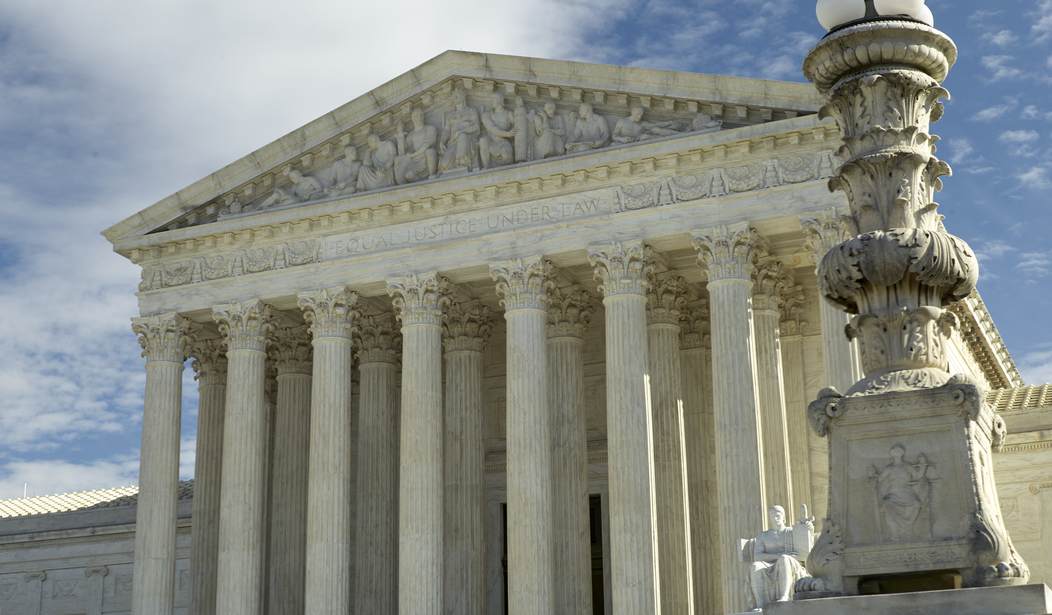
The Supreme Court ruled late on Friday night that California Governor Gavin Newsom (D-CA) does not have the power to restrict at-home prayer meetings on account of COVID, in a huge win for religious liberty. In a 5-4 ruling, the court concluded that Newsom did not have the power to restrict the rights of those practicing religion, while allowing secular activities to resume.
Justices Alito, Gorsuch, Thomas, Kavanaugh, and Barrett argued that Newsom’s edicts are discriminatory toward religious practice.
“California treats some comparable secular activities more favorably than at-home religious exercise, permitting hair salons, retail stores, personal care services, movie theaters, private suites at sporting events and concerts, and indoor restaurants to bring together more than three households at a time,” they wrote.
The conservative justices pointed out that the Ninth Circuit, where an appeal is pending, did not conclude that secular activities “pose a lesser risk of transmission than applicants’ proposed religious exercise at home.”
By 5-4 vote (Chief and three liberals in dissent), Supreme Court yesterday overturned Ninth Circuit's failure to grant an injunction against California covid order forbidding worship service in home. https://t.co/eyjy7oI3oJ
— Ed Whelan (@EdWhelanEPPC) April 10, 2021
Majority's frustration with Ninth Circuit is clear. pic.twitter.com/6AoECCuzQV
Chief Justice John Roberts, along with Justices Breyer, Kagan, and Sotomayor sided with Newsom’s restrictive order. Kagan argued that secular and at-home religious activities need not be treated equally as far as restrictions go.
Recommended
“California limits religious gatherings in homes to three households. If the State also limits all secular gatherings in homes to three households, it has complied with the First Amendment. And the State does exactly that: It has adopted a blanket restriction on athome gatherings of all kinds, religious and secular alike. California need not, as the per curiam insists, treat at-home religious gatherings the same as hardware stores and hair salons—and thus unlike at-home secular gatherings, the obvious comparator here,” she wrote in her dissent.
The court’s ruling delivered another loss to Newsom, who is currently embattled in a recall effort.





Join the conversation as a VIP Member