





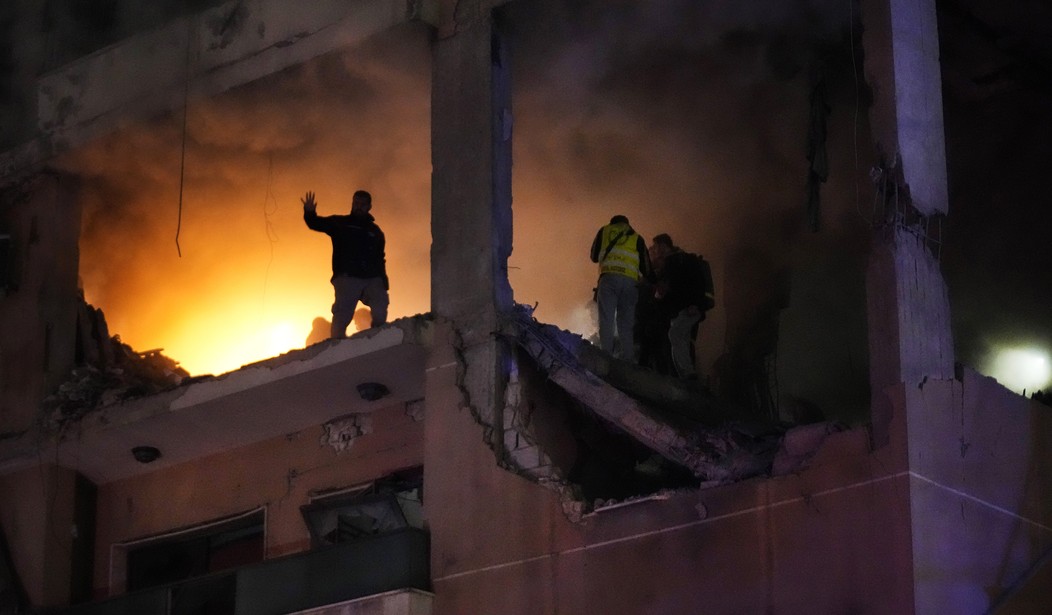
Hezbollah was planning an all-out aerial attack on Israel. It had amassed thousands of rockets and missiles with one clear goal: to kill as many Israelis as possible. Hezbollah is a different beast than Hamas, as they possess ballistic missiles and have well-trained fighters—a lesson Israel learned during their 2006 war. Taking on Hezbollah will not be a cake walk but after the October 7 attacks, the Jewish state is no longer going to allow such mayhem to persist. Israel cannot afford it—the country has no strategic depth and is surrounded by hostile nations. Lebanon was always going to be the second front in this war, and that may be happening now as the IDF launched a massive airstrike against the terror group this weekend when they learned Tel Aviv was being targeted.
Israel launched over 100 aircraft to destroy these terror targets. Some 6,000 rockets and missiles were being amassed for this strike against Israel. The IDF destroyed two-thirds of what would be launched during the strikes. The intelligence on Tel Aviv being a target was received less than an hour before Hezbollah was about to launch the missiles. Still, the barrage that Hezbollah unleashed was captured by onlookers who posted the Iron Dome system working overtime in parts of Northern Israel, especially the Golan Heights. Fox News’ Trey Yingst has more:
Some numbers from sources familiar:
— Trey Yingst (@TreyYingst) August 25, 2024
6000 pieces of Hezbollah ammunition were destroyed in the Israeli strikes. Missiles, rockets, UAVs. Not all of them were about to be launched at Israel.
2/3 of what was about to be fired was destroyed during the strikes.
100+ Israeli fighter…
Israel foiled a large Hezbollah attack aimed at Tel Aviv and parts of northern Israel.
— Trey Yingst (@TreyYingst) August 25, 2024
During and after the preemptive strikes, Hezbollah was launching drones and rockets into northern Israel.
The country is now in a special security situation for the next 48 hours. pic.twitter.com/xdKCRP1R4i
Hezbollah said their assault was in retaliation for the death of Hezbollah leader Fuad Shukr, who was killed by an Israeli airstrike on July 30. A 48-hour state of emergency was declared, though a ban on public gatherings has since been lifted. It was the heaviest cross-border attack in months (via NYT):
Israeli forces and Hezbollah militants in Lebanon traded cross-border strikes on Wednesday, fueling concerns about a wider regional conflagration as negotiators struggle to broker a cease-fire in the Gaza Strip.
Israel said that it had struck weapons storage facilities used by Hezbollah, the powerful Iranian-backed militia, in eastern Lebanon for the second time this week. The overnight airstrikes, close to the Syrian border, killed at least one person and injured 30 others, including children, Lebanon’s Health Ministry said in a statement.
Hezbollah said that in response it had targeted an Israeli military base in the Israeli-controlled Golan Heights.
Israel’s military said that dozens of rockets had crossed into the area from Lebanon, but that they had struck a civilian neighborhood, not near a military target, damaging two houses in Katzrin, a town of about 8,000 people in the region. Magen David Adom, the Israeli emergency medical service, said a 30-year-old man in Katzrin had been treated for shrapnel wounds.
“Attacks against our civilians will not go unanswered,” said an Israeli military spokesman, Lt. Col. Nadav Shoshani.
The cross-border strikes highlighted how months of diplomatic efforts, led in part by the United States, have failed to either broker a stop to the war in Gaza between Israel and Hamas, or ease hostilities along the Lebanese border. Israel and Hezbollah have dramatically increased the pace of their attacks since October, when Hezbollah began firing into Israel, saying it was acting in solidarity with Hamas and the people of Gaza.
We’ll keep you updated.











Join the conversation as a VIP Member