





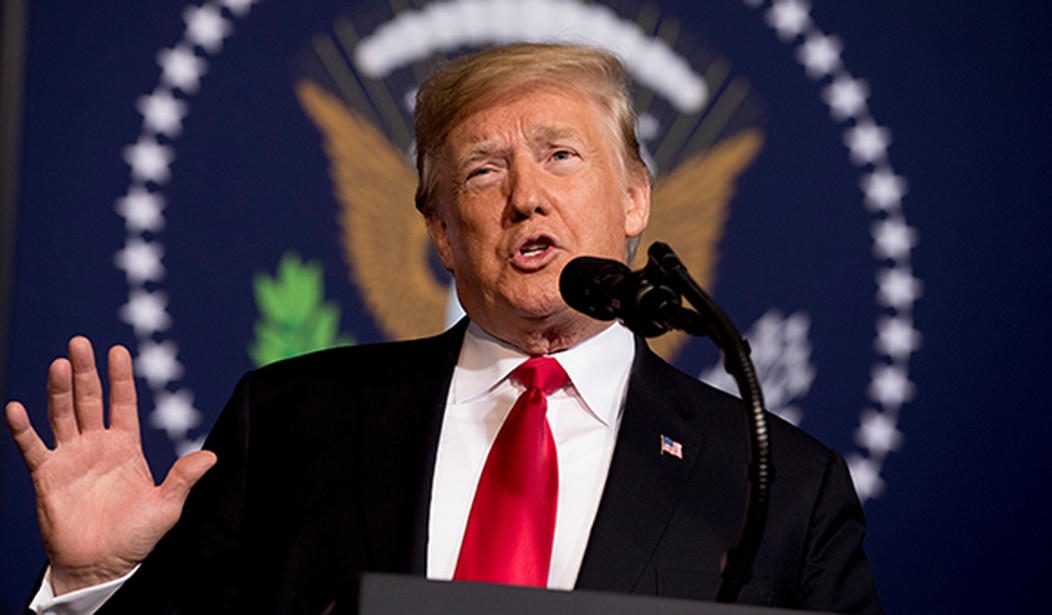
The United Nations Special Rapporteur on Freedom of Expression and Opinion David Kaye, who is also a professor of law at University of California, Irvine, claimed in a recent interview that President Trump was “the worst perpetrator of false information” in the United States.
In an interview with Digital Rights Monitor, published Thursday, Kaye commented that “in my own country, the United States, the worst perpetrator of false information is the President of the United States.”
He went on to label this "false information" as propaganda and argue that good journalism was one solution to it.
“So one thing is how do we deal with government ‘fake news’ — if you want to call it that, but propaganda is a better phrase for it. So on that front, I think journalists need to be covering it,” he said. “And again that’s hard for people in societies where you face all sorts of threats. So that’s something: You need to do it; it’s time consuming; it takes away from other reporting you might do, and when you do it you can come under pressure from the government or other actors. So that’s one thing is that journalists can be doing some of this.”
Kaye also argued that social media platforms need to take steps to censor “fake news,” including removing Twitter accounts tweeting out what they deem to be misinformation.
“The platforms, I think, can do things that are more technical as long as they are not evaluating content,” he said. “There are things they can do. They can’t just zap it and say, ‘This is fake news, it’s off the platform.’ But they can do things like identify how long is this Twitter account that’s tweeting all of this information, how long has it been in effect? Was it created three hours ago? Well then, maybe it should be restricted.”
Recommended
“I think there are technical things where the companies can more and more treat spam and decrease the number of accounts that are bots; which is also tricky because there are good bots and bad bots,” he concluded.
Earlier this year, then-UN ambassador Nikki Haley called out the politically-motivated bias of another UN Rapporteur. The Special Rapporteur on Extreme Poverty and Human Rights Philip Alston, a New York University professor, tried to claim that the Trump administration was making extreme poverty in the U.S. worse. In that report, Alston failed to cite and compare data from before and after Trump took office.






Join the conversation as a VIP Member