




During his State of the Union address in February, President Joe Biden announced U.S. troops are headed to the Gaza Strip in order to build an emergency port for humanitarian aid distribution.
The announcement immediately raised red flags among national security officials, experts and law makers on Capitol Hill -- prompting serious questions about troop security, rules of engagement and how U.S. soldiers will defend themselves if attacks by Iranian backed terror groups currently fighting the Israeli Defense Forces.
"We have strong reservations about your directing the United States military to establish a temporary pier on the Gaza Coast. While we acknowledge that this decision was taken with the consent of the Israeli government, we are concerned that the mission entails a significant risk to U.S. personnel. We are also concerned that this approach fails to address the main causes of the humanitarian crisis," Senate Armed Service Ranking Member Roger Wicker, along with 11 other Republican Senators, wrote in a letter Thursday to President Joe Biden.
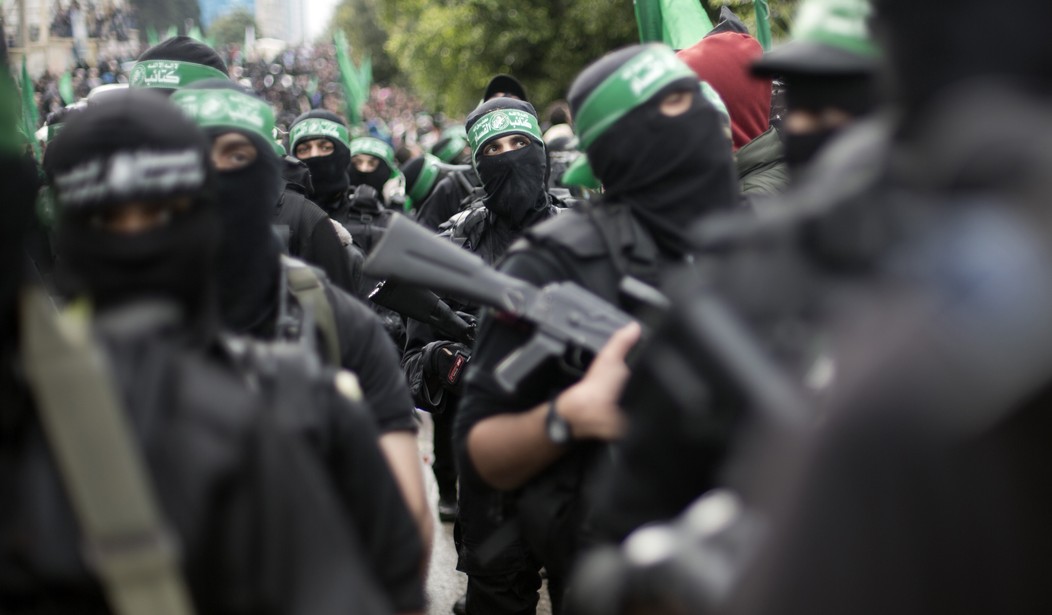
"First, this deployment ignores the most basic cause of Gaza’s humanitarian crisis: the fact that Hamas ignited the current war on October 7 by murdering 1,200 people, including more than 30 Americans, and taking another 240 hostages, including 12 Americans. The conditions for ending the war and the ensuing humanitarian challenges are the same today as they were on October 7: Hamas’ surrender and the return of the approximately 140 remaining hostages, including six Americans," they continued.

"Second, based on what has been shared with the Senate Armed Services Committee thus far, this decision appears to ignore force protection issues entirely against an enemy that tries to kill Americans every day. We are gravely concerned that the Department of Defense has given too little consideration to the likelihood that Hamas, Palestinian Islamic Jihad (PIJ), and other U.S.-designated terrorist organizations operating in Gaza would attempt to attack the U.S. personnel that will be deployed to this mission. Since October 7, Iran-backed proxies, of which Hamas and PIJ are two, have attacked U.S. forces in Jordan, Syria, Iraq, and off the coast of Yemen. Hamas is blatantly indifferent to the humanitarian crisis that its October 7 massacre has wrought, and it is unlikely to be deterred by the humanitarian nature of the U.S. mission to establish a pier off the coast of Gaza," the lawmakers said.
Biden's Gaza Pier Will Be a Floating Death Trap for U.S. Troops
— Townhall.com (@townhallcom) March 21, 2024
https://t.co/Rh751n6jLg
This week it was announced IDF soldiers will build a security perimeter around the pier in an effort to protect U.S. troops. That's a bad idea:
This is not a good development.
— Jonathan Schanzer (@JSchanzer) March 27, 2024
Israel is now being asked to protect US forces.
We have gone from the laudable principle of “Israel fights for itself, by itself” to whatever this is.
Now imagine the fallout from one US casualty. https://t.co/KJWEpPINR0
Meanwhile, the Pentagon is in talks about a "Palestinian peacekeeping force" once the war is ended.
"Biden administration officials are in preliminary 'conversations' about options for stabilizing post-war Gaza, including a proposal for the Pentagon to help fund either a multinational force or a Palestinian peacekeeping team," POLITICO reports. "The options being considered would not involve U.S. troops on the ground, according to two Defense Department officials and two other U.S. officials, all granted anonymity to discuss the closed-door diplomatic and military negotiations. Instead, DOD funding would go toward the needs of the security force and complement assistance from other countries."













Join the conversation as a VIP Member