






One of the biggest reasons why Congressional Republicans' successful effort to defund the so-called Obamacare bailouts to insurers was so important -- aside from saving taxpayers billions, of course -- is that it guarantees voters will feel the law's impact in 2016. The "risk corridor" programs were designed to use taxpayer dollars to paper over insurers' Obamacare-related losses early on in the program, in order to delay the inevitable reckoning on costs and rates. The new, more transparent reality is that many Americans will learn of their new premium increases just before heading to the polls in November. The
Advertisement
In trying to stave off a challenge from socialist Sen. Bernie Sanders, former Secretary of State Hillary Clinton has whole-heartedly embraced Obamacare, promising to build on it. "Before it was called Obamacare, it was called Hillarycare," she has been saying regularly on the campaign trail. She'll own Obamacare and its problems going into the general election assuming she's the nominee, and according to the schedule put out by HHS, insurers who wish to participate in Obamacare will have to submit their initial rates in the late spring. After back and forth with HHS over the summer, they'll start to become finalized in the fall. That means for months leading up to the election, voters are going to be hearing more and more about staggering rate increases coming in 2017. And this year, open enrollment – when individuals shopping for insurance can start to go online and see the premiums on new plans -- begins on Nov. 1, or just one week before the election. This means that for the months, weeks, and days leading up to the election, the Democratic presidential nominee and all of the party's Congressional candidates are going to have to contend with news of sky-rocking rates coming from Obamacare as insurers struggle to make the business profitable. Considering that Republicans owe their current House and Senate majorities to Obamacare, this should be a scary thought for Democrats.
Yes,
On Thursday, the Department of Health and Human Services reported that fewer than 13 million individuals signed up for Obamacare plans for 2016. Though the administration is trying to argue that this 12.7 million number beat expectations, nobody is buying it...This is significantly lower than the 21 million individuals the Congressional Budget Office initially projected the law would signup in 2016, below the downwardly revised 13 million CBO projection, and effectively flat from a year ago. Perhaps even more significant than the headline number, HHS also revealed that just 28 percent of those who signed up for coverage are between the ages of 18 and 34 – which is the same proportion as last year, and well south of the 40 percent target that HHS said was crucial to the exchanges remaining viable...During the initial botched launch of Obamacare in late 2013 and early 2014, there was a theoretical debate about whether the risk pool would be stable. But that is no longer theoretical. Insurers have now had a chance to look at actual claims data from Obamacare enrollees, and it isn't encouraging for insurers.
Because of these low enrollment numbers and older, sicker risk pools, an adverse selection problem is developing. This, in turn, is costing (non-bailed-out) insurers, some of whom are hinting that
Advertisement
Deductibles and other forms of cost-sharing have been creeping up in the United States since the late 1990s. A typical employer health plan now asks an individual to pay more than $1,000 out of pocket before coverage kicks in for most services. The most popular plans on the Affordable Care Act exchanges require customers to pay several times as much. Even Medicare charges deductibles...The other problem with high deductibles is the obvious one: Many Americans simply do not have the savings to afford them. In partnership with the Kaiser Family Foundation, we recently conducted a survey of Americans struggling with their medical bills. A substantial fraction of them could not pay their deductibles and were left with tough choices about how to cut thousands of dollars from their household budgets to pay for health care. For those people, deductibles often seem like an unfair trick, or a feature that makes insurance worthless. More than 3,000 readers wrote us about that medical debt article, many deploring high deductible health plans that had put them in financial distress.
Advertisement
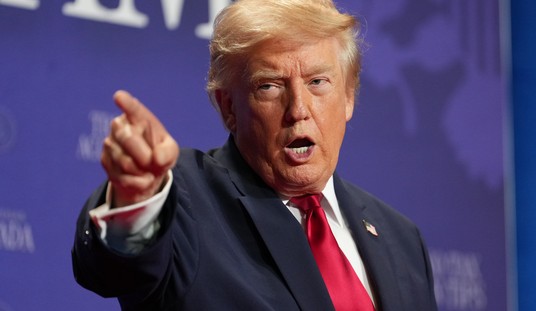
The "Affordable" Care Act forces people to pay for very expensive coverage that they can't even use until they blow through thousands in out-of-pocket expenses, which they already can't afford. According to the Kaiser study referenced in the piece, 62 percent of those who says they can't pay their medical bills are insured. I'll leave you with the healthcare portion of Saturday night's debate, in which Donald Trump dissembled his way through a clumsy answer trying to explain why his vision for universal, government-paid-for healthcare doesn't place him closer to Bernie Sanders than even Hillary Clinton on this issue:
Join the Conversation
VIP members get the ability to comment on articles.