



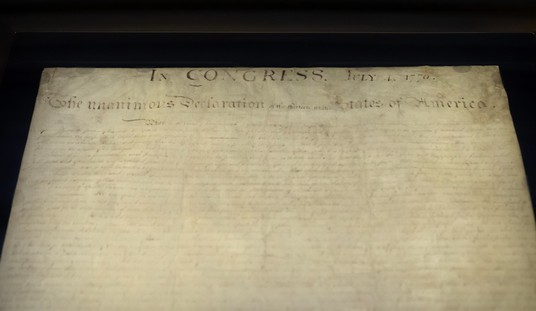
Was President Abraham Lincoln really for outlawing slavery? Let's look at his words. In an 1858 letter, Lincoln said, "I have declared a thousand times, and now repeat that, in my opinion neither the General Government, nor any other power outside of the slave states, can constitutionally or rightfully interfere with slaves or slavery where it already exists." In a Springfield, Illinois, speech, he explained: "My declarations upon this subject of Negro slavery may be misrepresented but cannot be misunderstood. I have said that I do not understand the Declaration (of Independence) to mean that all men were created equal in all respects." Debating Sen. Stephen Douglas, Lincoln said, "I am not, nor ever have been, in favor of making voters or jurors of Negroes nor of qualifying them to hold office nor to intermarry with white people; and I will say in addition to this that there is a physical difference between the white and black races, which I believe will forever forbid the two races living together on terms of social and political equality."
What about Lincoln's Emancipation Proclamation? Here are his words: "I view the matter (of slaves' emancipation) as a practical war measure, to be decided upon according to the advantages or disadvantages it may offer to the suppression of the rebellion." He also wrote: "I will also concede that emancipation would help us in Europe, and convince them that we are incited by something more than ambition." When Lincoln first drafted the proclamation, war was going badly for the Union. London and Paris were considering recognizing the Confederacy and assisting it in its war against the Union.
Recommended

The Emancipation Proclamation was not a universal declaration. It specifically detailed where slaves were to be freed: only in those states "in rebellion against the United States." Slaves remained slaves in states not in rebellion -- such as Kentucky, Maryland, Delaware and Missouri. The hypocrisy of the Emancipation Proclamation came in for heavy criticism. Lincoln's own secretary of state, William Seward, sarcastically said, "We show our sympathy with slavery by emancipating slaves where we cannot reach them and holding them in bondage where we can set them free."
Lincoln did articulate a view of secession that would have been heartily endorsed by the Confederacy: "Any people anywhere, being inclined and having the power, have the right to rise up and shake off the existing government and form a new one that suits them better. ... Nor is this right confined to cases in which the whole people of an existing government may choose to exercise it. Any portion of such people that can may revolutionize and make their own of so much of the territory as they inhabit." Lincoln expressed that view in an 1848 speech in the U.S. House of Representatives, supporting the secession of Texas from Mexico.
Why didn't Lincoln share the same feelings about Southern secession? Following the money might help with an answer. Throughout most of our nation's history, the only sources of federal revenue were excise taxes and tariffs. During the 1850s, tariffs amounted to 90 percent of federal revenue. Southern ports paid 75 percent of tariffs in 1859. What "responsible" politician would let that much revenue go?





Join the conversation as a VIP Member