



The gist of Gen. Stanley McChrystal's analysis that presumably will be presented to President Barack Obama is: If 1) you and Congress fully resource the effort (troops, materiel and civilian aid) and 2) if we get much better at coordinating all our assets -- Defense and State departments, the U.S. Agency for International Development, intelligence, contractors, NATO and others -- then 3) there is a better than even chance of success in Afghanistan, which will take 4) between five and seven more years. Note that the president is not likely to be told that the Pentagon can "predict" success -- only that it would be more likely than not to succeed.

Thus, the president will have to place a heavy bet at odds barely better than a gambler would get on even or odd at the roulette table. But unlike the gambler, who can leave the table, the president is forced to bet -- either go or no go. There is a potentially huge danger to leaving (as well as to escalating) -- for both national security and political reasons.
Unfortunately, while there are no easy answers, a number of appealing rationalizations and false assertions are available. They should be rejected for the comfortable untruths they are. Whether one is for getting out or staying and fighting, this is no time to avert one's mind from seeing reality straight on.
Sen. John Kerry's Monday column in The Wall Street Journal conveniently presents for consideration most of the rationalizations and false assertions that currently plague Washington decision-making:
--Much has changed, particularly a fraudulent election, since March, when the president unveiled the strategic plan for his "war of necessity" to defeat al-Qaida in Pakistan and Afghanistan through a community-focused counterinsurgency campaign that would "enhance the military, governance and economic capacity of Afghanistan" rather than merely execute counterterrorism body count hits.
Not true. The inevitability of deep fraud was revealed publicly when Afghan President Hamid Karzai decided to ally with bad warlords to win. We were debating the consequences of a fraudulent election on national television long before the election. But part of the strategy to "enhance governance" was to build on the many provincial and local leaders who were able and trusted by their people while reducing the historic corruption in the Kabul government. Also, I and many others went to open-source briefings in the spring and early summer on deteriorating conditions in the battle against the Taliban. In policy circles, there have been no recent surprises.
Recommended
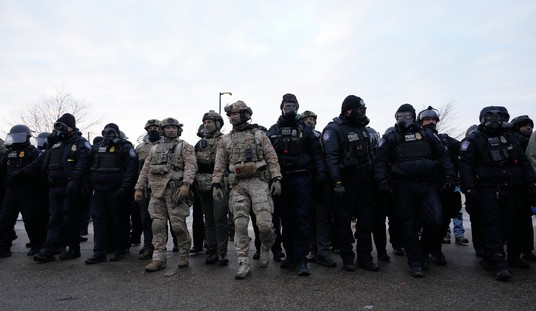
--We can get the job done without too many boots on the ground in Afghanistan, with sophisticated surveillance, effective aerial targeting of al-Qaida and more focus on Pakistan (Vice President Joe Biden's plan).
This is the most dangerous rationalization, though it is seen broadly by experts as implausible. (Secretary of State Hillary Clinton was publicly dismissive of the plan. See also The Washington Post, Sept. 27, "Go All-In, Or Fold," by Rajiv Chandrasekaran.) The danger is that it could allow not only our government but also our public to take the easy path it offers while falsely thinking we are not merely making a slow-motion retreat leading to victory and enhanced operational capacity for al-Qaida.
The case against the efficacy of the Biden plan is laid out in uncontestable detail by Frederick and Kimberly Kagan (The Weekly Standard, "How Not to Defeat al Qaeda"), who refute the essential assumptions of the plan: "that al Qaeda is primarily a terrorist group and that it is separable from the insurgent groups among whom it lives and through whom it operates."
--"What's the exit strategy?" Sen. Kerry asks. "We should not commit troops to the battlefield without a clear understanding of what we expect them to accomplish, how long it will take, and how we maintain the consent of the American people. Otherwise, we risk bringing our troops home from a mission unachieved or poorly conceived."
Unfortunately, as our troops have been in Afghanistan for eight years already, it is rather too late -- even if we were to leave now -- to avoid Sen. Kerry's downside risk. But even if we had not entered yet, the whole concept of exit strategies presumes a knowledge of the future that wars almost invariably contradict. On Dec. 8, 1941, Gen. George C. Marshall and President Franklin D. Roosevelt had no idea how long World War II would last or what we were going to expect of our troops; FDR was looking for an entrance strategy. His only exit strategy was victory.
We may wish to have the war in Afghanistan largely resolved in our favor within a year, but the generals think it will take at least five years.
--"Mr. Obama promises not to send more troops to Afghanistan until he has absolute clarity on what the strategy will be," Kerry observes. "He is right to take the time he needs to define the mission."
Well, yes, in principle. But our troops are fighting and dying now. Winter is coming. The spring fighting season is only six months away, and it takes several months to mobilize, up-train and transport fresh troops. So think "yes, but quickly."
The president has three choices: 1) Cut and run, 2) cut and walk or 3) stay and fight with enough troops. Either No. 1 or No. 3 may be justifiable based on hardheaded thinking. No. 2 is an evasion of reality and sinfully would sacrifice American troops for no good purpose.








Join the conversation as a VIP Member