





More than four in ten adults have medical debt, according to recent research from the Kaiser Family Foundation.
That has prompted several states to take action. Arizona voters recently approved a ballot measure capping interest rates on medical debt and protecting more personal property from creditors. New York has enacted legislation prohibiting healthcare providers from placing liens on primary residences or garnishing wages to collect debts. Lawmakers in Toledo, Ohio, plan to use federal dollars from the American Rescue Plan Act to retire medical debt.
But the extent of this supposed crisis is overblown. Medical bills account for a small share of Americans' debt burden. And by and large, they're not driving people into financial ruin.
Research from Kaiser pegs total U.S. medical debt at $195 billion as of 2019. That's no small number. But a small share of people accounts for the lion's share of the nation's total debt load.
About one-third of Americans with medical debt owe less than $1,000. Three-quarters owe less than $5,000.
And of course, six in ten Americans report no medical debt at all.
Further, most Americans have plans in place to pay off unexpected medical bills. Half say they'd pay a $500 charge right away without incurring interest; another 21% say they'd put it on a credit card and pay over time.
Even among those who have or have had medical debt, more than one-third say they'd be able to handle that unexpected $500 charge out of pocket. Another third would pay it off over time on a credit card or through a payment plan with a provider.
It's also important to note that medical debt pales in comparison to the other debt many Americans freely take on. The typical American holds over $96,000 in debt.
Recommended

The average auto loan balance in 2021 was nearly $21,000, according to data from the credit-reporting agency Experian. The average personal loan balance exceeded $17,000, while the average mortgage balance was over $220,000.
Imagine a person with a car loan, a mortgage, and a credit card balance finds himself facing financial troubles after an unexpected medical bill. How can we conclude that the medical debt is what pushed him to the precipice of financial ruin, when there were plenty of other debts stressing his finances?
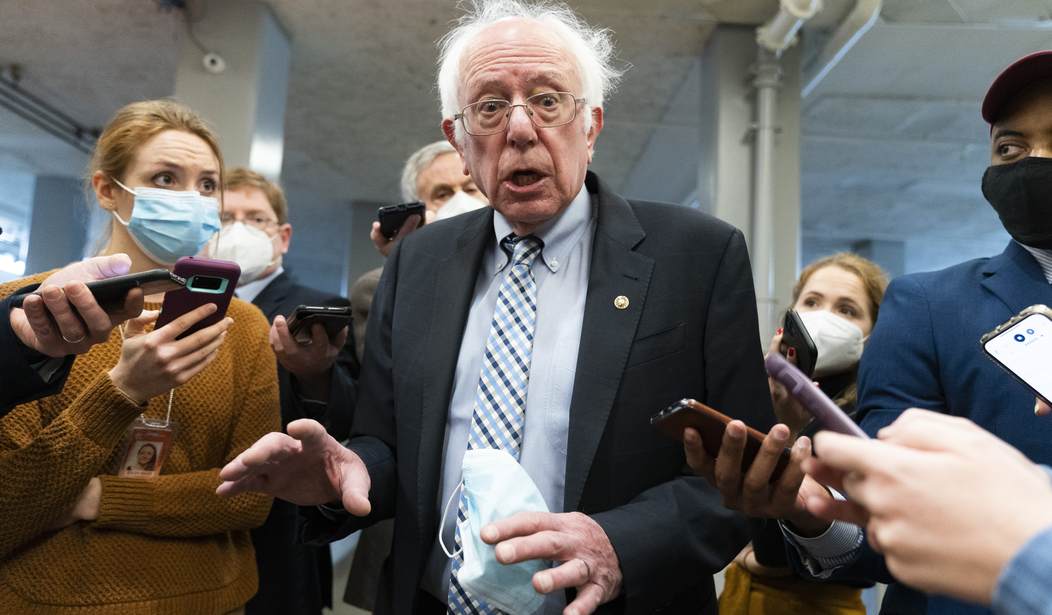
This hasn't stopped progressives like Sen. Bernie Sanders, I-Vt., from portraying a national medical debt crisis as proof that the healthcare status quo is broken -- and that making health care "free" at the point of access a la Medicare for All is the best path forward.
Last year, the Vermont socialist called for the cancellation of all medical debt. Back in 2019, he alleged that "500,000 Americans will go bankrupt this year from medical bills." That year, he asked, rhetorically, "How barbaric is a system that says, 'I’m going to destroy your family’s finances because you had cancer'?"
But that number is a massive exaggeration. A peer-reviewed study published in the New England Journal of Medicine in 2018 looked at the share of people with medical bills who declared bankruptcy, rather than how many bankruptcy filings included medical debt. The upshot? Approximately 4% of bankruptcies were caused by hospitalizations.
Even if medical debt were causing hundreds of thousands of Americans to go bankrupt each year, there's no reason to believe that injecting more government control into the healthcare system would minimize costs.
Consider that the share of people who filed for bankruptcy and listed medical expenses as a contributor actually went up about 2 percentage points after Obamacare was enacted.
Or look at Canada. Under our northern neighbor's government-run healthcare system, patients don't pay anything out-of-pocket at the doctor's office. But they pay dearly in taxes. The average Canadian family of four making just over $150,000 per year pays more than $15,800 in taxes for their health care.
And not even "free" health care is saving them from financial ruin. Canadians declare bankruptcy at a higher rate than their American counterparts. In 2021, that rate was 2.3 bankruptcies per 1,000 people -- compared to the U.S. rate of 1.2 bankruptcies per 1,000 people.
Medical debt is a burden for a vanishingly small portion of the U.S. population. The scope of the problem does not warrant the level of government intervention -- or taxpayer spending -- it is commanding.
Sally C. Pipes is President, CEO, and Thomas W. Smith Fellow in Health Care Policy at the Pacific Research Institute. Her latest book is False Premise, False Promise: The Disastrous Reality of Medicare for All (Encounter 2020). Follow her on Twitter @sallypipes.







Join the conversation as a VIP Member