





Panicked flight from China's currency twice caused a plunge of 7 percent in her stock market, forcing a suspension of trading.
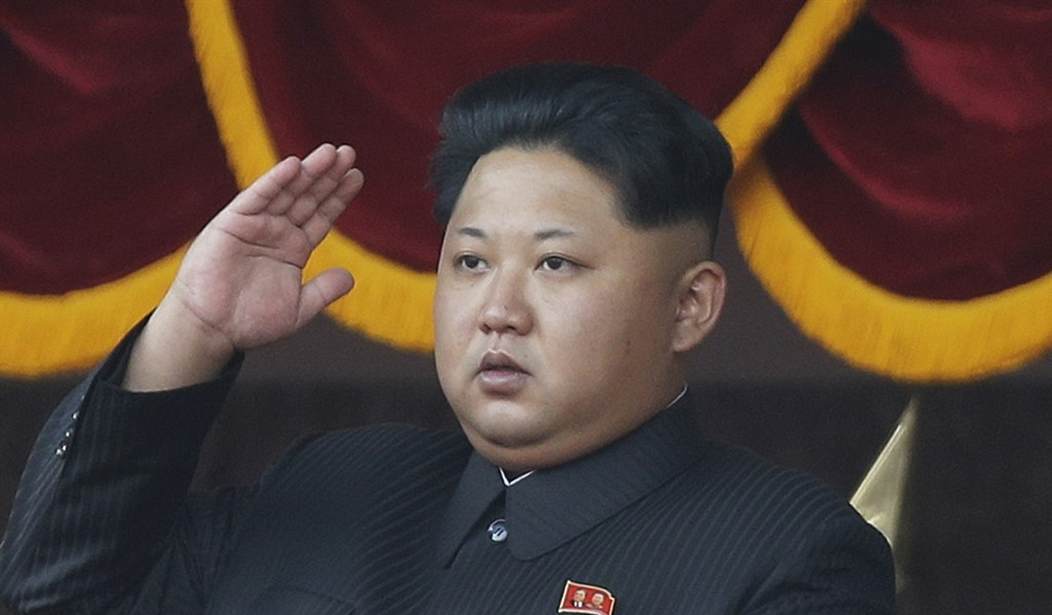
Kim Jong Un, the megalomaniac who runs North Korea, ignored Xi's warning and set off a fourth nuclear bomb. While probably not a hydrogen bomb as claimed, it was the largest blast ever in Korea.
And if Pyongyang continues building and testing nuclear bombs, Beijing is going to wake up one day and find that its neighbors, South Korea and Japan, have also acquired nuclear weapons as deterrents to North Korea.
And should Japan and South Korea do so, Taiwan, Vietnam and Manila, all bullied by Beijing, may also be in the market for nukes.
Hence, if Beijing refuses to cooperate to de-nuclearize North Korea, she could find herself, a decade hence, surrounded by nuclear weapons states, from Russia to India and from Pakistan to Japan.
Still, this testing of a bomb by North Korea, coupled with the bellicosity of Kim Jong Un, should cause us to take a hard look at our own war guarantees to Asia that date back to John Foster Dulles.
At the end of the Korean War in July 1953, South Korea was devastated, unable to defend herself without the U.S. Navy and Air Force and scores of thousands of U.S. troops.
So, America negotiated a mutual security treaty.
But today, South Korea has 50 million people, twice that of the North, the world's 13th largest economy, 40 times the size of North Korea's, and access to the most modern U.S. weapons.
Recommended

In 2015, Seoul ran a trade surplus of almost $30 billion with the United States, a sum almost equal to North Korea's entire GDP.
Why, then, are 25,000 U.S. troops still in South Korea?
Why are they in the DMZ, ensuring that Americans are among the first to die in any Second Korean War?
Given the proximity of the huge North Korean Army, with its thousands of missiles and artillery pieces, only 35 miles from Seoul, any invasion would have to be met almost immediately with U.S.-fired atomic weapons.
But with North Korea possessing a nuclear arsenal estimated at 8 to 12 weapons and growing, a question arises: Why should the U.S. engage in a nuclear exchange with North Korea, over South Korea?
Why should a treaty that dates back 60 years commit us, in perpetuity, to back South Korea in a war from the first shot with Pyongyang, when that war could swiftly escalate to nuclear?
How does this comport with U.S. national interests?
In 1877, Lord Salisbury, commenting on Great Britain's stance on the Eastern Question, noted that "the commonest error in politics is sticking to the carcass of dead policies."
Is this not true today of America's Asian alliances?
North Korea's tests of atomic weapons and development of land-based and submarine-launched missiles should cause us to reconsider strategic commitments that date back to the 1950s.
President Nixon, ahead of his time, understood this.
As he began the drawdown of U.S. forces in Vietnam in 1969, he declared in Guam that while America would meet her treaty obligations, henceforth, Asian nations should provide the ground troops to defend themselves. Gen. MacArthur had told President Kennedy, before Vietnam, not to put U.S. foot soldiers onto the Asian mainland.
Now that we have entered a post-post Cold War era, where many Asian nations possess the actual or potential military power to defend themselves, something like a new Nixon Doctrine is worth considering.
Take all of the major territorial quarrels between China and its neighbors -- the dispute with India over Aksai Chin and Arunachal Pradesh, the dispute with Japan over the Senkaku Islands, with Vietnam over the Paracels, with the Philippines over the Spratlys.
In none of these quarrels and conflicts does there seem to be any vital U.S. national interest so imperiled that we should risk a clash with a nuclear power like Beijing.
Once, there was a time when Hitler, Stalin, Mussolini and Tojo ruled almost all of Eurasia. And another time when a monolithic Sino-Soviet Communist bloc ruled from the Elbe to the Pacific.
As those times are long gone, is it not time for an exhaustive review of the alliances we have entered into and the war guarantees we have issued, to fight for nations and interests other than our own?
Under NATO, we are committed to go to war against a nuclear-armed Russia on behalf of 27 nations, including tiny Estonia.
One understood the necessity to defend West Germany and keep the Red Army on the other side of the Elbe, but when did Estonia's independence become so critical to U.S. security that we would fight a nuclear-armed Russia rather than lose it?
Indeed, how many of the dozens of U.S. war guarantees we have outstanding would we honor by going to war if they were called?







Join the conversation as a VIP Member