






Advertisement
This week, in a column titled A Future Segregated By Science?, Blow starts off with a story of how he won first prize in a science fair. And he freely admits, “I hadn’t actually done an experiment.” Instead he submitted a plywood model somehow representing the Reagan-era Star Wars project. I will leave unsaid my gut instinct exactly on what criteria Blow was awarded a blue ribbon.
So Blow want to talk about a “distressing disparity.” “Few women and minorities are getting STEM (science, technology, engineering and mathematics) degrees, although STEM jobs are multiplying and pay more than many other careers.”
Blow meanders around pointlessly, observing that women and minorities are underrepresented in STEM majors in college and in science and technology related jobs. In fact, African-Americans earn only 2% of PhDs granted in STEM fields in a typical year.
Blow cites an old AP article, asserting that the problem is “a complex equation of self-doubt, stereotypes, discouragement and economics — and sometimes just wrong perceptions of what math and science are all about.”
Well, based on my five years in graduate schools, I believe affirmative action is the real problem, one Blow would never even reluctantly admit is a factor. At elite universities, minorities are given significant preferences in the admission process. The inevitable result is that many of them simply aren’t as qualified as their classmates.
And one consequence of this is the explosion of African-American studies. I have no doubt it is an academically valid subject of study. But for Ivy League schools and other elite institutions, African-American studies departments have grown to outsize proportions because it is a notoriously easy subject. Given a choice between the rigors of, say, physics on the one hand, or reading some claptrap by Cornel West or a Maya Angelou novel, the latter is all too tempting an easy path to a degree. This is a thorny problem which people like Blow simply refuse to acknowledge exists.
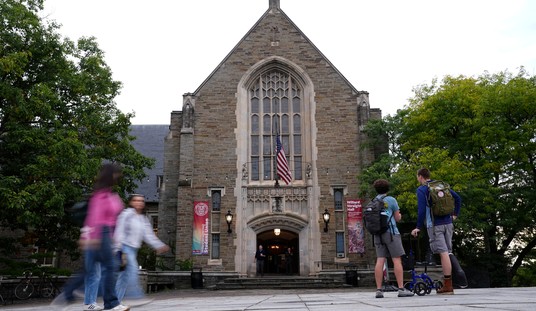
And what is it about Ivy League schools like Yale? A Yale student with the ludicrously upper class name of “Spencer Bokat-Lindell” deals with his complicated emotional and moral dilemma when his dog dies. in “#RIP: Greiving My Dog Offline. Bokat-Lindell describes in agonizing detail his overwrought feelings when his dog Ginny dies while he is away in Paris for his year abroad.
This is the kind of thing the NY Times editors love, first person accounts by Ivy Leaguers of how they deal with their monumentally tragic problems. Spencer struggles with an existential problem: whether or not to put a RIP testimonial to Ginny on his Facebook page. “I, like a lot of people I know, have a bad habit of fussing over how I appear on Facebook in ways that would be impossible in real time. Would people think I was overemotional or, even worse, fishing for pity? I was so used to curating a persona, to tinkering with statuses and comments and profile pictures — how was I supposed to post about Ginny without getting tangled in my own self-absorption?”
So Spencer eventually decides it would be too self-indulgent and public to post on his FB page about his beloved pet. “Though I didn’t receive the public condolences that might have validated my sorrow, there was something refreshing about experiencing a significant event in my life on my own terms rather than in a virtual panopticon of my peers.”
Yes, Spencer finally decides he will grieve in private for dear ole’ Ginny. Oh, and write a 1256 word op-ed piece for the
Advertisement
Well, thanks for reading Cheap Laughs, I have zero doubt the Times will oblige with ample material for next week’s installment.


Join the Conversation
VIP members get the ability to comment on articles.