





She was "small, bubbly and joyful. She had a radiant smile," with a "sweet" face. And yet, she wept.
She was a nun, in full habit, standing outside a Planned Parenthood clinic that Abby Johnson was running in Texas.
The first day Johnson and her staff saw her, they "gawked," and gathered at the clinic window. It was near 100 degrees, and there she was "in a heavy, dark brown habit that swept to the ground," Johnson, in her new book, "Unplanned," remembers: "Her head and hair were completely covered so that only her face showed, a face lifted toward heaven, eyes closed, clearly praying."
And then a "client" left the clinic, a woman who had just had an abortion. The religious sister, as Johnson writes, "fell to her knees and wept with such grief, such genuine personal pain, that I couldn't help but think to myself, She feels something far deeper than I ever will. She is honestly pained. This is real to her -- this grief at knowing that client had an abortion." Sister Marie Bernadette, the nun in question, would return every week on the days the clinic performed abortions.
Johnson asked herself: "How many other people cry outside my workplace because of the work I am doing?"
And she was not alone in her reaction. "The truth was, the sister's simple, prayerful presence bothered most of us, Catholic, ex-Catholic, Protestant and unchurched alike," Johnson recalls, "as she somehow represented our consciences."
The sister expressed a palpable agony.
Recommended
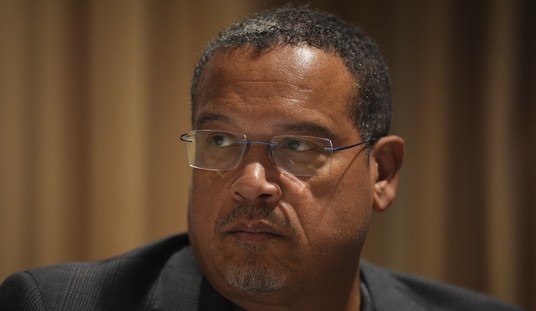
I thought about Sister Bernadette when I heard New Jersey Sen. Frank Lautenberg rant, of pro-life advocates: "If they had their way, the reproductive rights of American women would be tossed away, and it sounds to me like a Third World country that's requiring women to wear head shawls to cover their faces even if they don't want to do it."
He was responding to a simple funding bill before Congress that would keep taxpayer money away from abortion. There is currently no universal, permanent prohibition. This bill would change that. And I don't think anyone's going in for burqa measurements because of it.
Johnson, as you might expect, no longer works for Planned Parenthood. Participating in an all-too-clear, sonogram-guided abortion was the final straw. There was the "incredible irony" that, as Johnson puts it, "I had a career in educating women about contraception" and yet three times "conceived while using contraceptives." It was the third time that she kept her child, Grace.
Complexity, confusion, disconnection; these are all words Johnson uses to describe what was going on in her life and profession. And they describe America in regard to life issues.
More than 1.2 million abortions occur annually in the United States, with a disproportionate number concentrated in our poorest communities and among women of color, as Helen Alvare recently highlighted during testimony on Capitol Hill. Though it may have been received differently by some of the more adamant abortion-rights activists on the committee, her testimony was a valentine to women. The George Mason University professor called for "a thoughtful conversation about the meaning of health care."
Alvare highlighted "an emerging scientific and cultural awareness that abortion is not health care," noting that even "Many abortion providers and advocates of legal abortion" call it "killing."
Alvare continued: "According to leading scholars, it certainly appears that more easily available abortion has led to expectations of more uncommitted sexual encounters -- a situation which itself contradicts women's demonstrated preferences -- and thereby to more sexually transmitted infections, more non-marital pregnancies and births, and more abortions."
Throwing contraception at the problem, as Johnson knows all too well, isn't a panacea. The problem of why women ever feel like they need an abortion has deeper roots -- in individual lives and in our culture.
As Johnson writes: "From my first days at Planned Parenthood, I'd told myself I was there to decrease abortions. Now, the absurdity of that logic -- or lack of logic -- screamed at me. Not only had I been a leader in abortion efforts here in Texas, lobbying at the capitol, repeating clever talking points to the media, and running an abortion clinic, I'd even aborted two of my own children."
It's not a problem that's going to be solved in a day, or a column, a debate or a bill. But we might make a first step by taking a deep breath. We've had a series of wake-up calls lately: a brutal clinic in Philadelphia and disturbing undercover videos about the callousness inside some of the most mainstream, taxpayer-funded clinics. And yet, proponents of these modest legislative moves are accused of "assault" on women by purported leaders who should know better. Unfortunately, somewhere in all the violent, reckless rhetoric, lives are lost, and women and men are living in misery.








Join the conversation as a VIP Member