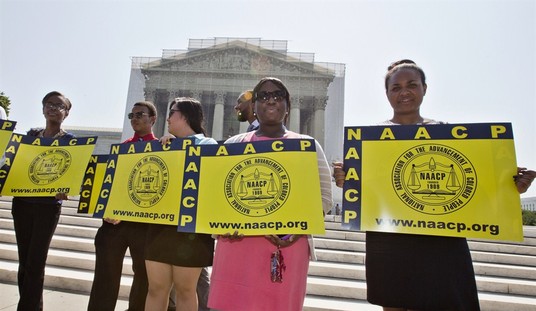
For decades, African Americans have voted more reliably Democratic than any other ethnic or special interest group. President Obama himself received over 95% of the black vote in 2008 and 2012.
New York City's Mayor Michael Bloomberg has become an interesting urban social engineer.
We’ve all heard the startling statistics about obesity in America: over one third of American adults are obese (almost 36%, according to the Centers for Disease Control and Prevention). Obesity puts us at risk for all kinds of health problems, including heart disease, stroke, type 2 diabetes and certain cancers. And it doesn’t afflict everyone equally: nearly 50% of blacks are obese, and lower income Americans in general are more likely to be obese than others.
Did you know that there was a time in our country, after the Civil War, when white unemployment was higher than black unemployment? It seems almost unfathomable now, but that was the case in the early decades of the 20th Century.
In 1965, Yale and Princeton raised their tuition, making them the most expensive Ivy League schools at the time. The hefty price tag? Just $1950 a year.
Famed neurosurgeon surgeon, Dr. Ben Carson, looked like just another black academic failure in his pre and elementary school years. His writings show that he was so angry he would have stabbed a classmate, and so learning-disabled that even the greatest Special Ed teacher would not have been able to mainstream him.
Last year, the horrific shooting at Sandy Hook Elementary School in Newton, Connecticut put the issue of gun control back at the forefront of public debate in America. Predictably, most celebrities voiced their support of stricter gun control laws as a response to the tragedy.
In some parts of the nation, the media is trying to paint minority problems as essentially well-coordinated, monochromic cultural issues. Unfortunately this paradigm is producing an unsettling clash. Black and Latino problems are not the same!
The question for our generation is: have we reached the limits of what changing the law can actually do to correct such inequalities?
From the early days of the Montgomery (Alabama) Improvement Association in which Dr. King became the first president in December 1955, to the March on Washington in August of 1963, the Civil Rights Movement went beyond giving blacks a chance to escape poverty.
From the very beginning, homosexual “marriage” activists have sought to hijack not only the moral authority of the Civil Rights Movement, but also the legal arguments which liberated minorities from centuries of legalized oppression and discrimination.
In an early strategic preparation for the struggle to avoid the fiscal cliff, the president and several Democratic luminaries decided to redefine as essential several entitlement programs. In an old fashioned way of manipulating the public, they began to redefine commonly held beliefs. In the interest of time, we will share only one example.
Homosexual activists achieved historic gains in the November 2012 election in the states of Washington, Maine and Maryland. These three notoriously liberal states passed laws extending marriage benefits to homosexual relationships by four to six percentage points. But will these legal victories ultimately deny them the sweeping Supreme Court decision they long for?
While most Americans were focusing on the domestic implications of Barack Obama’s re-election, the effects of his victory are being felt around the globe in different ways.
This election cycle has been one of the most interesting in modern history. Most observers agree that the nation was split down the middle on their opinions of the character and vision of the candidates.
After much deliberation, I have decided to vote for Mitt Romney. My reasoning is based upon both economics and moral principles. I am thankful for the ground-breaking achievement our nation experienced by electing our first black president. Collectively, we are a creating a post racial America. If we are serious about delivering our nation from her original sin of “racism,” we will have to hold President Obama accountable for his abandonment of foundational moral values and his failed economic policies. We cannot accept his blame-game excuses as the reason for our increasing national woes.
Our country made history in 2008 when we elected our first black president. The 2012 election is already historic as well, but for a much less promising reason. This year marks the first time in history that a major political party has put the redefinition of marriage into its national platform.
For most Americans, the meaning of marriage is simply common sense. Marriage as the union of one man and one woman is at the heart of what most of us believe family should be. Even if we don’t all manage to live out that belief as perfectly as we would like, not everyone who opposes the redefinition of marriage to include homosexual couples has a detailed explanation for their position. Just because someone is divorced, for example, does not mean he or she does not believe in traditional marriage. Everyday folks understand that society needs strong ideals to bring out the best in imperfect people.
Years ago, a tough private TV detective softened his crazy appearance by chewing on a lollipop instead of a cigar. To those he had rescued by brute force, he also frequently uttered the phrase, “Who loves ya, baby!” For those of us that have dared to oppose the LGBT [Lesbian, Gay, Bisexual, Transgendered] community’s stance on marriage, we know that we are often persecuted and intimidated, just like those who dared to go up against the TV character Kojak. Same-sex marriage proponents have been increasingly free to show us anything but love.