



Here are three common-sense principles.
- Higher taxes are misguided. They undermine prosperity and finance bigger government.
- Bailouts also are misguided. They facilitate corruption and encourage moral hazard.
- And international bureaucracies are misguided. They promote statism and squander money.
So what’s the “perfect storm” of bad policy?
How about when international bureaucracies offers a bailout in exchange for higher taxes?
Here are some very unpleasant details from Reuters about how the International Monetary Fund is working with other international bureaucracies to coerce Cyprus into raising taxes in order to provide a bailout.
International lenders would like Cyprus to raise its corporate tax and introduce a levy on capital gains and a financial transaction tax to ensure it can repay a euro zone bailout it asked for last year, euro zone officials said on Thursday. …One official, briefed on the talks between the International Monetary Fund, the European Central Bank and the European Commission – known as the Troika – and the new government in Nicosia, said no decisions had yet been taken on any of the taxes.
I’ve already explained that Cyprus got in trouble because government spending rose faster than the ability of the private sector to finance it.
So if the problem is that the burden of government spending is excessive, then how does it make sense to increase the corporate tax burden? To impose a capital gains tax? Or to levy a tax on financial transactions?
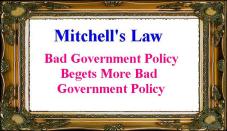 The answer, of course, is that it doesn’t make sense.
This is a very perverse example of Mitchell’s Law, with the pinhead bureaucrats at the IMF and elsewhere misallocating global capital on the condition that Cyprus increase an already onerous tax burden.
One bad policy leading to another bad policy. And it’s happening with our money. Something to think about the next time the fiscal pyromaniacs at the International Monetary Fund ask for additional bailout authority.









Join the conversation as a VIP Member