





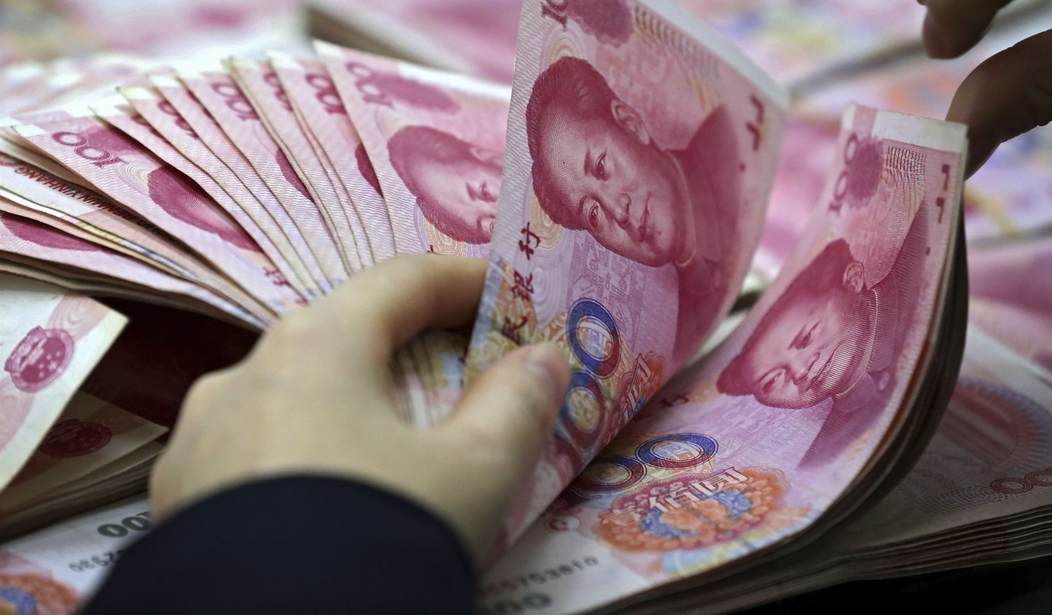
It was a sea of red, as there was nowhere to hide in the selloff earlier this week that began with China allowing its currency to drift to a level not seen in eleven years.
Technology stocks were the hardest hit as chipmakers, including Nvidia (NVDA) and Fortinet (FTNT) (popped last week on a monster earnings report). Also, Apple (AAPL), which is 16.5% of the sector, was among the biggest losers.
President Trump addressed the mass shootings that frightened the nation over the weekend. He also talked about action against social media and video game markets, and those names weighed down Communications Services.
S&P 500 Index | -2.98% |
Communication Services (XLC) | -3.24% |
Consumer Discretionary (XLY) | -2.68% |
Consumer Staples (XLP) | -2.60% |
Energy (XLE) | -2.98% |
Financials (XLF) | -3.33% |
Health Care (XLV) | -2.35% |
Industrials (XLI) | -2.77% |
Materials (XLB) | -1.88% |
Real Estate (XLRE) | -1.91% |
Technology (XLK) | -4.17% |
Utilities (XLU) | -1.43% |
Buy the Bounce?
There are lots of stocks that are already oversold, but the question is when to buy. I’m not talking about picking the bottom, which is folly. By the same token, a gift is being served up again. Bespoke Research posted an interesting piece showing how markets react after a harsh week, followed by the next Monday with a sharply lower decline.
Going back a decade, the market is higher from the Monday opening print. Yesterday, the S&P 500 opened at 2,898.07 -1.97% from Friday’s close. If history repeats itself, these are the potential levels the S&P 500 could rebound to by next Monday’s close:
- 2,913 (May 13, 2018 bounce)
- 2,961 (February 8, 2016 bounce)
- 3,055 (August 24, 2015 bounce)
Oversold Bounces | Prior Week | Gap Down Open | Week from Open |
March 9, 2009 | -6.78% | -1.41% | +11.64% |
August 8, 2011 | -7.15% | -2.64% | +3.17% |
September 12, 2011 | -4.15% | -1.25% | +5.10% |
November 21, 2013 | -3,70% | -1.46% | -0.12% |
June 24, 2013 | -2.52% | -1.04% | +2.51% |
August 24, 2015 | -5.53% | -5.23% | +5.43% |
February 8, 2016 | -2.98% | -1.16% | +2.16% |
May 13, 2019 | -2.02% | -1.97% | +0.54 |
August 5, 2019 | -3.11% | -2.18% | ??? |
Recommended
Yesterday, one of the two Fed rate cuts dissenters, Esther George acknowledged the stumbling stock market, admitting it must be watched. I wonder if she regrets not cutting rates. Right now, Wall Street sees three rate cuts this year.
CME Fed Watch Rate cut probabilities | 175-200 | 150-175 | 125-150 | 100-125 | 75-100 |
Sep 18, 2019 | 71.9% | 28.1% |
|
|
|
Oct 30, 2019 | 21.2% | 59.0% | 19.8% |
|
|
Dec 11, 2019 | 9.6% | 38.3% | 41.2% | 10.8% |
|
Jan 29, 2020 | 5.5% | 25.9% | 40.0% | 23.9% |
|
Business Investment
All my smart anti-tariff friends are now warning about the decline in business investments. It’s true, we need business investments, and there was a sharp decline in the second quarter of 2019 (2Q19), but the level is still elevated. Moreover, the last read of Durable Goods saw business investments spike by 1.9% in June. Still, this is a legitimate concern, although it’s not enough to raise the white flag of surrender when the United States is positioned to win.
Portfolio
All subscribers should have some cash to deploy.
Communication Services | Consumer Discretionary | Consumer Staples |
1 | 3 | 1 |
Energy | Financials | Healthcare |
1 | 2 | 1 |
Industrial | Materials | Real Estate |
2 | 3 | 1 |
Technology | Utilities | Cash |
2 | 0 | 3 |
China: Currency Manipulator
Now it’s official. The U.S. Treasury has labeled China a currency manipulator, which means steps will be taken with other trading partners to decide on a course of action. Many think this is largely symbolic, since any real resolution could take years.
From the U.S. Treasury
The Omnibus Trade and Competitiveness Act of 1988 requires the Secretary of the Treasury to analyze the exchange rate policies of other countries. Under Section 3004 of the Act, the Secretary must "consider whether countries manipulate the rate of exchange between their currency and the United States dollar for purposes of preventing effective balance of payments adjustments or gaining unfair competitive advantage in international trade.” Secretary Mnuchin, under the auspices of President Trump, has today determined that China is a Currency Manipulator.
As a result of this determination, Secretary Mnuchin will engage with the International Monetary Fund to eliminate the unfair competitive advantage created by China’s latest actions.
As noted in the most recent Report to Congress on the Macroeconomic and Foreign Exchange Policies of Major Trading Partners of the United States (“FX Report”), China has a long history of facilitating an undervalued currency through protracted, large-scale intervention in the foreign exchange market. In recent days, China has taken concrete steps to devalue its currency, while maintaining substantial foreign exchange reserves despite active use of such tools in the past. The context of these actions and the implausibility of China’s market stability rationale confirm that the purpose of China’s currency devaluation is to gain an unfair competitive advantage in international trade.
The Chinese authorities have acknowledged that they have ample control over the RMB exchange rate. In a statement today, the People’s Bank of China (PBOC) noted that it “has accumulated rich experience and policy tools, and will continue to innovate and enrich the control toolbox, and take necessary and targeted measures against the positive feedback behavior that may occur in the foreign exchange market.” This is an open acknowledgement by the PBOC that it has extensive experience manipulating its currency and remains prepared to do so on an ongoing basis.
This pattern of actions is also a violation of China’s G20 commitments to refrain from competitive devaluation. As highlighted in the FX Report, Treasury places significant importance on China adhering to its G-20 commitments to refrain from engaging in competitive devaluation and to not target China’s exchange rate for competitive purposes. Treasury continues to urge China to enhance the transparency of China’s exchange rate and reserve management operations and goals.






Join the conversation as a VIP Member