





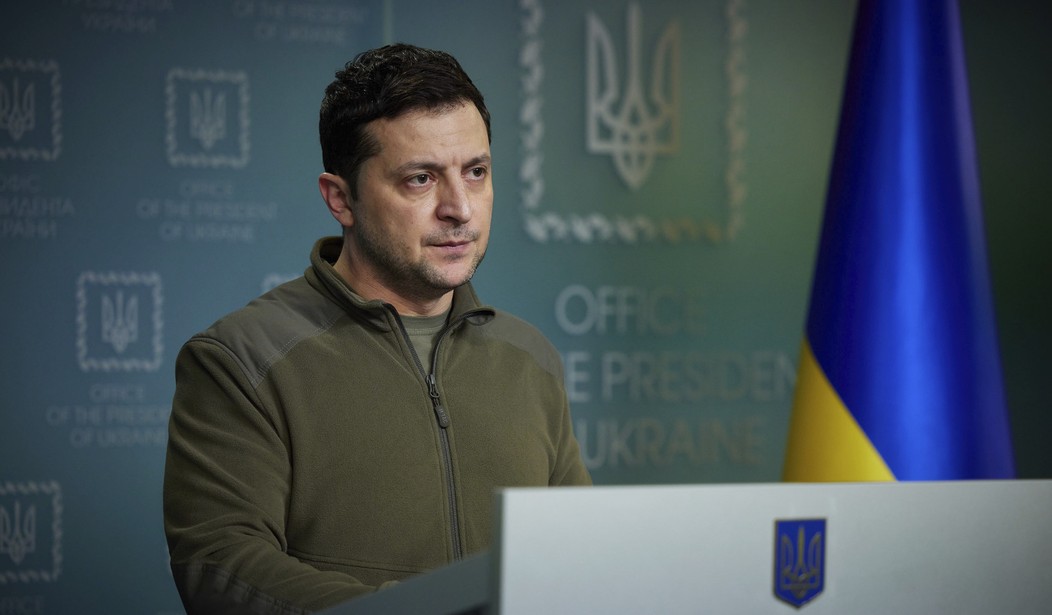
Russia versus Ukraine: It's an unexpected "near-peer" war.
Eleven months of combat and suffering demonstrate that on the battlefield Ukraine can defeat a Russian invasion then launch limited but sustained (and thus effective) local counter-offensives.
As Month 12 begins, satellites photograph trenches and shell holes, wire services report artillery slugfests and cable TV experts speculate on new attacks when the Russians get more soldiers, when the Ukrainians deploy Leopard 2 tanks.
In other words, the war has become a bloody stalemate between two armies that refuse to lose.
Feudal "peers" are fellow aristocrats. In geopolitics, "near-peer" is military, diplomat and bureaucrat lingo for two rival nations or alliances in which the defense and diplomatic establishments are "nearly equal" (have equivalent capabilities); one wages war against the other.
In other words, if bullets fly both combatants are capable of sustaining the fight. There will be no easy victory.
However, the war Vladimir Putin launched was supposed to be a superpower slam dunk, battlefield evidence of Russian superpower status, war-fighting skill and revived national confidence.
Putin, his Kremlin insiders and yes-men intelligence operatives convinced themselves Russian military power would quickly overwhelm Ukraine.
The slam dunk would send two messages: NATO, we're back... also, China... don't think about retaking Siberia.
What produced Putin's slam dunk delusion?
Bitter history supports this psychological explanation: Dreams of restoring imperial glory distort rational calculation, especially among dictators. Two examples: Adolf Hitler and Saddam Hussein. Putin believed -- and likely still believes -- his own "reclaiming our great Russian empire" propaganda schtick.
Recommended
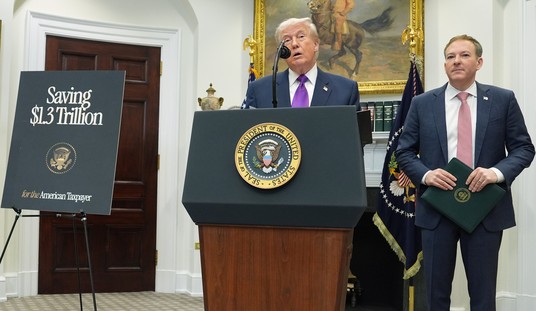
Recent history gave Putin a reason to underestimate Western opposition. In 2014 Russia invaded and annexed Crimea. For the first time since WWII military aggression in Europe by a major power led to political annexation and territorial expansion. The Kremlin paid a relatively light political and economic price for the crime. So why not bet Ukraine would quickly succumb to a massive strike and the decadent West would accept it?
The Biden administration's Afghanistan debacle signaled weak Western leadership. Did Putin think he had his chance?
In February 1990 Saddam Hussein thought he had a chance he had to take. In a speech he delivered that month in Amman, Jordan, he stated the (global) situation had "changed in a dramatic way." America was "fatigued" and would fade, but "throughout the next five years," the U.S. would be unrestricted. Defeating America entailed scraping the scar of Vietnam and threatening huge U.S. casualties. "Fatigue" and domestic self-recrimination would stall U.S. power. "The big," Saddam said, "does not become big, nor does the great earn such a description unless he is in the arena of comparison or fighting with someone else on a different level."
Saddam counted bullets, troops and tanks. He had plenty. Plus, he'd be fighting on his own border.
Putin, with a perceived superiority in troops and tanks and the war on his border, took the fight to a different level.
In war, the numbers of troops and weapons matter, and Russia has sheer numbers. Technology matters -- but combat has revealed flaws in Russia's "modernized" weapons. After 2014 Ukraine sought and acquired sophisticated anti-tank and anti-aircraft weapons optimized to defeat Russian armored columns and trained its troops to use them.
Moreover, Ukrainian troops were trained to act on their own initiative -- to fight a dispersed ground war and destroy Russian armored columns piecemeal. The situation differs from Finland 1940, but the basic concept is the same.
Russia has numbers, but the Russian Army fights "top down." Individual initiative is politically suspect.
Like Finland 1940, Ukraine has proven to be a "nation in arms" -- a warrior state with the will to fight. Nations in arms know what they fight for -- which is usually their very existence.
Battlefield valor, civilian resistance and an articulate and media-savvy leader who didn't flee despite the Biden administration's suggestion he do so: with this inspirational combination little wonder Ukraine attracts and maintains allies.
Russia's juggernaut has become a trench army confronting a warrior state backed by wealthy allies providing weapons that work.
The bullet and tank counters are adjusting their calculations.






Join the conversation as a VIP Member