





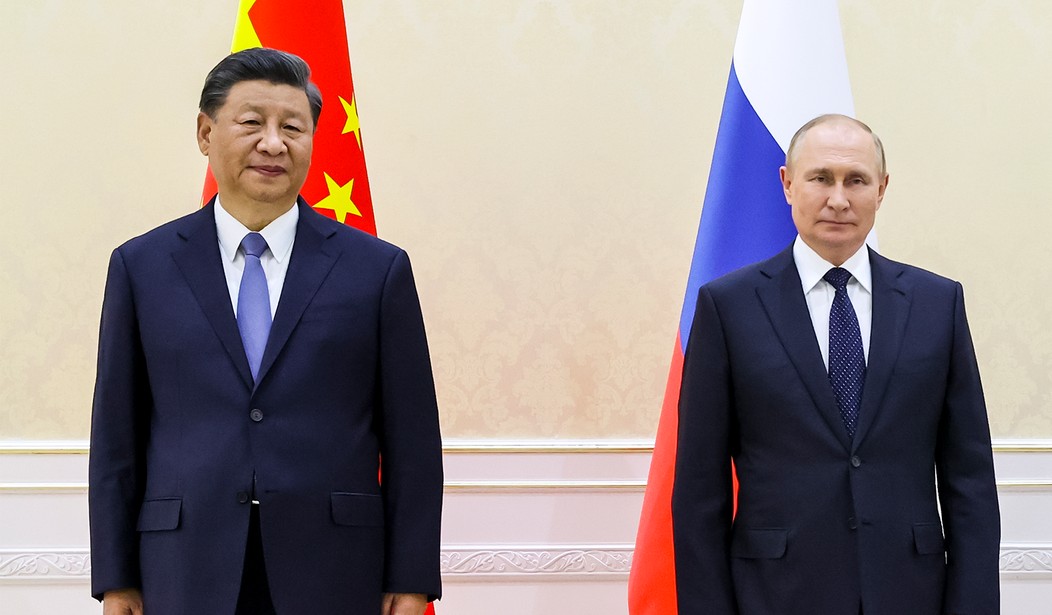
After several years of slowly drifting apart, Russia's war against Ukraine has greatly boosted the transatlantic relationship between Europe and the United States. After one year of this brutal war at Europe's doorstep, the transatlantic community finds itself more united than since after World War II, which came as a surprise to many, including Russian President Vladimir Putin himself, as he had believed the West would not be able to stand together.
Transatlantic relations under President Trump were challenging and have not always been smooth under President Biden, given his chaotic withdrawal from Afghanistan. Now that the appreciation for the value and importance of the transatlantic relationship is finally reaching new heights on both sides of the Atlantic, it is time to bridge the divide on another crucial issue: The West needs to work together to be able to effectively compete with China and stay tech leader of the world.
America's technology industry is leading global innovation and is the most essential and powerful weapon to compete with China. It is of the utmost importance to the West to ensure that this industry remains strong and capable of launching innovative breakthrough technologies.
Unfortunately, the European Union (E.U.) has been waging war against American tech companies for years, using unfair tactics to cripple them, limiting their growth and ability to compete. From Digital Services Taxes (DSTs) to the Digital Markets Act, Digital Services Act, GDPR, and the Data and A.I. Act, the E.U. has been relentless in its pursuit of stifling innovation and imposing hefty fines on these companies.
One of the most egregious ways the E.U. and its member states have been discriminating against American tech companies is by imposing Digital Services Taxes (DST). These taxes levied on revenue generated by technology companies are blatantly discriminatory. They unfairly target American companies. The E.U. has claimed these taxes are necessary to level the playing field. In reality, they are simply a way for the E.U. to generate revenue while punishing American companies for being successful.
Recommended

Furthermore, the E.U.'s Data and A.I. Act is yet another example of how the E.U. discriminates against American tech companies. This act imposes strict regulations on data usage, A.I. development, and algorithmic decision-making. While these regulations may seem benign at first glance, they are designed to hinder American companies' ability to compete in the European market. The E.U. effectively attempts to create a "fortress Europe" by preventing American companies from accessing European markets and developing new technologies.
In addition to these regulations, the E.U. has also imposed heavy antitrust fines on American tech companies. Google, in particular, has been hit with multiple fines totaling over €8 billion for alleged anti-competitive behavior. While the E.U. claims that these fines are necessary to ensure fair competition, they are yet another example of the E.U.'s discriminatory behavior towards American companies.
A recent CSIS publication, "Implications of the European Union's Digital Regulations on U.S. and E.U. Economic and Strategic Interests" determined that Europe's approach with their Digital Markets Act, Data and A.I. Act and other regulations "risks tilting the playing field in favor of Chinese competitors" and "enabling China to run parts of Europe's critical infrastructure."
But the Biden-appointed head of the Federal Trade Commission, Lina Khan, and the Department of Justice believe that the E.U.'s approach to regulating tech companies is the model to follow. They are actively colluding with the European Union and other foreign authorities to dismantle the U.S. technology system while turning a blind eye to China's tech abuses.
And when E.U. leadership voiced complaints about the effects of President Biden's Inflation Reduction Act, he immediately set up a US-EU Task Force to address European concerns and is now willing to award American tax grants to foreign companies in the E.U. It's reported that a pool of "$369 billion worth of subsidies" is up for grabs. E.U. President Ursula von der Leyen hopes to secure the European Union a trade partner status, placing the E.U. on par with Canada and Mexico.
While intensified integration, collaboration, and trade between the U.S. and E.U. is critical to being competitive with China, the U.S. should now use the revived transatlantic relationship to address areas where E.U. regulations and taxes are discriminating against U.S. companies.
The United States, the European Union, and all allies and partners worldwide have a responsibility to immediately end all short-sighted, petty measures like DSTs and the Digital Markets Act that aid the Chinese tech sector and therefore stop Xi's goal of global dominance in its tracks.
The transatlantic community was able to unite against the threat from Russia, and they now must do the same to stop communist China.








Join the conversation as a VIP Member