




Last week, both David Broder, The Washington Post's venerable and authoritative political voice, and Chuck Todd, NBC's new important political voice, declared President Barack Obama's honeymoon over.
Although almost every new American presidency is launched with renewed hope and optimism for both the president and the nation (Abraham Lincoln's being a conspicuous exception in 1861), a time comes when the public and the president's party begin to assess whether they made the right choice.
Are the public's expectations of the new president being met? Are the many promises that every candidate for president makes -- and his apparent personal attributes -- hanging together and beginning to form a potentially coherent and successful administration of government?

It is a commonplace of Washington politics that it is not news when the other party attacks, but it is noteworthy when there is opposition within a president's own party.
Last week, on two of his three major domestic legislative initiatives -- health policy and financial re-regulation -- strong Democratic Party congressional doubts (and, on some important details, opposition) emerged.
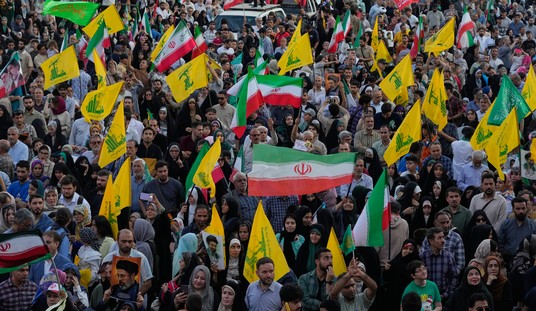
Abroad, the extraordinary and heroic rising of the Iranian people and the predictable but deeply disconcerting nuclear provocation of the North Korean regime are beginning the process of coloring in the public picture of the president's foreign-policy methods and effectiveness. Last week, public expectations and early presidential performance began to separate a little.
I don't think the Obama team would contradict me if I suggested that at the heart of Mr. Obama's winning campaign was his image as a progressive, idealistic, highly intelligent and masterfully competent man. Hopes for a "post-racial" society also motivated votes for Obama from both Democrats and Republicans. These images were projected by the campaign to contrast (in the campaign's view) with the then-incumbent Republican president.
In the weeks leading up to last week, the president disappointed many of his most intense supporters on the left by backpedaling on war-, civil liberties- and transparency-related issues, while Republican opposition increased as he made his first Supreme Court nomination on an identity-politics basis and advanced his intrusive industrial and regulatory policies.
His early predictions of unemployment rates have sadly been breached by events as the interest rates on Treasury notes needed to finance the president's proposed deficits are going up steadily -- thus driving up mortgage rates and driving down housing recovery.
Those same left-of-center supporters last week were very disappointed with what they see as his excessive solicitude to big Wall Street interests in his financial deregulation proposal, while the financial institutions that contributed handsomely to his campaign see the proposed regulations as too burdensome and bad for a growing economy.
Obama responded to the Iranian regime's murderous suppression of its public with a defensible (although I strongly disagree with it) but Kissingerian realpolitik calculation. The purported logic of that position sits uneasily on the consciences of many of his liberal supporters -- who previously had heard the president's high moral and idealistic tone -- and many conservatives, as well.
It is an unnatural and probably un-useful political act when a liberal Democratic White House cites the approval of its historic foreign-policy bête noire -- in this case, Henry Kissinger -- as justification for the president's foreign-policy plays -- in this case, on Iran.
But at the crux of last week's political consternations was the hard-to-avoid implication that the president's domestic agenda -- particularly his signature health policy plans (which also have been the Democratic Party's signature domestic issue) -- was running headlong into both economically and politically intolerable deficits and national debt accumulation.
The Congressional Budget Office's preliminary cost and deficit calculations of the president's overall budget and specific health proposals have sent tremors through the Democratic Party establishment, and the White House is feeling the vibrations.
Not counting the estimated $1.6 trillion 10-year cost for part of the president's proposed health policy changes, the CBO predicts that the administration's budget proposal would increase the national debt by $9.3 trillion over 10 years -- almost twice the total national debt from George Washington to George W. Bush. Even the president's own Office of Management and Budget director, Peter Orszag, has stated that a continued deficit that is more than 3.5 percent of gross domestic product is "unsustainable." The president's budget is more than 4 percent of GDP.
Moreover, to advance the president's climate change legislation (the third of his big three legislative initiatives), Rep. Henry Waxman, chairman of the House Energy and Commerce Committee, has had to cut way back on its early-years revenue-raising provisions in order to induce more support among Democratic congressmen -- thus further increasing future deficits beyond even the current budget proposal.
Though the president remains broadly admired, with his personal-approval polling numbers at about 60 percent, his policy proposals are becoming less popular with the public as they are emerging in more detail. And as even those policies that are popular appear to be unaffordable, the president's Democratic senatorial allies are focusing more on their responsibilities as senators and less on their party loyalties to a Democratic president.
Although the president is looking somewhat inconsistent and less effective while his policies are looking less plausible, it's early, and legislative success may yet be the president's this season. But it is not too early for Democratic Party nerves and their ending of the presidential honeymoon.






Join the conversation as a VIP Member