



In the Middle Ages, when a young prince suddenly and prematurely became king, the royal court, the church leadership and other senior aristocrats would scrutinize his every word and habit for signs of what kind of mind would be deciding their country's fate and their personal prosperity and safety. Today, around the world, President Barack Obama's every word, every action, every inaction is being likewise scrutinized for similar reasons.

Prior to the November election, the only evidence we had of Mr. Obama's managing style -- and that evidence was indirect -- was the management of his campaign, which was brilliant. But whether he was its active manager or merely took guidance from a shrewd Svengali remains to be known.
Since the election, we have begun to get hints of his management style in four items Mr. Obama himself has described as of the highest priority to him -- and thus, one presumes, items to which he would have given his personal attention: Cabinet selection, closing Gitmo, the stimulus package and bipartisanship.
Regarding the Cabinet selection, he famously said he "screwed up." But from a management perspective, the unanswered question is: How did he "screw up"? Did he actively design the failed vetting process and actively assess the various negative pieces of information and fail to see their significance? Or did he "screw up" by letting others design the failed system and assess the data inflow? The former would show poor substantive judgment. The latter would show he wasn't paying sufficient attention to a presumably vital matter. We don't know yet which kind of "screw-up" it was.
The second item, President Obama's performance at the Gitmo executive order, provided brief but revealing insight into the president's personal involvement in vital decision making. He had campaigned hard on closing Gitmo. His first public signing as president was that executive order to close it down. The central issue of Gitmo's closing was and is: What do we do with the dangerous inmates? President Bush kept it open primarily because his administration couldn't figure out an answer to that question.
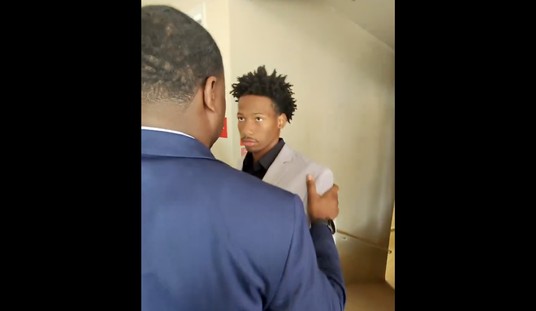
Thus, it was breathtaking that at the signing ceremony, President Obama didn't know how -- or even whether -- his executive order was dealing with this central quandary.
President Obama: "And we then provide, uh, the process whereby Guantanamo will be closed, uh, no later than one year from now. We will be, uh. Is there a separate, uh, executive order, Greg, with respect to how we're going to dispose of the detainees? Is that, uh, written?"
White House counsel Greg Craig: "We'll set up a process."
To be at the signing ceremony and not know what he was ordering done with the terrorist inmates is a level of ignorance about equivalent to being a groom at the altar in a wedding ceremony and asking who it is you are marrying.
Once again, in the third item -- the stimulus process -- his lack of personal involvement in its design is curious. He recently said (incorrectly, I believe) that his presidency will be judged only on whether he fixes the economy or not. Thus, as he has identified the stimulus as essential to the recovery process, his willingness to let House Speaker Nancy Pelosi and Senate Majority Leader Harry Reid design a bill that, even now that it's passed, Mr. Obama has continued to criticize as needing improvement (on bank executive compensation) leaves one puzzled as to why he didn't use his currently vast political clout with his own party allies to shape a bill more to his liking.
The final item to examine here is his repeated campaign and post-campaign commitment to bipartisanship. While he was gracious in inviting leading Republicans to the White House for a Super Bowl party, he permitted his congressional allies to completely shut out (except for the three collaborators) all Senate Republicans and all House Republicans, including their leadership and the GOP's titular leader, Sen. John McCain, in the drafting of the bill and the final conference committee.
He says he wants bipartisanship. Why would he permit his congressional allies to kill any hope of bipartisanship by their egregious conduct?
I can think of four possible explanations for this almost unprecedented presidential detachment from the decision making of policies the president publicly declared to be vital to the country and his presidency:
1) He is a very, very big-picture man, and he delegates decisions even on the central points of vital issues.
2) For tactical reasons, he decided these matters were not worth using up political chits.
3) He is either hesitant or unskilled at management, and he let matters drift until it seemed too late to intervene personally.
4) Or his personality type leaves him surprisingly uninterested in things that aren't personally about him.
Whatever the reason, this level of presidential detachment from high policy decision making is dangerous in a White House that has so many czars and other senior players (the West Wing staff is reputed to be more than 130 -- about double the usual number) combined with emissaries and strong-willed Cabinet secretaries. It may well lead to what has been called (regarding another country's government) "the immanent structurelessness to the running of the state."



Join the conversation as a VIP Member