






Want to know what troubles our American health care system?
Consider the thoughts of psychiatrist and Nazi death camp survivor Viktor Frankl.
After spending time in our country as a visiting professor, he saw the looming dangers of freedom without responsibility. He observed: "Freedom is in danger of degenerating into mere arbitrariness unless it is lived in terms of responsibleness. That is why I recommend that the Statue of Liberty on the East Coast be supplemented by a Statue of Responsibility on the West Coast."
We as Americans accept that health care is an individual right, even if someone else is paying for it. The truth that every personal right must have an accompanying personal responsibility is now lost in our self-absorbed materialistic culture. We have only rights, entitlements if you will.

Few have any idea what the costs are of the health care they receive. Many get it tax subsidized through their employer, many get it through Medicare in a now bankrupt Ponzi scheme in which those working pay taxes to pay for care of those retired, and more than sixty million Americans do not pay at all through Medicaid and SCHIP programs.
Hundreds of millions receive health care the costs of which have little or nothing to do with their own personal realities and then we wonder why those costs are out of control.
Now Ted Kennedy has introduced his solution to all of this, which also captures the thinking of our president. Set up a new government health care plan, subsidized of course by taxes, and call this choice because you are not forced to take it (although you are forced to pay taxes for it).
As Senator Kennedy announces more free health care -- meaning one group of Americans will get what another group of Americans will pay for -- the disconnect between who gets health care services and who pays for them will grow even greater.
Costs will be controlled, according to Senator Kennedy, by setting up a new army of bureaucrats who will get rid of proverbial "fraud and abuse," will decide for doctors how to treat their patients, and will decide for us how we should behave by dictating the preventative measures we must take for our own good.
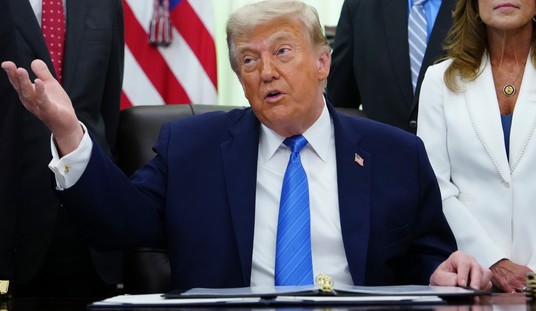
To put on a show for what this all might look like, a few weeks ago President Obama "invited" representatives from the major sectors of the health care business -- doctors, insurers, hospitals, pharmaceutical firms, medical device manufacturers -- to the White House to tell us all how much they would commit to lowering costs.
The result was a supposed commitment by these groups to cut costs by 1.5 percent per year.
Aside from the fact that shortly after the White House announcement, industry representatives began issuing statements denying that they made any such commitment, let's assume it's accurate. That these groups do not know how to run their own businesses and that they can deliver the same products and services annually for 1.5 percent less if the president threatens them.
At our annual health care bill of about $2.5 trillion dollars, savings of 1.5 percent would be about $40 billion.
Let's consider how much of our $2.5 trillion health care bill are costs resulting from behavior that individuals choose.
Googling around and totaling up, I come up with about $240 billion, about ten percent of our total health care bill. This is roughly the total reported health care costs associated with obesity, drug and alcohol abuse, sexually transmitted diseases, HIV/AIDS and sedentary life styles.
Worth noting is that these occur disproportionately in low income groups who get their health care free. More than half our spending on HIV/AIDS, for example, is out of Medicaid. Can it be accidental that the huge health care costs related to lifestyle issues are most pronounced where individuals do not personally bear the costs of how they behave?
How can our health care problems be solved by more entitlements and bureaucrats when this is what is causing the problem to begin with?
Viktor Frankl had it right. At the heart of the solution for our health care crisis is personal responsibility. This means more freedom and more markets.







Join the conversation as a VIP Member