



All U.S. presidents start out with the premise that their administration will behave in a bipartisan manner.
They all pledge to be a conciliator – until they have to reconcile the irreconcilable.
“Just ask George W. Bush how that all worked out,” says the Republicans’ former House Majority Leader Tom “The Hammer” DeLay.
As governor of Texas, Bush had a near-flawlessly congenial relationship with Democrats in the state legislature. That was not the case when he went to Washington.

As Barack Obama prepares to take the oath as president with a largely-Democratic Congress covering his back, will he consider the olive branch offered by Rep. John Boehner, the Republicans’ House Minority Leader?
“When our new president extends his hand across the aisle to do what is right for our country,” Boehner said, “Republicans will extend ours in return.”
Obama ran on changing Washington and has sent signals that he wants to govern from the center. But he cannot do that without the cooperation of congressional leaders such as House Speaker Nancy Pelosi or Senate Majority Leader Harry Reid.
That means he must be willing to say “no” from time to time to maintain centrality, especially on “heartland” issues such as the Employee Free Choice Act, the Fairness Doctrine, oil shale and off-shore drilling.
“Hands across the aisle can and has worked in the past,” says St. Louis University law professor Joel Goldstein. “One of the most successful practitioners of that style of legislating was Sen. Edmund Muskie (D-Maine). Muskie's greatest of many legislative accomplishments were the Clean Air Act of 1970 and Clean Water Act of 1972, both of which initiated sweeping new regulation and both of which were crafted and passed by huge bipartisan margins.”
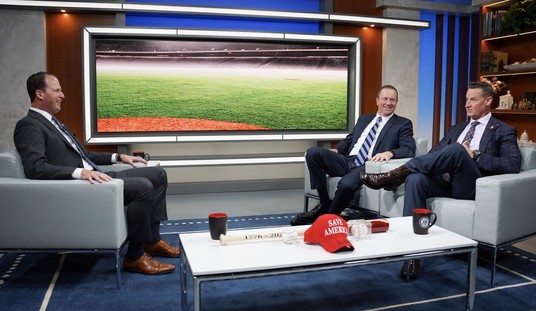
Bipartisanship requires a commitment on both sides to addressing and solving problems, not simply posturing about issues. It requires a intensive dialogue, not a my-way-or-the-highway approach.
It also requires credit being shared – and that’s going to be the tricky part, as lesser-known House and Senate members risk being stampeded by the more prominent ones in the race to talk to the cameras after any debate under the dome.
The key to bipartisanship and consensus is listening, because each member of Congress brings his or her district's concerns to the floor (along with a desire to get re-elected).
“It is definitely going to be vigorous out there,” says Rep. Mike Doyle, D-Pittsburgh. “But I can see legislation where there will be comfortable bipartisan support, like the stimulus package and an energy bill.”
Doyle adds that Democrats do not have a monopoly on good ideas and would be foolish not to be inclusive with Republicans.
He thinks the “vigorous” part will come in debates over health-care reform, which has so many moving parts that intra-party fights can be expected on both sides.
Political scientist Bert Rockman wonders how long today’s bipartisan love-fest will last because “Obama is torn between the need to get a buy-in without having sold-out.”
Rockman remembers when many activist Democrats thought Bill Clinton did more selling-out than necessary as president.
Clinton had little choice: Most of his term was spent working with a Newt Gingrich-led, Republican-controlled Congress.
Obama does not face such a circumstance.
“The American tradition is that bipartisanship only lasts a short time unless there is an extraordinary circumstance, such as World War II,” says political scientist Larry Sabato.
Yet even during World War II, politics were suspended just beyond the water’s edge – not domestically. Elections were held on schedule, and debates in Congress were vigorous. That’s why John McCain’s campaign “suspension” at the onset of today’s financial crisis probably will be seen as his “jump the shark” moment, when he lost presidential credibility.
Elections matter, and Obama and a fully-loaded Democratic Congress both won comfortably. Right now, Americans view the economy as a major crisis.
If they perceive that either party is not behaving seriously, or is dragging its feet for political spectacle, then bipartisanship will take a knee – and Americans’ reaction will be felt in the next election.






Join the conversation as a VIP Member