




Pennsylvania voters were the center of the presidential political universe this year during both the Democratic primary and the general election.
Their concerns and culture allowed Hillary Clinton to get her groove back in the spring and, in the fall, became the battleground where John McCain made his last stand.
Now two key Pennsylvania races -- for a U.S. Senate seat held by Republican Arlen Specter, for an open seat for governor now held by Democrat Ed Rendell -- are up for grabs in 2010, although the jockeying already has begun.
Eight years ago, Pennsylvania had two Republican U.S. senators, Specter and Rick Santorum, with Republican Tom Ridge as governor. Its congressional delegation and state Legislature were also solidly GOP.

Since then, the governorship, one Senate seat and a majority of the congressional delegation have shifted to Democrats. The only thing left in GOP hands is the state Senate.
“Being out of power can be good for political parties,” says Rob Maranto, a former Villanova political scientist. “It forces you to work harder to figure out what you really need to focus on, as opposed to what is superfluous, and it forces you to find new and more capable leaders.”
In the U.S. Senate battle, Specter still feels the sting of his tough 2004 primary challenge from U.S. Rep. Pat Toomey. Specter won -- but by less than 2 percentage points. Toomey, now president of The Club for Growth, remains noncommittal about a rematch.
Chris Matthews, the anchor of MSNBC’s “Hardball” program, tops the list of potential Democrat challengers; word is that he plans to decide in the early days of the new year. Rep. Patrick Murphy, a Bucks County “Blue Dog” is considering a run; state Rep. Josh Shapiro, a rising Democrat star and Philadelphia-area reformer, also is rumored to be considering it.
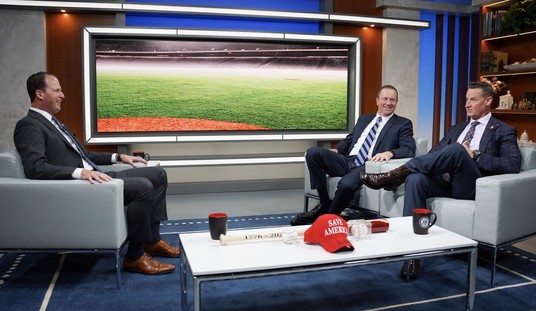
“For the Dems, a lot hinges on Chris Matthews, who has name recognition but is a nonstop talker,” says Maranto. His guess is that the party’s favorite may end up being Josh Shapiro, if he can find a way to out-fund-raise Matthews: “In any event, if Specter is beaten in the Republican primary -- an outcome that is at least 50/50 -- this is likely to become a Democratic seat.”
Thanks to the state’s two-term limit, Rendell will leave an open governor’s seat.
Pennsylvanians have a long history of switching parties every eight years, which in theory gives Republicans an edge.
On the GOP side, state attorney general Tom Corbett tops the list to succeed Rendell, followed by former U.S. attorney Pat Meehan and Rep. Jim Gerlach. No sign so far of a return by former Steeler and 2006 Republican gubernatorial nominee Lynn Swann.
The top Democrats are Allegheny County executive Dan Onorato, state auditor general Jack Wagner and Kathleen McGinty, former head of the state environmental protection department.
Pennsylvania’s 2010 races will come at a key time for President Obama; they will mark his first midterm election, the first real electoral test of his political tentacles.
If Obama is successful, then he could solidify Pennsylvania’s blueness. If he is on shaky ground, then all shades of red and purple could predominate.
“I think Pennsylvania remains a competitive state that leans blue but which cannot be taken for granted,” says former University of Pittsburgh political scientist Bert Rockman.
In the run-up to the November election, everyone around the country learned that Pittsburgh and Philadelphia served as Democratic bookends to the state's conservative Republican center and northern tier. Yet if you look closely at 2008's results, the more accurate portrayal now is of Democratic Philadelphia and her collar counties in the east with virtually everything else to the west being the Republican heartland.
In 2008, Clinton and McCain both staked everything on Pennsylvania. Obama stumbled badly there in the spring but by the fall won it handily -- which might make political-thinkers believe the state is now firmly blue.
Maranto disagrees: “GOP prospects are pretty good. Pennsylvania voters are generally leery of giving all the keys to the kingdom to either party; with Rendell having the governorship for eight years and the Democrats in control in Washington, it makes it easy for a Republican to run as someone assuring the separation of powers, or else run as the outsider.
“Either way,” he says, “it should make the Republicans highly competitive in Pennsylvania -- and lots of other states.”




Join the conversation as a VIP Member