




If I told you that a major rock-n-roll celebrity had thrown his hat into the political ring, you’d probably reach for your wallet. Or your revolver.
The candidate is Krist Novoselic. He may be a rock legend, but he lives in the country, grows vegetables and raises chickens, and belongs to the local Grange.
Besides, he’s running for the County Clerk position in Wahkiakum County, Washington. The county boasts less than 4,000 citizens. If he wins, he can’t do much harm.
Especially since he pledges to resign, if elected.
What’s going on here?
Krist Novoselic, bassist for the late, great grunge band Nirvana, and, until recently, bassist for the punk band Flipper, doesn’t exhibit your standard celebrity shallowness. When we hear of some Hollywood actor or rocker going political, we think “limousine liberal.” But for Novoselic, politics is not flash. Or power.
He’s more interested in procedural issues.
He wants to save our democracy.

He’s been a prominent proponent of Instant Runoff Voting (IRV), a fascinating — and promising — reform that aims to increase voter influence on elections and break the hold of insiders on the political process. Novoselic believes that IRV would increase voter participation and interest in elections.
So, though he hails from a left-of-center segment of the political spectrum, he’s someone whose way of thinking I can understand. As I see it, procedural issues are key. Ballot access, initiative and referendum rights, term limits — these reforms have been my main interest for years. I support them, in part, for the reasons Novoselic supports IRV.
I met him once, at a FairVote conference. He’s a tall, quiet man with a trimmed beard and dark, thinning hair. I regret I have not read his book, Of Grunge and Government. I have it on good authority, though, that the book deftly moves from his participation in grunge rock performance and culture to his participation in political activism.
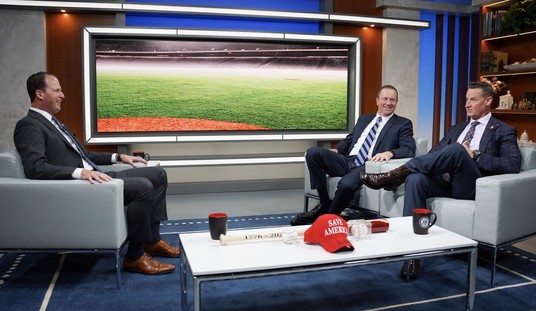
And now he’s running for county clerk. Why?
Well, the key to it all is his party. Novoselic is a leader in the Democratic Party of his little rural county, but he’s not running as a Democrat. He selected the Grange Party as his “party of preference.”
Here’s the rub: The Grange does not run candidates. It’s nonpartisan. And his local Grange did not approve his candidacy.
Reading Novoselic’s prepared statement, voters learn that though the Grange may spend time and money to refute his candidacy in normal public venues, under Washington state law the Grange cannot control his party preference on the actual ballot — “the only place,” Novoselic notes, “a voter is guaranteed to see my claim.”
There is a long story behind all this. Some time back, Washington state’s popular open primary system was declared unconstitutional. Parties are private organizations, the Supreme Court reasoned, and had an interest in controlling who may vote in their primaries.
So then-Governor Gary Locke, backed by the Grange, supported an initiative, I-872, that would allow something like open primaries. The measure passed and ended up making the party system pretty much moot — among I-872’s several features was to allow candidates to declare a “party preference” without so much as a by-your-leave from the party itself.
Obviously, peoples’ association rights have been weakened, not strengthened — thus running up against the constitutional issues that led to the measure in the first place.
Novoselic could have run as anything. The law is that vague. He would have raised no concerns — and therefore made no point — had he run as a Democrat. Had he run as a Republican, or as an American Legion candidate, he might have stirred up actual anger. But since he is, himself, Master of the local Grange, he thought the “Grange Party” preference made the most sense.
The whole thing is a stunt — as he freely admits. Novoselic is proud of his Grange associations, but he wants to spur interest within the Grange, and outside it, to change the law.
Novoselic’s stance in favor of free association is on target: “As a strong believer in private association, I oppose the way the state has implemented I-872, the Grange-sponsored Top Two primary . . . My issue is with the way candidates can appropriate the name of a private group. . . .”
Good. Parties should have the freedom to associate with only those candidates they desire. But what to put in place of the current Washington law?
Novoselic suggests an “unassembled caucus,” sometimes called a “firehouse primary,” as the means to select party candidates.
That’s a caucus that runs for, say, a day, with people showing up at a polling place and casting a ballot. The difference between this and a regular primary is that the polling place is controlled — and paid for — by the parties themselves, not the taxpayers.
The I-872 system is called the “Top Two Primary” because the top two candidates from the August primary go on to the general election in November. Since the two could both be from the same party, the breadth of choice in the general election can and does decrease . . . hardly great for the electorate. Fewer options.
The best thing would be to replace the August election with firehouse primaries. Oddly, Novoselic isn’t suggesting that, apparently as a compromise with current, Grange-supported law. He officially supports the firehouse primaries plus the two elections.
Why two elections? Consider what happens in a single election with private primaries and multiple (more than two) candidates, and there’s no majority, just a plurality outcome. The more candidates in a race, the more likely that a generally despised candidate could win a plurality of the vote. And thus, in first-past-the-post elections, win the seat.
That’s the point of a runoff election, to ensure something like majority support. That was part of the thinking behind the current Top Two system in Washington state, to accommodate a runoff.
But this is where Novoselic’s Instant Runoff Voting makes better sense. IRV would allow a recounting of ballots without holding a costly runoff election. This can be done because each person would vote, on his or her ballot, for the candidates in ranked order of preference. Then the ballots for the lowest vote-getters would be resorted, by their next-ranked preference, to see which of the top vote-getting candidates gets more popular support.
IRV saves the cost and trouble of a second election and gives voters more choice. My only worry about such reforms is that they would lessen the oppositionalism in current minor-party politics. A Green Party candidate would not necessarily take votes away from a Democrat. In fact, by attracting more voters to the polls who might likely support the Democrat as their second choice, the Green candicacy might help the Democrat.
Something similar might happen between Libertarians and Republicans.
Oppositionalism has its advantages. It can whack complacent major-party folks upside the head. Something they often need.
On the other hand, IRV takes away the “wasted vote” argument, and it might be that, someday under such a voting system, a new party could arise.
That would really upset the current insiders.
As of now, the party leaders in Washington state are all for Novoselic’s run. He seems to be on “their side.” But if Novoselic’s full agenda were to be instituted, they might quickly change their tune.
In any case, it is good to see a celebrity focus both on local office and on procedural matters that are, in actual fact, the lifeblood of a democratic republic.
That’s the best way to “rock the vote” . . . as well as the establishment boat.






Join the conversation as a VIP Member