





Thank God for Barack Obama. Until his "More Perfect Union" speech last Tuesday, it seems it never occurred to anyone that America needed to talk about race.
"Maybe this'll be the beginning of a conversation," Wall Street Journal columnist Peggy Noonan proclaimed on "Meet the Press." The Chicago Tribune reported that "many voters, black and white, say they were moved by Obama's speech ... which they see as a long-awaited invitation to begin an honest, calm national dialogue about race." Newspaper editorial boards agree. In the words of the San Diego Union-Tribune: "Prodding Americans to confront their racial differences is, by itself, an accomplishment of historical proportions."
Because so many agree on this brilliant new strategy to heal our national wounds, I can only assume that I'm the one missing something. But when one luminary after another smacks his forehead like someone who forgot to have a V8 in epiphanic awe over the genius of Obama's call for a national conversation on race, all I can do is wonder: "What on Earth are you people talking about?"
"Universities were moving to incorporate the issues Mr. Obama raised into classroom discussions and course work," the New York Times reported within 48 hours of the speech.
Oh, thank goodness Obama fired the starter's pistol in the race to discuss race. Here I'd been under the impression that every major university in the country already had boatloads of courses dedicated to race in America. I'd even read somewhere that professors had incorporated racial themes into classes on everything from Shakespeare to the mating habits of snail darters. I also had some vague memory that these universities recruited black students and other racial minorities, on the grounds that interracial conversations on campus are as important as talking about math, science and literature. A ghost of an image in my mind's eye seemed to reveal African-American studies centers, banners for Black History Month, and copies of books like "Race Matters" and "The Future of the Race" lining shelves at college bookstores.
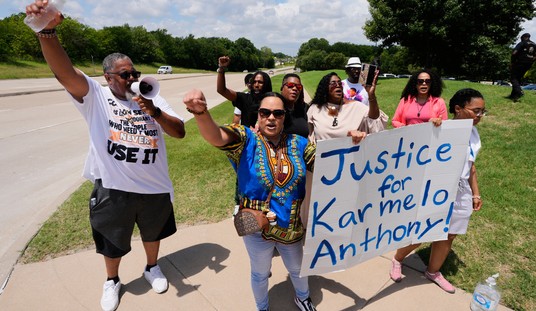
Were all the corporate diversity consultants and racial sensitivity seminars mere apparitions in a dream? Also disappearing down the memory hole, apparently, were the debates that followed Hurricane Katrina, Trent Lott's remarks about Strom Thurmond, the Supreme Court confirmation hearings for Clarence Thomas, the publication of "The Bell Curve" and O.J. Simpson's murder trial. Not to mention the ongoing national chatter about affirmative action, racial disparities in prison sentences and racial profiling by law enforcement.
And the thousands of hours of newscasts, television dramas and movies - remember films such as 2004's Oscar-winning "Crash"? - dedicated to racial issues? It's as if they never existed.
I feel like one of the last humans in an "Invasion of the Body Snatchers" movie in which all of the pod people are compelled by some alien DNA to pine continually for yet another "conversation" about a topic we've never stopped talking about. And if I just fall asleep, I, too, can live in the pod people's dream palace, where every conversation about race is our first conversation about race. Snatching me from any such reverie was this masterful understatement from Thursday's New York Times: "Religious groups and academic bodies, already receptive to Mr. Obama's plea for such a dialogue, seemed especially enthusiastic."
No kidding. Janet Murguia is one such enthusiastic person. She hoped, according to the Times, that Obama's speech would help "create a safe space to talk about (race)."
Who's Janet Murguia? Oh, she's just the president of the National Council of La Raza, which, despite what they'll tell you, means "the race." Maybe it's just me, but aren't most of the people begging for a "new conversation" on race the same folks who shouted "racist!" at anyone who disagreed with them during all the previous conversations?
This disconnect between rhetoric and reality is the kind of thing one finds in novels by Alexander Solzhenitsyn or Milan Kundera. To my un-rehabilitated ear, Murguia sounds like an old Soviet apparatchik saying that what the USSR really needs is an open and frank conversation about the importance of communism.
Why do voluptuaries of racial argy-bargy want yet another such dialogue? For some, it's to avoid actually dealing with unpleasant facts. But for others - like La Raza or the college professors scrambling to follow Obama's lead - when they say we need more conversation, they really mean their version of reality should win the day. Replace "conversation" with "instruction" and you'll have a better sense of where these people are coming from and where they want their "dialogue" to take us.





Join the conversation as a VIP Member