




President Bush will leave office on Tuesday, and a majority of Americans aren't disappointed to see him go. The country is experiencing a painful recession, enduring an unpopular — albeit successful — war, and people are generally eager to allow a new team to assess and tackle the nation's mounting problems. President Bush also appears ready to relinquish the heavy burdens of the presidency and quietly enter private life back in Texas. Liberals have been literally counting down the days to January 20, 2009 since Bush's re-election victory, and grumbling from the Right has grown steadily louder as the Republican President failed to live up to conservative principles on a number of occasions. In short, precious few people will miss President Bush. But I will.

I had the extraordinary opportunity to serve as a White House intern during Bush's second term. During my short time there, I was struck by the profound decency of the President, as well as the professionalism, dedication, patriotism and sacrifice displayed by his staff. When I would pass through security each morning around 7:45, the President and his top advisers had already been on the job for hours. Every single day. Rain or shine. Although the administration had been battered and bruised from all sides, morale remained surprisingly high due, in large measure, to the President's determined optimism and work ethic. Every day he lived out a passion for protecting this country, and doing so honorably. This outlook commanded enormous respect and affection from his staff, the overwhelming majority of whom remain loyal to their boss, despite all the negative attention paid to a disgruntled few.
Perhaps the most frustrating element of Bush hatred is the widely held perception that he is an unintelligent, uncaring, intellectually incurious man. Nothing could be farther from the truth. Many people unfairly dismiss his degrees from both Yale and Harvard as the benefits of a famous last name. Even fewer people are aware of his voracious reading habits. And only a small handful of people have ever experienced President Bush unplugged, pouring out his heart in an off-the-record conversation without a microphone in sight. I had the honor of witnessing such an event.
In the fall of 2007, my office helped coordinate a bill-signing on the third floor of the Eisenhower Executive Office Building, a stately edifice standing directly west of the White House itself. The invited guests included a small group of young business leaders from around the country. Right before President Bush made his entrance, a pack of reporters and photographers were herded into the back of the room, only to be hustled away shortly after the official event had concluded. Believing that the event was over, I made a move for a side exit to head back to my office. One of my superiors caught my eye as I approached the door, and mouthed the word "stay." Needless to say, I did.
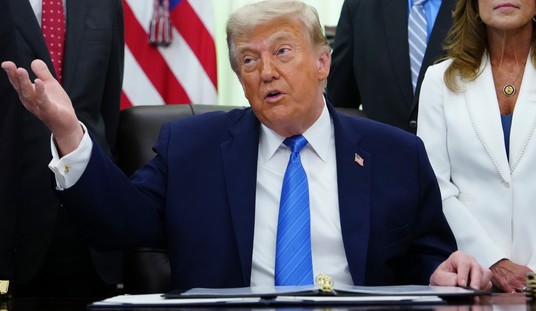
Moments later, an aide requested that everyone put away any cameras or other potential recording devices because the President was about to entertain some off-the-record questions from the remaining guests. The next 40 minutes were breathtaking. In this relatively intimate setting, President Bush answered a wide range of questions — many of which were far from sycophantic — with a degree of confidence, ease, self-deprecation, and intensity that I had never seen from him. He spoke movingly about his relationship with his father. He joked cheekily about his own malapropisms and his critics. He lightly pounded his fist on the podium while mounting a stirring defense of the Iraq war. His deep understanding of a myriad of intricate issues was undeniable, and he utterly captivated the room.
This, sadly, was the President Bush that few Americans ever saw. As a Bush supporter who'd spent many personal conversations defending him, his brilliant Q&A performance was stunning even to me. I commented to a colleague that if only the whole country could see him in his element, his popularity ratings would spike considerably. Alas, it was too often the President's critics, and his mistakes — real or manufactured — that shaped his public image. The anti-Bush media, desperate to preemptively destroy his legacy, is already nattering about whether he could be the worst president ever. This is nonsense. President Bush is right to suggest that the distance of history will be his most impartial judge, free of the poisonous partisanship that characterizes much of our contemporary discourse. Still, some of his accomplishments are readily identifiable today.
Some of the Bush administration's best decisions and finest chapters came on the heels of failure. The attacks of 9/11 caught the government off-guard and revealed dangerous blind spots in our national security strategy. Bush acted decisively, and protecting the country became a daily obsession. Yes, he's been hammered relentlessly on his tactics, but they achieved results: Zero terrorist attacks inside the United States after that horrific fall morning. That's a feat that seemed nearly impossible in the aftermath of the attacks.
The war effort in Iraq was sliding into the abyss midway through Bush's second term, and the Defense Secretary seemed to have outlived his usefulness in the position. With deaths mounting and public opinion fading fast, the President pulled the trigger on an audacious plan to double-down in Iraq with a controversial troop surge. Even many Republicans cautioned against the move, in many cases for political reasons, yet Bush rebuffed their counsel. The new strategy, along with its new commander and fresh leadership at the Pentagon, has paid enormous dividends. The level of stability in Iraq as Bush leaves office is remarkable. So remarkable, in fact, that the anti-Bush media have virtually stopped covering it because it no longer serves its one-time purpose as prime Bush-bash material.
Poor personnel decisions like the Harriet Miers misadventure and Scott McClellan's atrocious tenure also led to vast improvements. The hapless McClellan was finally replaced by the late, great Tony Snow, followed by Dana Perino, which served as a crucial upgrade from a messaging standpoint. Alongside communications advisors Ed Gillespie and Kevin Sullivan, the last two Bush press secretaries restored competent, likeable, public relations to 1600 Pennsylvania Avenue.
The ill-advised Miers Supreme Court nomination galvanized conservatives against President Bush's choice, prompting him to right the ship by nominating an impeccable candidate, who will likely serve as justice for decades to come. Conservatives of all stripes — limited government advocates, national security hawks, and social traditionalists — will be thankful for at least this element of the Bush legacy, especially when the next president begins filling the federal bench with a roster of ACLU all-stars.
Beyond the political and policy legacy President Bush will leave behind, I am grateful that for the last eight years, the country has been led by a man with enormous respect for the office he's held, and who made it his primary mission to keep my friends and family safe from those who seek our destruction. He endured countless indignities — from mean-spirited critics to humiliating betrayal — with grace and class, and without resorting to vindictive or petty retaliation. And although quite a few of Bush's decisions have angered and disappointed me through the years, I never once doubted his motives or his character. For those reasons alone, I say: Thank you, President Bush.






Join the conversation as a VIP Member