






In April of 1979, a week or so after the nuclear-near-disaster at Three Mile Island near Harrisburg, Pennsylvania, Saturday Night Live did a sketch featuring Dan Akroyd as President Jimmy Carter. Playing on the idea that Carter had a background in engineering and nuclear physics, Akroyd insisted on visiting a place called cryptically, “Two Mile Island,” and his character was exposed to contaminated water.

Rosalyn Carter: Where is Jimmy? I have a right to see him!
Ross Denton: Mrs. Carter, the president is receiving special treatment right now.
Rosalyn Carter: What kind of special treatment? Why can't I see him?
Ross Denton: Mrs. Carter, this is Dr. Edna Casey. Perhaps she can explain better than I what has happened to the president.
Dr. Edna Casey: Mrs. Carter, your husband was exposed to massive doses of radiation. Now this has affected the entire cell structure of his body and greatly accelerated the growth process.
Rosalyn Carter: Well, what does that mean?
Dr. Edna Casey: It means, Mrs. Carter, your husband, President Carter, has become THE AMAZING COLOSSAL PRESIDENT.
Rosalyn Carter: Well how big is he?
Dr. Edna Casey: Well Mrs. Carter, it's difficult to comprehend just how big he is but to give you some idea, we've asked comedian Rodney Dangerfield to come along today to help explain it to you. Rodney?
Ross Denton: Rodney, can you please tell us, how big is the president?
Rodney Dangerfield: Oh, he's a big guy - I'll tell you that - he's a big guy. I tell you he's so big, I saw him sitting in the George Washington Bridge dangling his feet in the water! He's a big guy!
It was a funny bit. But it’s not so funny to see life imitate art these days.
The founding fathers and framers of the constitution were very concerned about vesting too much energy in the American chief executive. In his book, The Cult Of The Presidency: America’s Dangerous Devotion To Executive Power, Gene Healy reminds us that many these days see it as “the president’s job to protect us from harm, to ‘grow the economy,’ to spread democracy and American ideals abroad, and even to heal spiritual malaise.” In fact, this job description is completely foreign to what was created back in the day. “If the public expects the president to deal with all national problems, physical or spiritual,” he writes, “then the president will seek – or seize – the power necessary to handle that responsibility.”
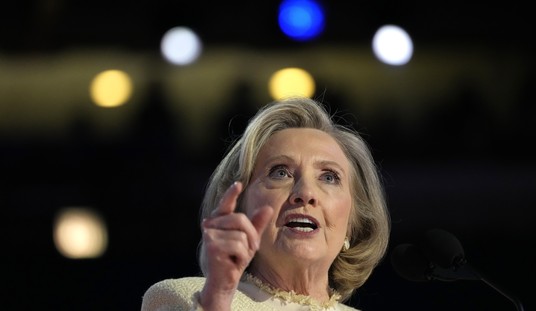
In other words, an amazing colossal presidency.
So, how did we go from what the constitution meant to where we are now? The trouble began around the turn of the 20th century and the Progressive movement. And it was very much an equal opportunity problem – with Democrats and Republicans to blame.
A careful look at the presidencies of Theodore Roosevelt and Woodrow Wilson yields abundant clues about how we got here. TR was a Republican and a strenuous occupant of the White House – and in many ways, admirably so. He is seen by many today as a hero, though it is likely that his personal qualities inspire people more than his actual policies or approach to the presidency itself. He was a man of courage and confidence. His post-presidential speech about “The Man In The Arena” is one of my favorites.
Mr. Roosevelt, however – all his wonderful traits notwithstanding – dramatically expanded the role of the presidency and with it the expectations of Americans. Then later, Woodrow Wilson picked up where Teddy left off and transformed the office into one that became, in fact, an amazing colossal presidency. And it wasn’t a good thing.
The day after his election in November of 1912, Wilson told his party chairman: “Before we proceed, I want it understood that I owe you nothing. Remember that God ordained that I should be the next President of the United States.” I think he may have showered in contaminated water that very morning. He was, after all, from Jersey.
Wilson had written a book back in 1908 entitled Constitutional Government. In it, he talked about his views of the presidency: “The President is at liberty, both in law, and conscience, to be as big a man as he can.” His administration was living proof of this. This so-called “Progressive” man was a civil liberties wrecking crew, though revered by most Democrats today as a hero – even a saint. The nation under Wilson, and at the end of The Great War, was as close to totalitarianism as it had ever been. An editorial in The New Republic on November 16, 1918, gives a snapshot of what the country looked like, and this periodical clearly saw all of it as great:
“The whole issue hinges on social control. For forty years we have been widening the sphere of this control, subordinating the individual to the group and the group to society. Without such control, vastly magnified, we should not have been able to carry on the war. We conscripted lives, property, and services; we took over railroads, telegraphs and other economic instruments. We fixed wages, prices, the quantity of coal, power, labor or transportation a man might command, and the quantity of food we might consume. All this we did on the narrowest of legal bases, for no one dared question our power.”
It did happen here – thanks to an amazing colossal presidency.
In between Teddy and Woody came William Howard Taft. Now largely dismissed by historians as a presidential failure, what it is missed is how much of a voice of reason he was. Roosevelt’s handpicked successor ratified by the voters in 1908, Taft and TR eventually had a falling out and conducted a party-dividing battle for the 1912 Republican nomination. Taft won that race, but Teddy decided to run as a third-party candidate that November, effectively conceding the overall election to Mr. Wilson.
It was humiliating for Taft and while in the political wilderness he wrote a book about the presidency entitled, Our Chief Magistrate and His Powers. What he had to say back then needs to be read, and read again by Americans today, in this new age of the amazing colossal presidency:
“Ascribing an undefined residuum of power to the President is an unsafe doctrine and…it might lead under emergencies to results of an arbitrary character, doing irremediable injustice to private right. The mainspring of such a view is that the executive is charged with responsibility for the welfare of all the people in a general way, that he is to play the part of a universal Providence and set all things right, and that anything that in his judgment will help the people he ought to do, unless he is expressly forbidden not to do it. The wide field of action that this would give to the executive, one can hardly limit.”
Warren Harding appointed William Howard Taft as Chief Justice of the Supreme Court in 1921, the only job he ever really wanted. Harding also undid much of the damage Mr. Wilson had done to the economy, not to mention liberty itself.
Sure, Harding had his share of personal problems. And Taft was not too great on the campaign trail. But compared to some of the amazing colossal presidents we have had, I think the men who served before and after Wilson look better than the man in the middle, and even in some ways, though it’s hard to admit, than the man in the arena.






Join the conversation as a VIP Member