



Long after nightfall on January 20, 1969, Lyndon and Lady Bird Johnson arrived at their 330-acre Texas ranch. LBJ had been an ex-President for just a few hours. Throughout the day well-wishers had gathered – first at Andrews Air Force Base, then at Bergstrom Air Force Base in Texas. They showed up to say thank you to the man who had ascended to the presidency in those chaotic Dallas moments more than five years before - and who less than a year before had pulled himself out of the race for a final term in the White House.
One of the first tell-tale signs that life was going to be comparatively perk-free was when they came upon their massive collection of luggage that had been left in the carport that evening, with no one around to carry the bags. Mr. and Mrs. Johnson laughed and she remarked: “The coach has turned back into the pumpkin and all the mice have run away.”
I imagine that President George W. Bush has been thinking a lot about Crawford, Texas and his post-presidency period these days. With polls indicating that he is increasingly unpopular, he will step down just after noon next January 20th.
The U.S. Senate is sometimes referred to as the country’s most exclusive club. But actually, that distinction better describes a group of three - soon to be expanded to four: The fraternity of former Presidents. Reentering the atmosphere of earthly reality minus the privileges and powers inherent in our nation’s highest office has not always been an easy adjustment.
We currently have three former presidents roaming the land. There is the first President Bush, who has clearly managed to conduct himself with the kind of self-effacing dignity that characterized his personal style during his Oval Office tenure. Except for the occasional jump out of an airplane to mark a birthday, he doesn’t make the news much, and it’s probably because he prefers it that way. Will his famous son approach his exile similarly?
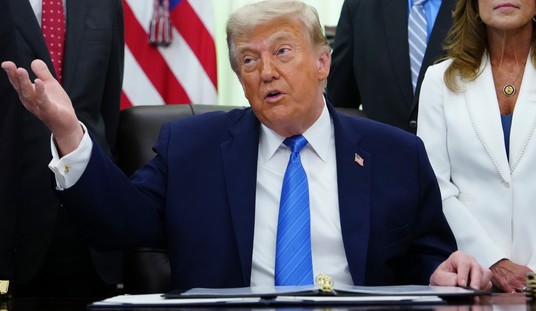
Then there are Jimmy and Bill – two men who seem to be determined to magnify the weaknesses of their previous service in ways that make the news on a near-daily basis.
For a long time after Mr. Carter headed back to Plains, Georgia, after a single frustration-laden term, I often thought that he was a better ex-President than he was a President. He was building homes for the poor, teaching his Bible class, and using his influence for the general betterment of mankind. But frankly, I liked Habitat for Humanity Jimmy much better than the Hurray for Hamas cheerleader who has lately been conducting his own misguided and counterproductive shuttle diplomacy without portfolio.
Bill Clinton, who had spent so much time since leaving office rebuilding his reputation in light of the scandal that clouded his final years at 1600 Pennsylvania Avenue, seems determined to throw it all away in the pitch and toss of some of the fiercest politics of this current campaign season. He was doing so well on his road toward a truly post-partisan elder-statesman-like retirement, but the lure of the limelight and sound byte has set him back – maybe permanently. It was said of Theodore Roosevelt that he wanted to be the bride at every wedding he attended and the occupant of the casket at every funeral. Mr. Clinton seems to want to be the candidate in every election.
But, in fairness, being a FORMER President must be an awkward thing. Woodrow Wilson left office a broken man – physically and emotionally - the cheering having stopped long before his White House exit. Lyndon Johnson went back to Texas and spent his final years working at his ranch and on his memoirs.
Some former Presidents found their second wind after leaving office. Richard Nixon made a new career for himself as a writer and thinker – and did much to rehabilitate his image and reputation after his resignation. His funeral in 1994 (attended by all four members of the fraternity at the time) was in many ways a healing event providing a measure of needed closure. His successor Gerald Ford, by all accounts enjoyed the high esteem of his countrymen – as did Ronald Reagan, even as he entered and endured the long and sad good bye of Alzheimers Disease. Harry Truman conducted himself well as a former president – though, sadly, he didn’t live long enough to see his complete recovery from the distinction of leaving office with the lowest ever recorded approval rating.
But I think the gold standard for ex-presidential life and service, one that two of the three current members of that elite club will likely never have a shot at, was set by a man who for most seems to embody the very idea of an ineffective presidency.
I am talking about Mr. 31 - Herbert Clark Hoover.
In a real sense, the presidency was the worst thing that ever happened to him. He had been so successful prior to that, and was known for his unmatched resume and clear sense of duty and compassion. The man pretty much saw to it that Europe didn’t starve after The Great War ended in 1918.
His election in 1928 was the one of the most inevitable political events of those times. It was a no-brainer. The Great Engineer had an unsurpassed resume. He was probably the most qualified man ever to hold the office. But we all know the rest of the story. The economic catastrophe of the age happened on his watch and he seemed to be unable to deal with it and watched his reputation as a great man unravel.
It’s interesting to note, as American’s try to figure out what a Recession is, and whether we’re actually in one or not – that Hoover wrestled with what to call his crisis. Up to that time, massive financial reverses had been referred to as PANICS. But Hoover didn’t want to scare folks, so he made sure the obviously more benign term – DEPRESSION – was used. Of course, he didn’t foresee the adding of the enduring modifier GREAT to it.
Mr. Hoover was swept out of office by a promise of change including the “yes we can” of the day: “Happy Days are Here Again!” Of course, the truth is that Franklin Roosevelt didn’t really change that much, adopting and continuing many of Hoover’s policies and approaches. But his frenetic first hundred days and his savvy use of the media of the times made sure that people “felt” like things were changing. FDR was, in many ways, the father of the post-modern politics of meaning.
Hoover lived for more than thirty-one years as a former President. He wrote sixteen books (including one entitled: “Fishing for Fun – And How to Wash Your Soul”), and eventually was able to serve his country again with great distinction. I say eventually because he was banned from the White House during FDR’s lengthy administration. In fact, the relationship between President’s 31 and 32 was probably the worst ever between two former chief executives. For all of FDR’s purported charm, he also had a capacity for brutal pettiness.
In the early days of Harry Truman’s presidency, he invited Hoover back to the White House – something both men felt was long overdue. And as Europe struggled to recover from the ravages of World War Two, Mr. Hoover was dispatched by the President to tour Germany – using Herman Göering’s old train car - to investigate the food supply there. Hoover told Truman that the situation was dire, and this was the catalyst for an extensive program that provided food for millions of school children.
The 40 tons of food were described by the beneficiaries at the time as Hooverspeisung – Hoover Meals.
Soon another assignment came from Truman – asking Hoover to serve on a commission to reorganize the executive departments of the federal government. He was elected chairman – and it came to be known as the Hoover Commission. When Dwight D. Eisenhower became President in 1953, he asked his most recent Republican predecessor to serve as chairman of another such commission.
And by the time he died at the age of ninety in October of 1964, having lived out his final years in an apartment at the Waldorf Astoria Hotel in New York City, he had proven himself to be a dedicated and constructive former President of the United States.
It seems to me that former Presidents have two good options if they want to preserve or enhance their legacies. They can go to the ranch like Lyndon. Or they can wait to be called on to serve, like Herbert.
When former Presidents take too much initiative to seize the moment, they are forgetting that they already had their turn.





Join the conversation as a VIP Member