




Egypt's recent actions against Hizbullah operatives are a watershed event for understanding the nature of the threat that Iran constitutes for both regional and global security. For many Israelis, Egypt's actions came as a surprise. For years this country has been appealing to Egypt to take action against Hizbullah operatives in its territory. With minor exceptions, it has refused. Believing that its operatives threatened only us, the Mubarak regime preferred to turn a blind eye.

Then too, now seems a strange time for Egypt to be proving Israel correct. Senior ministers in the new Netanyahu government have for years been outspoken critics of Egypt for its refusal to act against Hizbullah and for its support for the Hizbullah/Iran-sponsored Hamas terror group. By going after Hizbullah now, Egypt is legitimizing both their criticism and the Netanyahu government itself. This in turn seems to go against Egypt's basic interest of weakening Israel politically in general, and weakening rightist Israeli governments in particular.
But none of this seemed to interest Egyptian officials last week when they announced the arrest of 49 Hizbullah operatives and pointed a finger at Hizbullah chief Hassan Nasrallah and his bosses in Teheran, openly accusing them of seeking to undermine Egypt's national security.
The question is what caused Egypt to suddenly act? It appears that two things are motivating the Mubarak regime. First, there is the nature of the Hizbullah network it uncovered. According to the Egyptian Justice Ministry's statements, the arrested operatives were not confining their operations to weapons smuggling to Gaza. They were also targeting Egypt.
The Egyptian state prosecution alleges that while operating as Iranian agents, they were scouting targets along the Suez Canal. That is, they were planning strategic strikes against Egypt's economic lifeline.
The second aspect of the network that clearly concerned Egyptian authorities was what it showed about the breadth of cooperation between the regime's primary opponent - the Muslim Brotherhood - and the Iranian regime. Forty-one of the suspects arrested are Egyptian citizens, apparently aligned with the Muslim Brotherhood. This alignment is signaled by two things. First, many of them have hired Muslim Brotherhood activist Muntaser al-Zayat as their defense attorney. And second, Muslim Brotherhood spokesmen have decried the arrests.

For instance, in an interview with Gulf News last Thursday, Muslim Brotherhood spokesman Issam el-Erian defended Hizbullah (and Iran) against his own government, claiming that Nasrallah and the Iranian ayatollahs are right to accuse President Hosni Mubarak of being little more than an Israeli stooge.
In his words, "The Egyptian government must redraw its national security policies to include Israeli threats against Arab counties like Syria and Lebanon and to consider threats against Palestinians by Israelis as a threat against its national security."
In a nutshell then, both the Hizbullah network's targets and its relationship to Egypt's Sunni Islamist opposition expose clearly the danger the Iranian regime constitutes to Egypt. Iran seeks to undermine and defeat opponents throughout the world through both direct military/terrorist/sabotage operations and through ideological subversion. It is the confluence of both of these aspects of Iran's revolutionary ambitions that forced Egypt to act now, regardless of the impact of its actions on the political fortunes of the Netanyahu government. And it is not a bit surprising that Egypt was forced to act at such a politically inopportune time.
THROUGHOUT the region and indeed throughout much of the world, Iran's star is on the rise. Its burgeoning nuclear program acts as a second arm of a pincer-like campaign against its opponents. The asymmetric and ideological warfare it wages through its terror and state proxies are the campaign's first arm. Together, these two strategic arms are raising the stakes of Iran's challenge to its neighbors and to the West to unprecedented and unacceptable heights. Morocco is so concerned about Iranian subversion of its Sunni population that last month it cut off diplomatic ties with Teheran.
Iran's great leap forward has been exposed by recent events. Last month's Arab League summit in Doha exemplified how Iran has successfully split the Arab world between its proxies and its opponents. For the past three years, and particularly since the 2006 war between Israel and Iran's Hizbullah in Lebanon, Arab League states have been increasingly polarized around the issue of Iran. The country has used its satellite states of Syria, Sudan and Qatar, as well as its burgeoning alliances with Muslim Brotherhood branches in Egypt, Jordan, the Palestinian Authority and elsewhere, to legitimize its rapidly escalating assaults on Sunni regimes throughout the region.
Although Egypt and Saudi Arabia successfully blocked Qatar from inviting Iran and Hamas to the summit, by using the good offices of Qatari Emir Sheikh Hamad bin Khalifa Thani and Syrian President Bashar Assad, the Iranians were able to get their anti-Saudi/Egyptian platform passed. As the Middle East Media Research Institute chronicled in a report on the proceedings, Assad successfully abrogated the so-called Saudi peace plan that the Arab League adopted in 2002. According to a new Syrian-backed resolution, any Arab rapprochement with Israel would be contingent on Israel first destroying itself by withdrawing into indefensible borders and being overwhelmed by millions of hostile foreign Arab immigrants.
Sensing what awaited him at the summit, Mubarak chose to stay home and send a junior emissary in his place. Saudi King Abdullah said nothing throughout the two-day Arab love-fest with Iran. Both leaders emerged weakened and humiliated.
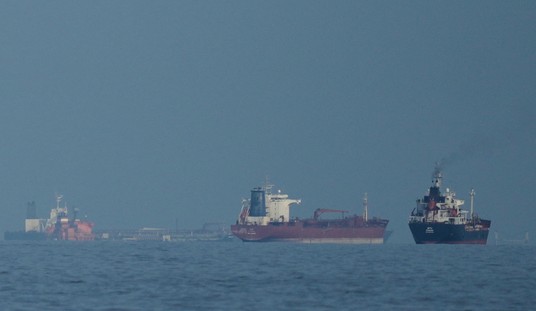
In recent years, Iran has expanded its sphere of influence to strategic points around the region. Two recent additions to Iran's axis are Eritrea and Somalia. Iran and Eritrea signed a strategic alliance last year that grants Iranian Revolutionary Guard units basing rights in the strategically vital Bab al-Mandab strait that controls the chokepoint connecting the Indian Ocean with the Red Sea. As for Somalia - whose position along the Gulf of Aden provides it a similarly critical maritime posture - Iran has been exploiting its condition as a failed state for several years.
In 2006, the UN reported that some 720 Somali jihadists aligned with al-Qaida fought with Hizbullah in Lebanon during its war against Israel. According to an analysis of Iran's coopting of Somali jihadists published in November 2006 by the on-line Long War Journal, in exchange for the Somali operatives' assistance, Iran and Syria provided advanced military training to the Somalis who had just established the al-Qaida-affiliated Islamic Courts Union regime in the country. Teheran equipped the ICU with anti-aircraft missiles, grenade launchers, machine guns, ammunition, medicine, uniforms and other supplies both before and after it took control of Somalia.
The UN report also linked the ICU to Iran's nuclear program. Its alleged that Iranian agents were operating in ICU chief Sheikh Hassan Dahir Aweys's hometown of Dusa Mareb, where they sought to buy uranium.
Beyond the Horn of Africa, of course, Iran has been consistently expanding its influence in Iraq and Afghanistan. In both countries the mullahs simultaneously sponsor the insurgencies and offer themselves as the US's indispensible partner for stabilizing the countries they are destabilizing.
What is perhaps most jarring about Iran's ever-expanding influence is the disparate responses it elicits from Israel and Sunni regimes like Egypt and Saudi Arabia on the one hand, and the West on the other. Whereas Israel and the Sunni Arab states warn about Iran daily, far from acknowledging or confronting this ever-expanding Iranian menace, the US and the Europeans have been alternatively ignoring it and appeasing it. If the US were taking the Iranian threat seriously, the Obama administration would not be begging Iran to negotiate with it after Teheran demonstrated that it has complete control over the nuclear fuel cycle.
If the US were interested in contending with the danger Iran constitutes to global security, Secretary of State Hillary Clinton would not be absurdly arguing that the US cannot verify whether Iran's announcement that it is now operating 7,000 centrifuges and its opening of another nuclear site signify an increase in its nuclear capacity.
Were the US taking Iran seriously, it would not be asking Iran to help out in Afghanistan and Iraq. It would not be treating Somali piracy as a strategically insignificant nuisance. It would not be ignoring Eritrea's newfound subservience to Iran. It would not be maintaining the Central Command's headquarters in Qatar. And, of course, it would not be permitting Iran to move forward with its nuclear weapons program.
THEN there is Britain. Last week Michael Ledeen from the Foundation for Defense of Democracies reported that Britain's decision to recognize Hizbullah is part of a deal it struck with Iran and Hizbullah in exchange for five Britons who have been held hostage in Iraq by Hizbullah/Iran-affiliated terrorists for two years. According to the deal, in exchange for the British hostages, London agreed to recognize Hizbullah and the US agreed to release a number of Shi'ite terrorists its forces in Iraq have captured.
As Tariq Alhomayed, the editor of Asharq al-Awsat, noted in response to the news, the deal puts paid Nasrallah's contention that Hizbullah does not operate outside Lebanon except to wage war against Israel. But it also points to a severe problem with the West.
If Britain was willing to acknowledge and contend with the grave threat Iran constitutes for global security, it would not accept the authority of Hizbullah or Iran to negotiate the release of British hostages in Iraq. Instead it would place responsibility for achieving the release of the British hostages on the sovereign Iraqi government and use all the means at its disposal to strengthen that government against agents of Iranian influence in the country.
So, too, rather than participate in the deal, the US would seek to destroy the Iranian-controlled operatives holding the hostages and discredit and defeat the Iraqi political forces operating under Iranian control. Certainly if the US were taking the Iranian threat seriously, it would announce that any withdrawal of US combat forces from Iraq will be linked to the complete defeat of agents of Iranian influence in Iraq.
The West's refusal to contend with the burgeoning Iranian menace no doubt has something to do with the West's physical distance from Iran. Whereas Middle Eastern countries have no choice but to deal with Iran, the US and its European allies apparently believe that they can still pretend away the danger. But of course they cannot.
From the Somali pirates in the Gulf of Aden to Hizbullah cells from Iraq to Canada; from Iranian agents in British universities to Hizbullah and Iranian military advisers in South and Central America, the West, like the Middle East, is being infiltrated and surrounded.
Egypt's open assault on Hizbullah is yet another warning that concerted action must be taken against the mullocracy. Unfortunately, the absence of Western resolve signals that this warning, too, will go unheeded.







Join the conversation as a VIP Member