






Starbucks, that epitome of a socially-conscious corporation, is now the target of an escalating campaign to blacken its name. One can understand why radical activists would go after discount retailing behemoth Wal-Mart. But who would have thought they’d also have classy Starbucks in their sights?
Last month, Brave New Films, an independent documentary production company based in Culver City, California, launched its “Stop Starbucks” campaign. The website (www.stopstarbucks.com) features a four-minute video posting on YouTube alleging mistreatment by the company toward employees, plus a petition demanding Chairman and CEO Howard Schultz “quit following Wal-Mart’s anti-union example.” Within a week, nearly 12,000 viewers had signed it. The campaign also featured a Twitter sabotage of a Starbucks photo promotion, replete with clever messages like “I want my union with my latte” and “Schultz makes millions, workers make beans.”
On closer inspection, this makes sense. The head of Brave New Films is Robert Greenwald, producer of the 2005 anti-corporate agitprop feature, “Wal-Mart: The High Cost of Low Price.” As much as the Right, the Left has taken to New Media. Greenwald, for one, is a believer. “What happens with these things is that people watch it, send the link to friends, and you can see it build,” he notes. “It’s a tool that doesn’t cost billions of dollars.”
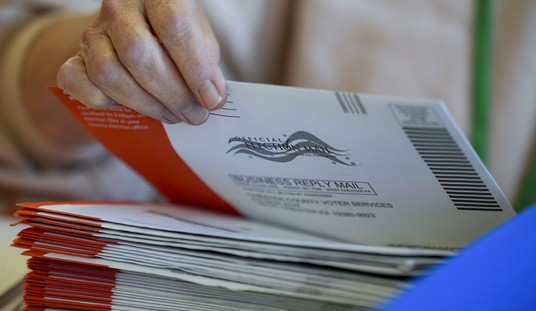
This corporate campaign didn’t happen in a vacuum. Brave New Films is tight with organized labor. And right now unions are engaged in an eleventh-hour blitz to get Congress to pass the Employee Free Choice Act (EFCA), legislation having nothing to do with expanding worker choice and everything to do with expanding union clout. EFCA would require an employer to recognize as binding any union organizing campaign that obtains a simple majority of signatures from affected workers who indicate a desire to join. In addition to this “card check” provision, which effectively would end secret-ballot elections, it would mandate an arbitration process whose rapid-fire timetable would work to a union’s advantage and whose decisions would not be subject to appeal.
EFCA, as many are aware, has stalled. In 2007, the House passed the measure, but Senate Republicans successfully blocked it. The bill, not unpredictably, has been re-introduced in the new Congress; President Obama has vowed to sign it. Yet even with wide Democratic majorities in the House and Senate this time, the measure remains highly vulnerable to filibuster. A number of Senate Democrats such as Blanche Lincoln (Ark.), Claire McCaskill (Mo.), and party convert Arlen Specter (Pa.) believe the Employee Free Choice Act is ill-suited to deal with the current recession, if not necessarily wrong in principle. Union leaders such as Service Employees President Andrew Stern have expressed pessimism over the prospects for passage.
Here’s where the Seattle-based Starbucks fits into the picture. This March, Starbucks’ Howard Schultz, Whole Foods’ John Mackey and Costco’s James Sinegal announced the formation of an ad hoc group, the Committee for a Level Playing Field for Union Elections. The purpose is to create a Third Way that would protect union organizing rights while retaining the secret ballot. The project would guarantee a fixed time period in which to hold a secret-ballot election and increase penalties upon employers and unions who violate the law.
Many activists on the Left are enraged at this seeming sellout, which in fact is more tilted toward union interests than it looks. It’s another phase in a continuing battle against Starbucks. Nearly a decade ago, several Seattle anti-World Trade Organization rioters, their cup brimming over with enthusiasm, smashed a number of Starbucks storefronts – right on company home turf! The new Stop Starbucks campaign hasn’t resulted in any vandalism, but it’s traveling through the anarcho-socialist blogosphere faster than Starbucks can open new stores. Many sites have linked to the Greenwald video.
Anti-Starbucks activists point to other black marks. For one thing, the Industrial Workers of the World (IWW) – our old friends, the Wobblies – for some five years has been targeting Starbucks in an organizing drive in Illinois, Minnesota, New York and other states, plus foreign countries such as Chile. “While Starbucks used the economic crisis as a pretext for an all-out assault on our already meager standard of living,” note organizers (www.starbucksunion.org), “our struggle gained momentum this year amidst a stark decline of the company’s brand and widespread store closures.” Union activists contend Starbucks employees are exploited, receiving $7.50 to $10 an hour in wages and inadequate health benefits, while being subject to a grueling schedule.
Also sticking in the activists’ craw is a recent California appeals court ruling requiring Starbucks baristas to share tips with supervisors. The decision overturns a lower court ruling in San Diego County forcing Starbucks to reimburse class-action plaintiffs (i.e., baristas) by around $86 million plus interest. Since each Starbucks customer is served by a team rather than an individual employee, the appeals court reasoned, money in the tip jar must be distributed among all workers on a given shift. Starbucks thus hadn’t violated a state law barring supervisors from receiving tips.
Now as someone who has worked in his share of restaurants, I can sympathize with the employees and the union up to a point. But attacking the Starbucks brand name is a stretch. These are, for the most part, entry-level workers. Those who seek long-term employment have plenty of opportunities for advancement, as the company tends to promote from within. And prospective employees respond to job openings. As one Web posting from North Scottsdale, Arizona put it: “It’s amazing how many teenaged girls want to work at Starbucks. I swear they put an ad in the paper and they’ll get a hundred applications the first day.”
In the larger context, there is a certain paradox to the progressives’ wrath. Since founding its flagship store in downtown Seattle in 1971, Starbucks continuously has sought to be a hybrid of profit-seeking and social responsibility. Its Shared Planet initiative, for example, commits the company to core goals of ethical sourcing, environmental stewardship and community involvement. This means, respectively, that: all coffee will be responsibly grown and ethically traded; all cups will be recyclable and reusable; and the company will contribute a minimum of 1 million hours of community service. “We’re proud to be one of the most progressive employers in the United States in terms of benefits, offering stock options, healthcare and working conditions,” notes Jim Koster, Starbucks senior vice president.
It’s tempting to view the company’s recent hammering by the Left as poetic justice. But supporters of free markets must recognize the potential damage of this corporate campaign, both to Starbucks and business as a whole. For if a company as avowedly progressive as Starbucks can be the target of an Internet-based corporate campaign, then no corporation is safe.
Size, if nothing else, makes Starbucks an easy target. In recent years it’s averaged five store openings a day. The company now generates about $10 billion annually in net revenues from all operations, which include publishing, music and film, plus brand-name food items in supermarkets. With more than 16,000 outlets worldwide – around 11,000 in the U.S. – and a work force of 135,000, Starbucks, like McDonald’s, has become an institution, right down to its logo.
Anti-globalist activists, taking note of such facts, denounce the company as a juggernaut of injustice that mows down competitors and homogenizes neighborhoods. This is a familiar – and suspect – complaint. To say there are too many Starbucks is like saying there are “too many” Tiger Marts, Bed Bath & Beyond outlets, Hard Rock Cafes and James Bond movies. Supply expands to meet demand. In a highly competitive marketplace, successful companies anticipate what people want, and after having built the public trust with their brand name, continue to seek new and repeat customers. Starbucks’ offense seems to be that it’s pretty good at it.
The company has filled an untapped niche, the gourmet coffee house in the neighborhood and the mall. If people are willing to pay more for the extra quality, well…it’s their money. Starbucks haters might be comforted by the company’s announcement early this year that it would close about 900 outlets in response to falling net income. Even the fastest-growing businesses at some point run up against that brick wall. That Starbucks could help torpedo EFCA is more than the unions and their allies can bear, even if lattes and espresso were to go for half-price.
Starbucks, God knows, aims for benevolence. Howard Schultz explained to CBS’s “60 Minutes” in April 2006: “We’re not in the business of filling bellies. We’re in the business of filling souls.” Hey, I’m not laughing. If management can make this kind of mission statement work, more power to them. Far better, I say, for liberals to run successful businesses than ruin them.
Unfortunately, certain activists are trying to inflict real damage on the company until it gets fully on board with organized labor. The company needs to recognize that striking an ideal balance between profit and progressivism isn’t always possible. This is one of those instances when it’s not. Starbucks should smell the coffee and fight back.







Join the conversation as a VIP Member