



It helps to read history. We know, or should, that American life shows us nothing like the social and political conniptions that Germany experienced in the 1920s, France in the 1790s and the United States in the 1850s.
But something is cooking. Indignant people -- I'm sidestepping the adjective "angry" so as to avoid connotations -- don't mysteriously materialize in the capital city to fulminate and castigate on their own nickels. They have to want to. What might make them want to? I would venture, the sense that something's badly, seriously, woefully out of joint in their beloved homeland.

Note that the "tens of thousands" (general media estimate) or the "million" (Daily Mail of London) demonstrators last weekend went to Washington, D.C., not to New York City. They went where they judged the problem to reside. That would make it a political, not an economic, problem -- one arising from an accumulation of offenses and indignities peculiar to how their country is run.
We've seen it before, haven't we -- as far back as the gasoline lines and inflation of the '70s, continuing through the movement that made Ross Perot a household name, with his pledge to look under the hood and fix the motor. Then there was last year's thirst for "change."
Do the monarchs of politics get the impression no one loves them, whatever their party? Whether they get it or not, it's true.
"Congressional Job Approval" survey, Sept. 3-8, Associated Press: approve, 28 percent; disapprove, 69 percent. Neither political party creeps up even to 50 percent in terms of generic public approval. Democrats finish less than 3 percentage points ahead of Republicans.
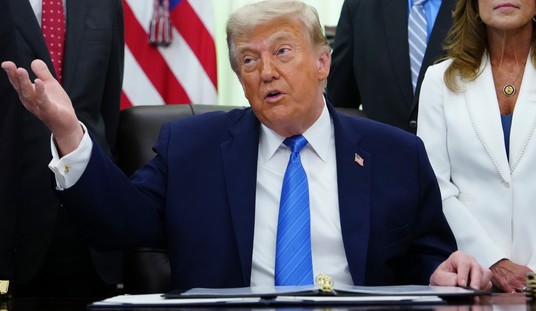
For now the Democrats, who at least nominally rule the capital with a mailed fist, draw most of the hostility. Only a year ago, it was the Republicans who couldn't turn a trick, what with moral scandals, Iraq, Katrina, etc. Next year at the midterm polls, Democrats will likely take a hit, not unlike the one Republicans took in 2006. So it goes.
The size of the political footprint on the public's back is the main reason for public discouragement with the modern cult of politics. The bigger the footprint, the larger the likelihood of disrupting normal life.
Unfortunately, the sizing down of political expectations isn't realistic: not when government has muscled into every known field of endeavor. We, the people (through our government apparatus) own General Motors? Incredible. We're on the verge of committing control of health care policy to the government? Still more incredible. No constitutional lawyer blinks an eye at such assertions of authority over the private sector? That's not incredible in the least. No one these days ever seems to doubt that Congress will do, and get away with doing, whatever it likes -- permitted or not by the Constitution.
Up and down Washington the crowds may surge and surge again. It's hard to see how things will basically change, inasmuch as the old-fashioned conviction that government has proper limits looks as durable as the seas and the mountains.
People who want Washington to change its ways are often on the right track -- especially, now with the Democrats leering at unprecedented opportunities for controlling our lives through health care. It's the whole "wanting" thing, for better or worse, that gets in the way of reform. We want, we want, we want -- and, boy, do our leaders, and all aspiring to that dignity, want us to have it. Grateful voters make for long tenures and big government pensions, not to mention overseas travel, large staffs, chauffeured vehicles, and, oh, yes, constant access to microphones and cameras capable of making some essentially little people look very big indeed.
Here's a problem harder to solve than health care: how to loosen voters' grips on the idea that politics can be twisted productively to serve specified ends -- my ends, of course, not yours, which aren't half as good as mine. The Psalmist, all these centuries later, draws top honors for political advice: "O put not your trust in princes … for there is no help in them."








Join the conversation as a VIP Member