





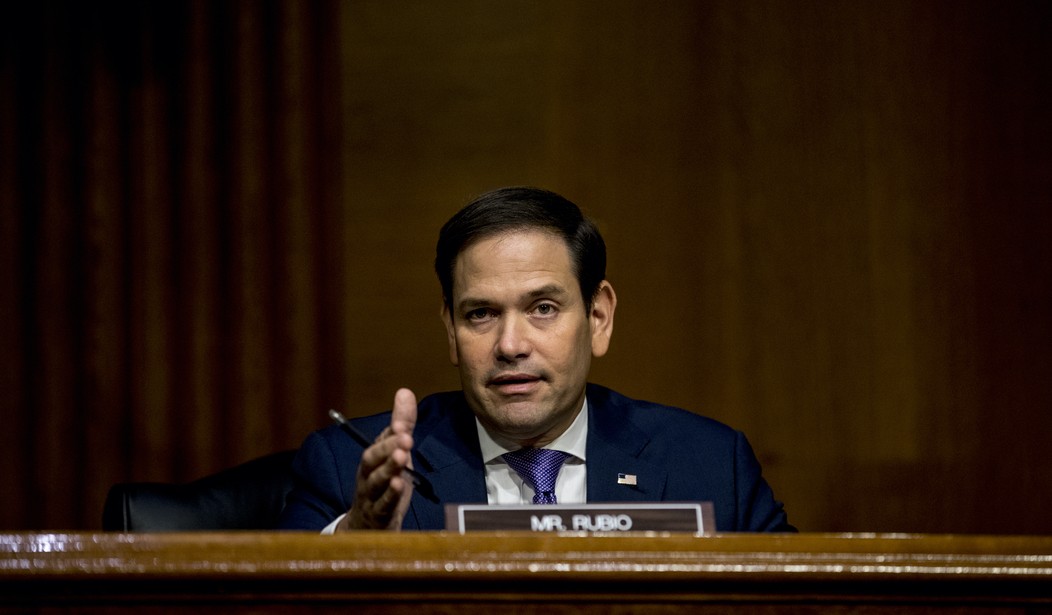
ActBlue, a fundraising platform used by Democrat causes and candidates for offices ranging from President of the United States to mayor of a small town, is under new scrutiny thanks to U.S. Senator Marco Rubio (R-FL) for allegedly "fraudulent" practices that took advantage of seniors.
This week, Sen. Rubio's office noted that ActBlue "has purportedly engaged in thousands of dollars in campaign donations through small donors, including senior citizens, via illegal contributions, without those donors’ consent or awareness." Rubio's office also explained that, "unlike nearly every other individual political campaign and political action committee, ActBlue does not require a card verification value (CVV) number as a requirement for donating."
Sent a letter to the @FEC to demand an investigation into @ActBlue after reports of 'fraudulent' fundraising off seniors without their consent or awareness.
— Senator Marco Rubio (@SenMarcoRubio) April 12, 2023
Read my full statement below. ⬇️https://t.co/dkrvAKpiQe pic.twitter.com/qBAOhAdA8o
Taking action, Rubio fired off a letter to the Federal Election Commission's Chairwoman Dara Lindenbaum and Vice Chairman Sean Cooksey urging the regulatory agency "to investigate the purported presence of widespread fraudulent donations being reported to the commission by ActBlue."
Rubio's letter to the FEC continues:
Recently, alarming reports emerged of fraudulent donations being reported to the FEC by ActBlue. These reports indicate that numerous individuals, including senior citizens, have purportedly donated to ActBlue thousands of times a year. However, according to recent investigative reports, many of these individuals had no idea that their names and addresses were being used to give thousands of dollars in political donations, with most of these “donations” going to ActBlue. It should come as no surprise that ActBlue serves as vessel for fraud, considering the intentional lack of security engrained within their donation processes and systems.
As you both know, the vast majority of online transactions require a card verification value (CVV) number. This requirement is standard practice across the e-commerce industry to reduce fraud and prevent unlawful foreign transactions. In knowing that foreign actors use fake accounts to exploit donation systems that do not have robust verification processes and systems in place, most individual campaigns and political action committees (PACs) require CVV numbers as part of making an online donation. However, in breaking with most organizations, ActBlue does not require CVV numbers as a requirement for donating, and thus lending itself as a facilitator of fraud.
Recommended
In addition to an investigation of ActBlue, Rubio requested answers on a handful of questions such as, "Is the commission concerned about reports detailing widespread fraud from ActBlue?" "Was the commission aware of these seemingly fraudulent donations being reported by ActBlue prior to reports surfacing?" and, if the FEC declines to investigate ActBlue, why won't they?
"It should come as no surprise that ActBlue serves as a vessel for fraud, considering the intentional lack of security engrained within their donation processes and systems," Rubio remarked.
This isn't his first foray into political donation transaction security policy, either. Earlier this spring, Rubio reintroduced his Codification of Verified Values (CVV) Act to require a card verification value (CVV) when donating to political campaigns.













Join the conversation as a VIP Member