







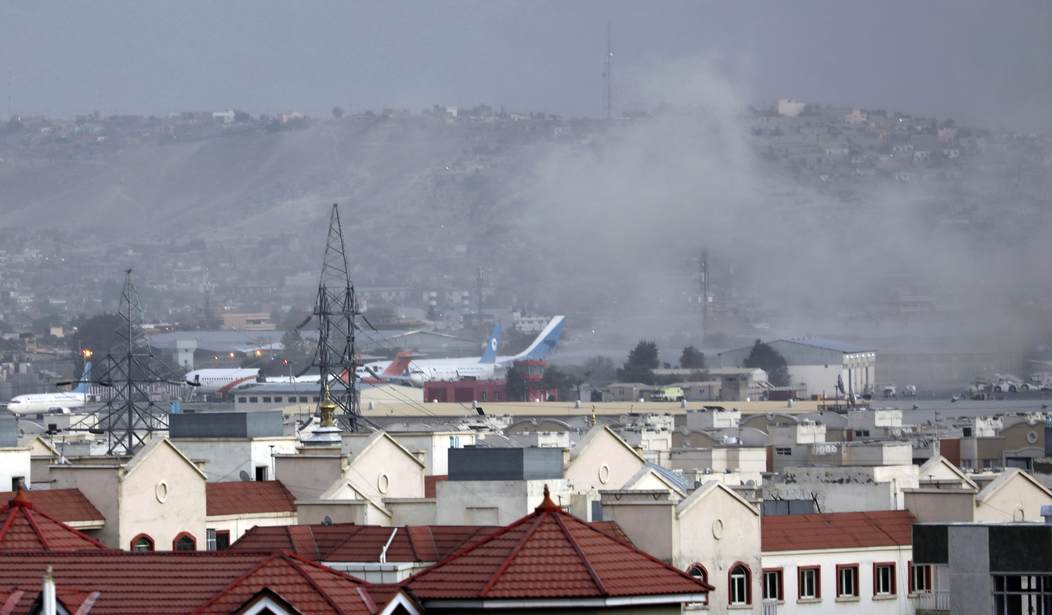
An investigation conducted by the United States Central Command (CENTCOM) found that an August 29 drone attack carried out in Kabul, Afghanistan by the United States was not the "righteous strike" as described by chairman of the Joint Chiefs Mark Milley.
Rather than taking out an ISIS-K suicide bomber or a car laden with explosives, CENTCOM concluded that the drone strike killed an innocent aid worker along with seven children and two other members of his family. The secondary explosion — supposedly proof that the strike stopped an impending attack on American service members and fleeing Afghans at Hamid Karzai International Airport — is believed to have been a propane tank near the car.
The drone strike set off a large secondary explosion that officials originally said was evidence the car was indeed carrying explosives. But investigation determined the secondary explosion most likely set off by a propane tank located in the driveway. - @CBSDavidMartin (2/2)
— Ed O'Keefe (@edokeefe) September 17, 2021
In the Pentagon Press Briefing on Friday afternoon, CENTCOM Commander Kenneth McKenzie addressed his investigation's findings saying a thorough review convinced him as many as ten civilians, including seven children, were killed in the strike.
Gen. McKenzie said he now assesses it is "unlikely" the vehicle and those who died were part of ISIS-K. "It was a mistake," McKenzie said, based on the "earnest belief" that the strike would stop an "imminent ISIS-K threat" after 13 American service members and dozens of Afghans were killed by a suicide bomber on August 26.
Adding that he offered his "sincere condolences" to the family of those who were killed, McKenzie said he is "fully responsible for this strike and its tragic outcome." The Office of the Secretary of Defense, McKenzie added, is looking at providing reparations to surviving family members of the 10 civilians killed in the strike.
CENTCOM Commander Gen. Kenneth McKenzie says deadly U.S. drone strike in Kabul killed “as many as 10 civilians, including up to 7 children,” instead of ISIS terrorists:
— The Recount (@therecount) September 17, 2021
”… it was a mistake, and I offer my sincere apology.” pic.twitter.com/B892nDePBH
"This was not a rushed strike," McKenzie insisted in explaining how the decision to strike was made. Believing that a white Toyota Corolla would carry out a suicide attack on the Kabul airport, surveillance identified a car matching the description moving through the streets of Kabul picking up and dropping off several adult males with bags and jugs. When they were observed loading items into the vehicle, officials concluded that they were explosives. After dropping off several men, the car arrived at a compound roughly three kilometers from HKIA. After being surveilled for roughly eight hours, a single hellfire missile was launched at the vehicle. "Clearly our intelligence was wrong on this particular white Toyota Corolla," McKenzie added.
McKenzie sought to differentiate between the failed "self-defense" strike on August 29 and the "over the horizon" capability that the Biden administration has insisted will be used to prevent terrorists from gaining a foothold in Afghanistan after the U.S. withdrawal. Claims that the Pentagon "thought we had a good target" did little to assuage concerns that America's capabilities in Afghanistan are dangerously diminished as McKenzie confirmed the "over-the-horizon strike cell commander" was the individual with final approval for the botched strike.
As for accountability anyone may face for the failed strike, McKenzie said that portion of the investigation was ongoing and he couldn't comment further because it involves personnel. President Biden, on Friday at the time of the Pentagon's announcement, was at home in Rehoboth Beach, Delaware, enjoying a long weekend.
Can someone go to the beach and ask POTUS?
— Guy Benson (@guypbenson) September 17, 2021

Join the Conversation
VIP members get the ability to comment on articles.