







It’s become increasingly clear the United States is suffering from a new wave of anti-Semitism, particularly in light of this past weekend's violence in Monsey, New York, when 37-year-old Grafton Thomas reportedly stormed a rabbi’s home and began stabbing the faithful gathered there celebrating Hanukkah.
The Washington Post reports Thomas’ attack marks the 13th anti-semitic attack in the state of New York alone over the past three weeks, leaving many no doubt shaking their heads wondering what it will take to stop the unprovoked violence.
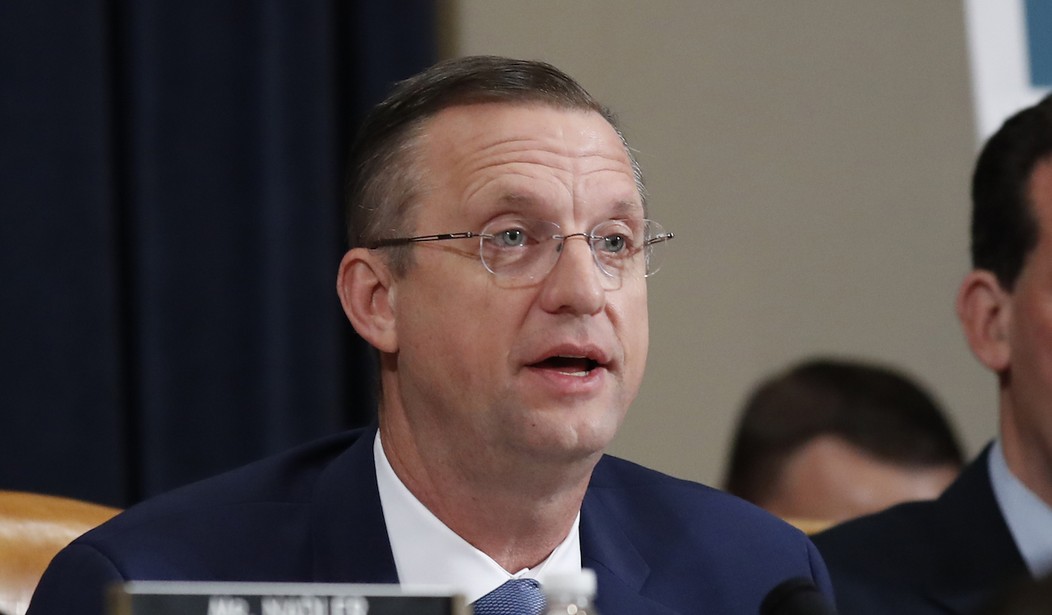
Georgia Republican Rep. Doug Collins, however, in an op-ed back in October, said he believes he knows what can be done to stamp out the rising wave of anti-Semitism. He also indicates he knows what may be partially the cause.
In an interview Monday with Fox News, Collins said one of the best things that can be done to stop the spread of anti-Semitism is to stop dancing around the attacks and treating them as unconnected in intent, and instead call the hatred and bias by name.
“Just call anti-Semitic activity for what it is,” Collins said. “The biggest thing, though, is [we need to ask] why is this out there [and] why do we let it go on?”
Collins is building on thoughts he laid out in an October op-ed in the Atlanta Jewish Times where he noted anti-Semitism is on the rise and that support of the Boycott, Divestment and Sanctions (BDS) Movement — “an attack on Israel’s very right to exist” — and support for that movement from some Congressional members was exacerbating targeting of American Jews for hate crimes.
Anti-Semitic violence is a stain on our world’s history, having extinguished countless lives — yet, today, more and more members of Congress are voicing anti-Semitic rhetoric. It’s also hard to comprehend why my Democrat colleagues are quick to schedule hearings and votes on other forms of hateful rhetoric but refuse to condemn members of their own caucus who are proudly fueling anti-Semitic tropes every chance they get.
Collins also pointed out that anti-Semitism is on the rise on college campuses, using examples from both the University of Tennessee in Knoxville — where graffiti was used to blame the Jews for 9/11 — and Emory University in Atlanta — where anti-Israel activists posted fake eviction notices on the dorm room doors of Jewish students.
So Collins has decided to do what his position as a United States Congressman allows him to do: introduce legislation to both condemn the hate and to make resources available to the Department of Education to investigate claims of anti-Semitism on campuses by clarifying what the term “anti-Semitism” means under the law.
Unfortunately, an absence of clear guidance on anti-Semitism has made it difficult, if not impossible in some cases, to directly address threats, harassment and intimidation infringing on the civil rights of Jewish students. In July, I introduced the Anti-Semitism Awareness Act to help combat anti-Semitism on college campuses. My legislation would provide the Department of Education with an additional resource to investigate potentially anti-Semitic behavior on college campuses by clarifying the definition of “anti-Semitism” in Title VI of the Civil Rights Act of 1964. This is a critical tool to protect the civil rights of students and ensure they receive equal educational opportunities.
…
The Anti-Semitism Awareness Act does not change the rights or obligations under existing anti-discrimination law; it simply ensures the protection of students’ and schools’ First Amendment rights along with the right to equal educational opportunities.
While the answer to the growing attacks against Jewish Americans isn’t fully clear, primarily because there seems to be several contributing factors as to why they’re happening now, it’s heartening that at least one member of Congress is doing the work of strengthening the spirit of the 1964 Civil Rights Act so that the perpetrators of these attacks will know, in no uncertain terms, that when they strike, they are breaking federal law. And, perhaps more importantly, they will understand that their hateful attacks are violating the civil rights of their fellow Americans.
Sarah Lee is a freelance writer and policy wonk living and working in Washington, D.C.



Join the Conversation
VIP members get the ability to comment on articles.