





This article has been updated to include statements from Curt Levey, a constitutional law attorney and the president of the Committee for Justice.
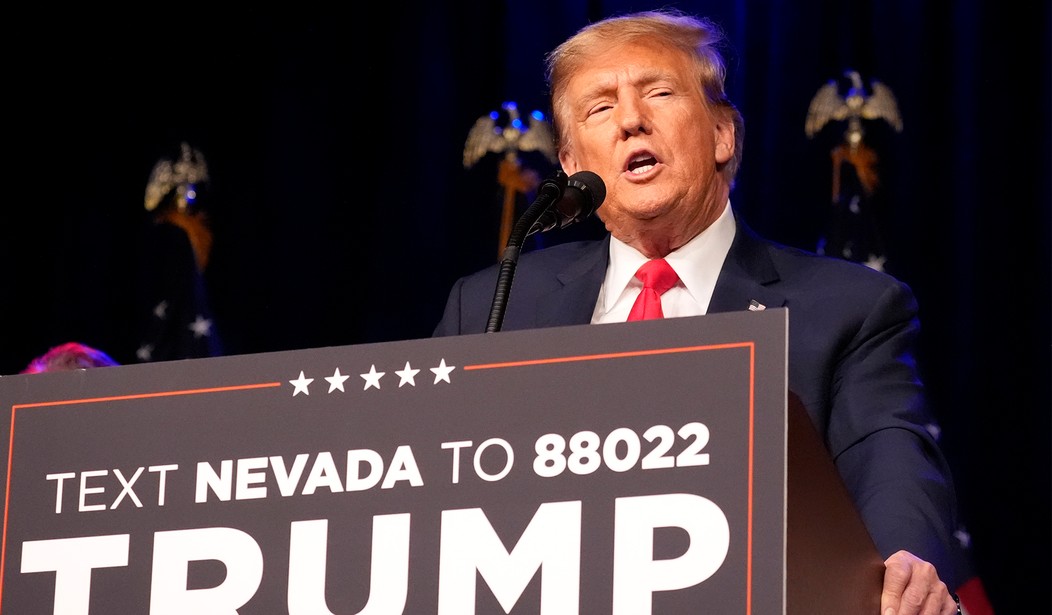
On Monday, former and potentially future President Donald Trump requested that the U.S. Supreme Court weigh in and keep his January 6 case on hold. His request comes after the DC Court of Appeals ruled last week that Trump does not have presidential immunity. At the time, Trump campaign spokesperson Steven Cheung lambasted the decision and vowed that they would appeal.
The hope for Trump is to delay a trial until after the election, especially if he is once more elected president. In that case, Trump can pardon himself or direct his Department of Justice (DOJ) to drop the case.
Reporting from The Hill about the appeal mentioned the high stakes involved:
Trump’s appeal sets up a potentially landmark case at the high court over the bounds of presidential immunity, and it also places the justices in a position to dictate when Trump can head to trial.
The former president has long looked to delay his criminal cases, and he has found initial success in postponing his Washington, D.C., trial date — originally scheduled for March 4 — by first appealing his immunity claims.
Now, as the historic dispute reaches the Supreme Court, the justices’ decision is poised to have an outsized influence on whether Trump can push the trial beyond the presidential election.
Such a feat would enable Trump to potentially first return to the White House and subsequently pardon himself or direct his Justice Department to drop the prosecution.
Chief Justice John Roberts will automatically receive the stay motion, and, in theory, he could act on the request alone. But given the seismic stakes, he is likely to refer the matter to the full court for a vote.
That emergency ruling, which could come within days, will serve as a major indication for when this Trump case may reach trial.
Before bringing the immunity appeal to the Supreme Court on the merits, Trump’s attorneys indicated they next want to ask the full D.C. Circuit bench to reconsider the three-judge panel’s ruling. Pursuing that step would take additional time, aiding Trump in his goal of moving the trial after the 2024 election.
The justices could grant that request in an emergency ruling, issuing a pause that allows Trump to first seek the full D.C. Circuit’s review.
“The reasons to do so are compelling,” Trump’s lawyers wrote. “President Trump’s claim that Presidents have absolute immunity from criminal prosecution for their official acts presents a novel, complex, and momentous question that warrants careful consideration on appeal.”
...
The court previously declined a petition from Smith to leapfrog the appeals court and immediately take up the case, instead opting to first let it be heard by the lower court.
But it could again decline to take up the case, with some arguing the strength of the lower court’s opinions prompt the court to leave the case be.
Curt Levey, a constitutional law attorney and the president of the Committee for Justice, weighed in with a statement for Townhall as to why the former president's legal team went about such a path. "The fairest thing for the DC Circuit to have done would have been to keep the trial on hold until Trump’s legal team could submit a normal petition for Supreme Court review. But since the DC Circuit, like Jack Smith, is seemingly in a rush to put Trump on trial before the election, Trump’s request today for an emergency stay was his only viable option," Levey shared.
Jonathan Turley, a legal analyst and law professor, weighed in last week when the DC Court of Appeals' decision came down to point out that it could still be a win for Trump when it comes to the delays involved.
On Monday night, after the Trump team made their request, Turley weighed in once again to note that he believes the Court should grant the review.
...I previously said that the panel wrongly sought to curtail Trump's right to seek an en banc review. The motion first goes to Chief Justice John Roberts who will likely submit it to the full court for consideration.
— Jonathan Turley (@JonathanTurley) February 12, 2024
Levey made clear that the Court needs to weigh in on the issue at some point. "There is always the chance that the Supreme Court will treat the stay request as a petition for review and agree now to hear the merits of Trump’s immunity claim. One way or another, the Court needs to decide the merits because there is no governing precedent about if and when an ex-president has immunity, given that no prosecutor has ever before indicted an ex-president," he also shared. "In fact, even Jack Smith urged the High Court to decide the issue two months ago, when he asked the Court to skip over the DC Circuit and review the trial court’s denial of Trump’s immunity claim."
Trump's request comes as the Supreme Court just last Thursday heard oral arguments in Trump v. Anderson, as the justices considered Colorado's move to kick Trump off of the ballot. Oral arguments did not go well for Colorado, and we may even see an 8-1 or 9-0 decision.
Join the Conversation
VIP members get the ability to comment on articles.