


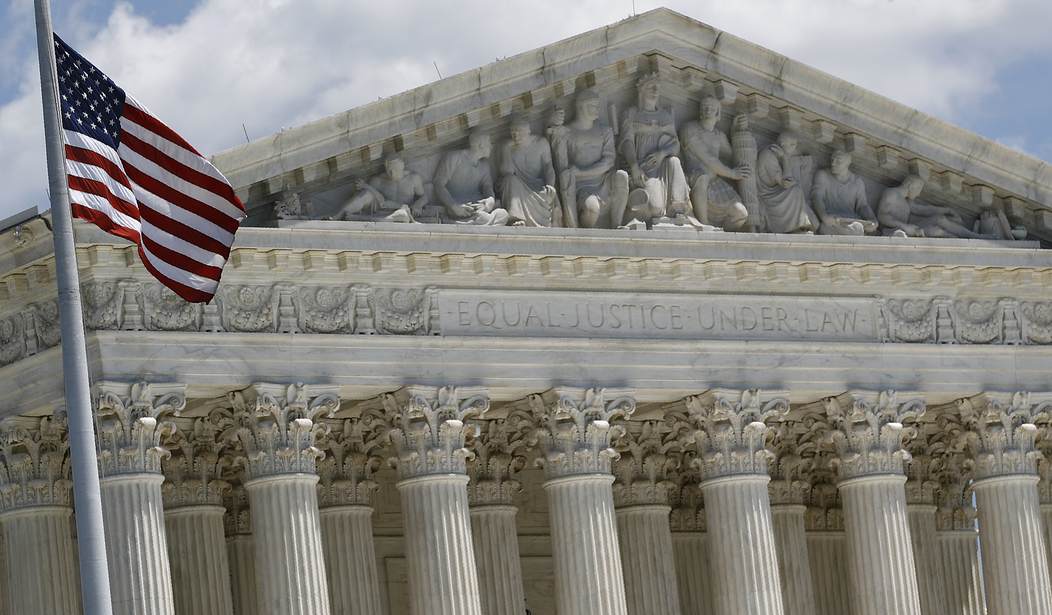
The Supreme Court held that state laws which seek to punish presidential electors who break their pledge of support to certain candidates do not violate the constitution. The court ruled against so-called “faithless electors” in a case that stems from three Washington electors who all violated their electoral pledge in 2016.
The court’s decision means that electors must vote the way that the state does in the popular vote, and states can coerce electors to remain committed. Advocates for “faithless electors” argue that Article II and the 12th Amendment protect these actors from retaliation from states.
“Nothing in the Constitution expressly prohibits States from taking away presidential electors’ voting discretion as Washington does. Article II includes only the instruction to each State to appoint electors, and the Twelfth Amendment only sets out the electors’ voting procedures. And while two contemporaneous State Constitutions incorporated language calling for the exercise of elector discretion, no language of that kind made it into the Federal Constitution. Contrary to the Electors’ argument, Article II’s use of the term “electors” and the Twelfth Amendment’s requirement that the electors “vote,” and that they do so “by ballot,” do not establish that electors must have discretion,” the justices wrote in the opinion’s opening.
In “faithless electors” cases, unanimous #SCOTUS rules that state laws that penalize or remove presidential electors who do not vote for candidate they pledged to support do not violate the Constitution
— SCOTUSblog (@SCOTUSblog) July 6, 2020
Recommended

Justice Elena Kagan delivered the majority opinion of the court:
“Article II, §1’s appointments power gives the States far reaching authority over presidential electors, absent some other constitutional constraint....And nothing in the Constitution expressly prohibits States from taking away presidential electors’ voting discretion as Washington does. The Constitution is barebones about electors,” the Justice Kagan wrote. “The Electors’ constitutional claim has neither text nor history on its side. Article II and the Twelfth Amendment give States broad power over electors, and give electors themselves no rights...A State follows in the same tradition if, like Washington, it chooses to sanction an elector for breaching his promise.”
The court sided with the ability of states to have autonomy over appointed electors unanimously, in a 9-0 decision.











Join the conversation as a VIP Member