





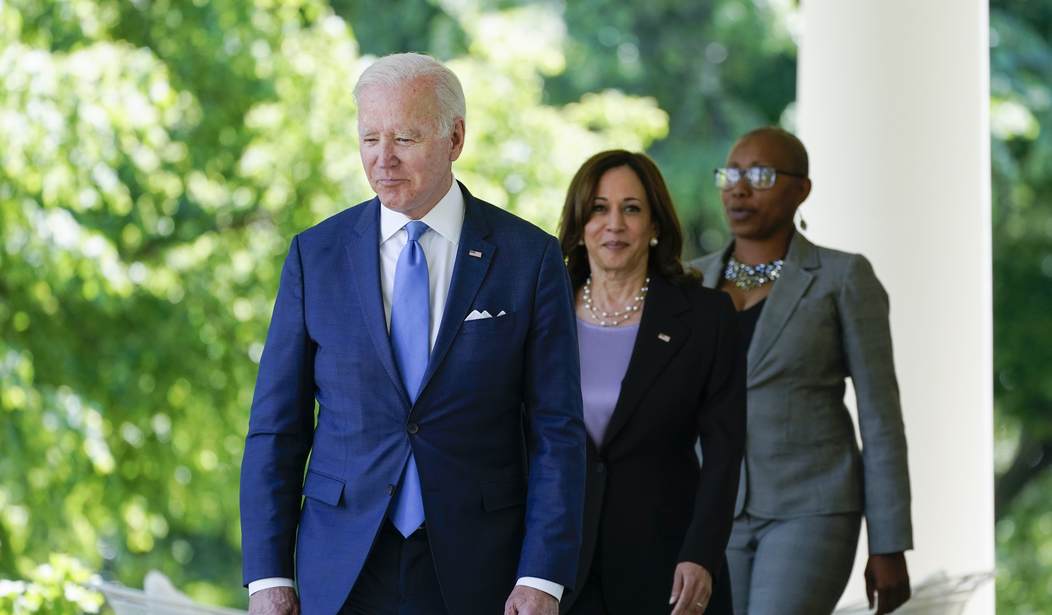
A day after I reported on Brendan Carr, Commissioner of the Federal Communications Commission, taking down the Biden-Harris Administration’s misuse of the $42 billion Broadband Equity, Access, and Deployment (BEAD) program, Carr revealed further shocking details of the program that Vice President Kamala Harris agreed to lead.
The BEAD program would have delivered broadband services to unserved areas. However, much like the southern border, Harris failed to take charge.
“Broadband Czar” Harris failed to deliver her promise of securing rural areas in the United States with the Internet to instead focus on imposing the Biden Administration’s woke agenda for so-called “climate change.” In the 1,039 days that Harris has been in charge of the program, no one and nothing has been connected, including homes and businesses.
During a hearing on Thursday, Carr, a Republican appointee, criticized the Harris-Biden Administration’s so-called “effort” to connect underserved people to the Internet, calling this the “slowest federal broadband program in recent history.”
🚨JUST IN: FCC Commissioner @BrendanCarrFCC slams Vice President Kamala Harris's $42 billion broadband initiative, saying it hasn't connected a single person to the internet in 3 years.
— KanekoaTheGreat (@KanekoaTheGreat) September 19, 2024
"In 2021, VP Harris agreed to lead a $42 billion effort to expand internet access to… pic.twitter.com/YgBoafNW0Y
Carr revealed that there would be no infrastructure plan until next year— but likely not until 2026. And at the current pace of distributing the funds, some areas won’t have Internet until at least 2030.
The Biden-Harris Administration revoked a $1,300 per location deal in August 2022 with Elon Musk’s Starlink broadband service, which said it could provide faster, cheaper Internet access to 640,000 rural locations in 35 states with little or no connectivity.
The FCC then questioned Starlink’s internet speed and “the uncertain nature” of SpaceX’s Starship launches. However, some cite Biden’s dislike of Musk as the reason why the government pulled out of the deal.
In 2022, Biden investigated Musk’s “technical relationships” with other countries, claiming they are “worthy of being looked at.” Carr accused the Biden-Harris Administration of probing the billionaire as something that “certainly fits the Biden administration’s pattern of regulatory harassment.”
“The bottom line: Without major reforms, VP Harris's $42 billion program is wired to fail. It's time to correct course. Get rid of all the extraneous political goals and focus on quickly connecting Americans,” Carr said.
Under Biden’s BEAD program, homes and businesses in rural areas won’t be connected to the Internet for years. However, Starlink can provide same-day installation of its installation equipment, which can be ready to use in just a few hours.
Join the Conversation
VIP members get the ability to comment on articles.