





Hospitals in New York and Maryland changed their COVID-19 containment policies after the U.S. Department of Health and Human Services (HHS) settled disputes over religious freedom this week. Both cases were filed in June, but the HHS’ Office for Civil Rights (OCR) announced them on Tuesday.
“The Trump Administration has made it a priority to defend Americans’ right to practice their faith, at all times and especially during this pandemic,” said HHS Secretary Alex Azar in a statement.
After a drunk driver struck their motorcycle in May, Susanna and Sidney Marcus were transported to Prince George’s Hospital Center, part of the University of Maryland Medical System. Susanna was eventually discharged, but Sidney, who had sustained critical injuries, required placement in the intensive care unit. Susanna requested a priest visit for Sidney to administer Last Rites as Sidney’s recovery prospects diminished.
“We believe that, in the sacraments, our souls are united to God. And I needed to know that he [Sidney] had access to that,” Susanna told reporters on Tuesday.
The OCR statement said the priest had agreed to wear appropriate personal protective equipment.
The hospital denied Susanna’s request per UMMS policy to restrict external contact with infected persons, so she filed a complaint with the OCR’s Conscience and Religious Freedom Division in June.
Centers for Medicare and Medicate Services (CMS) guidance permits healthcare facilities to limit visitation but makes exceptions for spiritual caretakers: “Facilities must ensure patients have adequate and lawful access to chaplains or clergy in conformance with the Religious Freedom Restoration Act and Religious Land Use and Institutionalized Persons Act.”
OMS extended the guidance to the Maryland hospital.
The 13 hospitals within UMMS revised their COVID-19 visitation policies to include religious visitations at end-of-life situations for COVID-19 positive patients, and at any reasonable hour for patients in non-COVID units.
OCR Director Roger Severino stated that “spiritual needs don’t only exist at the point of death,” Catholic News Service reports.
Wearing appropriate protective gear, a priest administered Catholic sacraments to Marcus, including Holy Communion and Anointing of the Sick.
“Too many people have died alone during this crisis, but this resolution shows that hospitals can practice compassion and safety without sacrificing either,” said Severino, noting in a separate statement that both spiritual and religious care are necessary “to treat people as an integrated human being.”
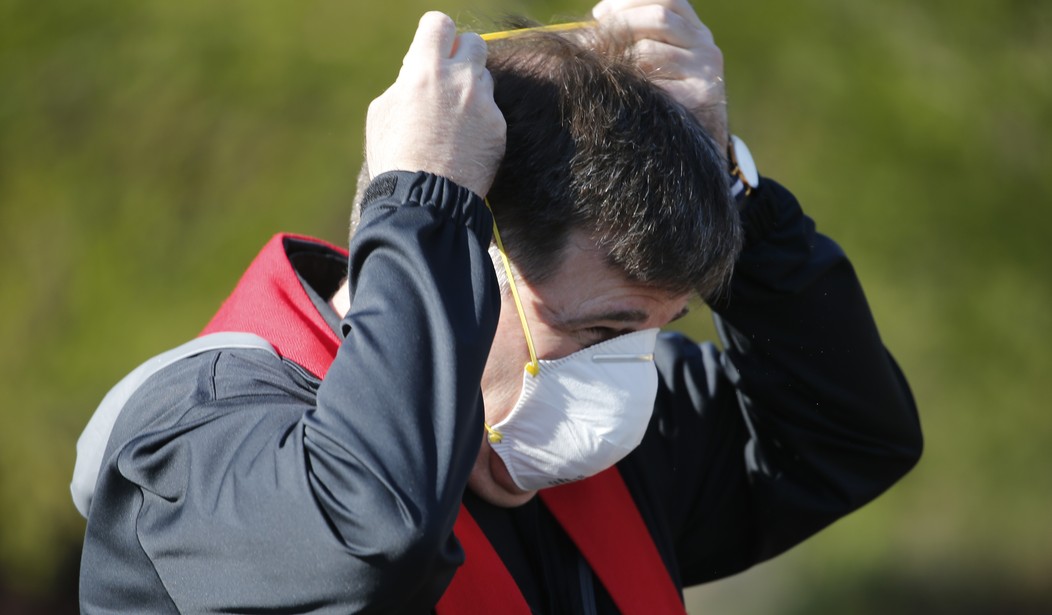
The second case involves a medical student who refused to shave his beard to fit N95 respirator masks, a requirement to complete rotations at the Staten Island University Hospital (SIUH) in New York City. He claimed that, prior to the coronavirus outbreak, he had passed the N95 fit-test by using a beard gown underneath the mask.
SIUH mandated that the complainant shave despite his religious obligation to grow a beard. Apprehensive about his ability to adhere to the tenets of his religion and complete his study requirements, the student appealed to the OCR.
OCR mediated between the two parties, counseling SIUH to provide the student with a larger, more protective mask, the Powered Air Purifying Respiratior.
“I had to make sure we weren’t singling out religious worship for suspicion or additional restrictions compared to comparable secular activities,” Severino told the American Society of Nephrology in an interview.
Join the Conversation
VIP members get the ability to comment on articles.