





If you’re white in America, your skin color has created a culture where those of other colors are seen as inferior or abnormal.
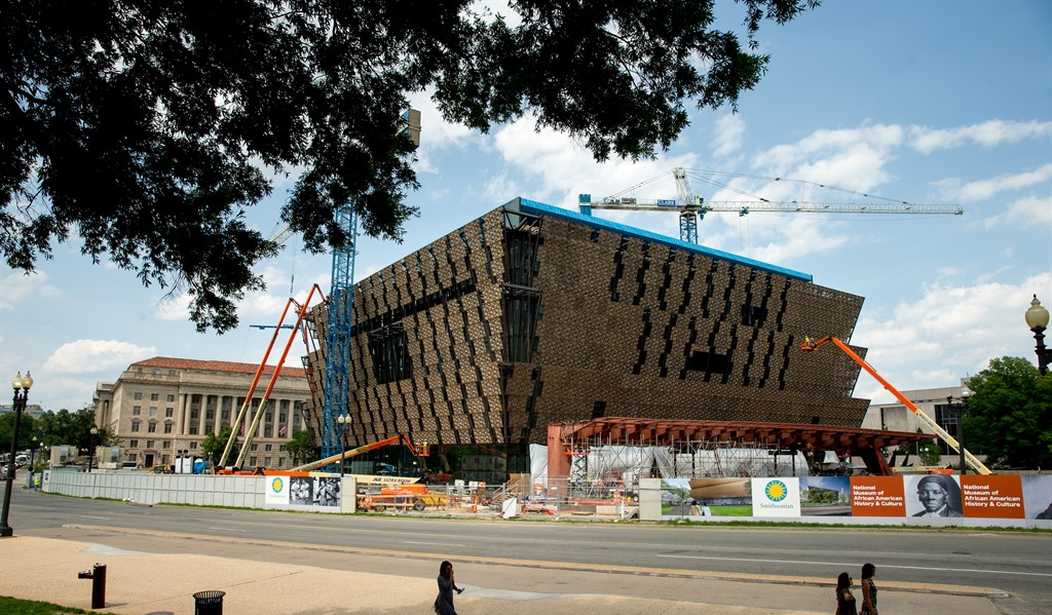
That’s the message the Smithsonian National Museum of African American History and Culture has for its white visitors. The revelation came to light in a tweet by Ryan P. Williams, president of the Claremont Institute, on Tuesday.
I can’t believe I only just found this.
— Ryan P. Williams (@RpwWilliams) July 15, 2020
Your tax dollars at work promoting divisive propaganda.
From the National Museum of African American History (@NMAAHC).https://t.co/1rEfADwap9
In a special section of its website dedicated to "Whiteness," the museum lectures readers on talking points like white privilege, white dominant culture, white supremacy, internalized racism, and how to confront one’s “white fragility.”
"White dominant culture, or whiteness, refers to the ways white people and their traditions, attitudes and ways of life have been normalized over time and are now considered standard practices in the United States,” the website explains. “And since white people still hold most of the institutional power in America, we have all internalized some aspects of white culture—including people of color."
So what are the signs of this oppression? An at-a-glance poster lists some of the most identifiable aspects of white culture imposed on other races, including:
- Ideas of individualism, self-reliance, and autonomy.
- The nuclear family with a father, mother, and children.
- An emphasis on the scientific method of objective, rational linear thinking.
- The Western and Judeo-Christian tradition and Christianity as the “norm.”
- The notion that hard work is the key to success.
- Respect for authority and private property.
- Planning for the future.
- Holidays based on white history and male leaders.
- Justice based on English common law.
- Politeness and written communication.
Those who would push back on this narrative are simply showing their white fragility, the museum says.
“While these feelings are natural human reactions, staying stuck in any of them hurts the process of creating a more equitable society,” the site states. “The defensiveness, guilt, or denial gets in the way of addressing the racism experienced by people of color.”
Other sections on the site include a discussion on “systems of oppression” with an “Oppression Matrix” delineating the privileged and the downtrodden as well as tips on how to become an “anti-racist.”
The museum, which opened in 2016 and was dedicated by then-President Barack Obama, cost $540 million. Congress footed half of the bill, according to the Washington Post.
It’s not just the African American History Museum propagating this ideology, however. The Seattle City Council recently held a seminar to help white city employees “undo their whiteness.” The discussion began with a list of telltale signs of “internalized racial oppression” such as comfort, individualism, and objectivity and challenged attendees to practice “self-talk” that affirms one’s complicity in racism. The presentation also outlined practical steps to becoming “accomplices” in anti-racism, like giving up physical safety, property, jobs and promotions, relationships with “some other white people,” social status, and individuality.
The museum’s manifesto elicited blowback on Twitter from a host of conservative voices, calling it "ironic," "overtly racist," and an attack on "the entire American way of life."
The ironic thing about this?
— Lauren Chen (@TheLaurenChen) July 15, 2020
Asserting that "hard work is the key to success" is a white belief is way more racist to black people than it is to white people. https://t.co/NFs1HayqdI
This is really outrageous and overtly racist. https://t.co/ZhgSu54VbB
— Erick Erickson (@EWErickson) July 15, 2020
Important: These aren’t “white” values. They’re American values that built the world’s greatest civilization. They help you succeed here, no matter your color. So make no mistake, Biden’s radicals aren’t coming for “whites,” they’re coming for the entire American way of life. https://t.co/L97NBydHpb
— Donald Trump Jr. (@DonaldJTrumpJr) July 15, 2020
The museum debacle makes one thing clear. Identity politics pits social group against social group and places the "privilege" of skin color over the real privilege: being an American citizen.



Join the Conversation
VIP members get the ability to comment on articles.