





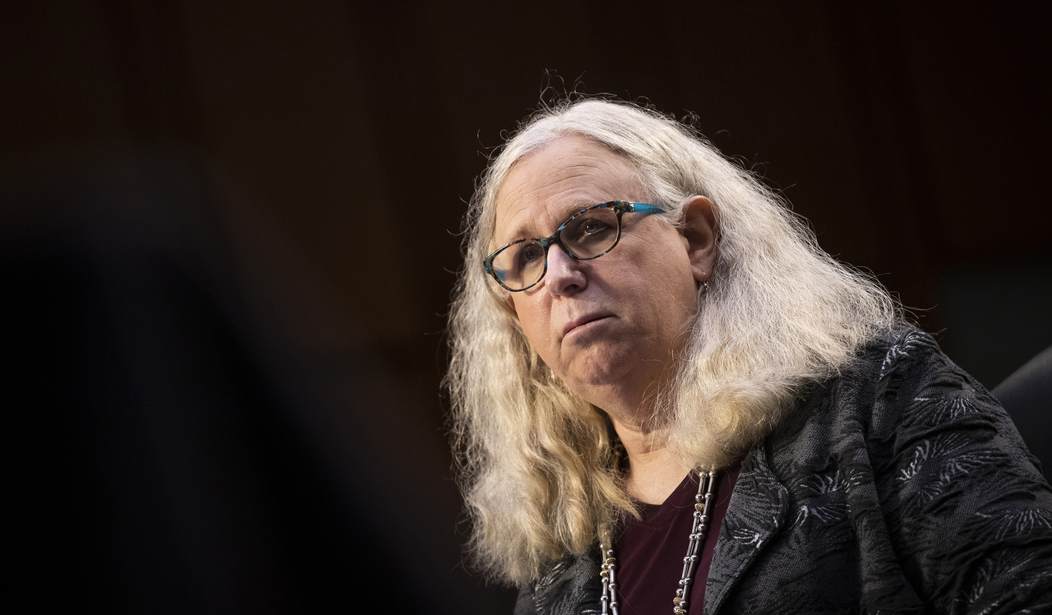
Health officials within the Biden administration pressured an international group of medical experts to remove age limits for so-called “gender-affirming” surgeries for transgender minors.
The New York Times reported that the Biden administration believed that age minimums on this kind of treatment could “fuel growing political opposition to such treatments.”
Reportedly, email excerpts from members of the World Professional Association for Transgender Health recount how staff for U.S. Adm. Rachel Levine, who is transgender, urged the organization to drop proposed age limits on transgender care. Reportedly, they succeeded (via NYT):
The draft guidelines, released in late 2021, recommended lowering the age minimums to 14 for hormonal treatments, 15 for mastectomies, 16 for breast augmentation or facial surgeries, and 17 for genital surgeries or hysterectomies.
The proposed age limits were eliminated in the final guidelines outlining standards of care, spurring concerns within the international group and with outside experts as to why the age proposals had vanished.
One excerpt from an unnamed member of the WPATH guideline development group recalled that they had a conversation with Levine’s chief of staff, Sarah Boateng. They wrote, “She is confident, based on the rhetoric she is hearing in D.C., and from what we have already seen, that these specific listings of ages, under 18, will result in devastating legislation for trans care. She wonders if the specific ages can be taken out.”
Another email claimed that Levine “was very concerned that having ages (mainly for surgery) will affect access to care for trans youth and maybe adults, too. Apparently the situation in the U.S.A. is terrible and she and the Biden administration worried that having ages in the document will make matters worse. She asked us to remove them.”
The excerpts were filed by James Cantor, a psychologist who is critical of so-called “gender-affirming” treatments. They were part of a report he submitted in support of Alabama’s ban on this type of care for children.
The Times noted that gender care for minors has escalated in recent years. Many countries have scaled back on providing these treatments. Earlier this year, England sent shockwaves around the world when its National Health Service announced that children will no longer be prescribed puberty blockers, which Townhall covered.
In addition, more and more states and local governments in the U.S. have passed legislation protecting children from these so-called “gender-affirming” treatments, and more de-transitioners have spoken out about the harm these treatments inflicted on their lives. And, researchers at the Netherlands’ University of Groningen released a 15-year study, Development of Gender Non-Contentedness During Adolescence and Early Adulthood, that tracked the “gender unhappiness” of 2,772 participants ages 11 through 26. The study found that most children who feel “transgender” at a young age end up outgrowing it.



Join the Conversation
VIP members get the ability to comment on articles.