





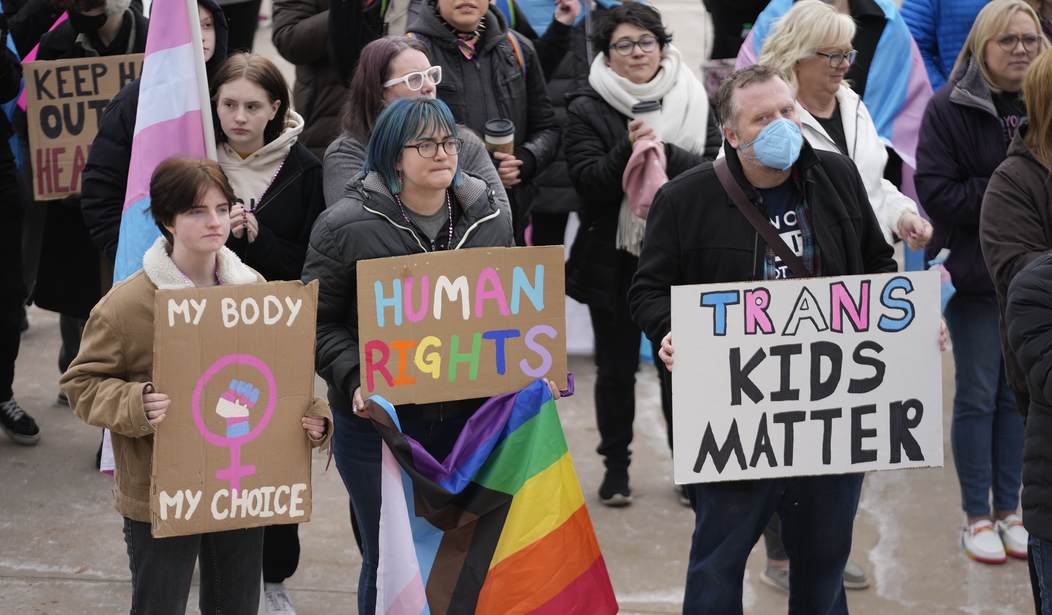
The majority of children on puberty blockers experienced fluctuations in their mental health, including one-third who experienced negative impacts, according to a study reviewed by BBC.
According to the outlet, the original 2021 study of 44 children who all took puberty blockers for a year or more found “no mental health impact,” reportedly. Now, a re-analysis of the data suggests that 34 percent of the children saw their mental health deteriorate while 29 percent saw improvements.
Wasn't this something
— Dr Jordan B Peterson (@jordanbpeterson) September 19, 2023
You were recently promoting@BBCWorld
And likely
Still are?https://t.co/YQtaMh9jfU
Reportedly, the authors of the new study have welcomed the new evidence. Though, the new study has not appeared in a peer-reviewed journal yet. The authors claimed that “they felt there was an urgency in getting the information into the public domain,” (via BBC):
In 2011, a team from the Tavistock's Gender Identity Development Service (GIDS) - England's only NHS specialist gender clinic for children - and University College London Hospitals (UCLH) embarked on what became known as the early intervention study.
They enrolled 44 children, aged between 12 and 15, over the following three years. The study looked at the impact taking puberty blockers - medicines used to postpone puberty in children - was having. It resulted in the age at which puberty blockers could be offered on the NHS being lowered.
When the landmark study's results were published in 2021, it revealed blockers brought "no changes in psychological function" to those taking them.
[...]
Prof Susan McPherson, from the University of Essex, and David Freedman, a retired social scientist, have since re-analysed the data. They instead looked at the individual trajectories of each of the young people in the early intervention study.
They found, after 12 months of puberty blocker injections - 34% of the children had reliably deteriorated, 29% had reliably improved, and 37% showed no change, according to their self-reported answers.
The proportions were a little lower in the parents' scores, but in three quarters of the cases, there was broad agreement between parents and their children.
Last year, Townhall covered how England’s NHS warned that most transgender children could be experiencing a “transient phase” they will eventually grow out of. This came after the NHS announced that it would shutter its only dedicated gender identity clinic for children, Tavistock and Portman NHS Foundation Trust in response to recommendations from an “expert review.” The review criticized the clinic’s long waiting lists and “raised concerns over a lack of consensus about how the health service should assess, diagnose and treat young people seeking gender services,” Reuters noted.
Daily Mail reported that at least 15 children under the age of 4 years old were referred to the Tavistock clinic to undergo “gender-affirming” care, which can include hormone therapy treatments, puberty blockers and sex reassignment surgery. In total, over 5,000 children were referred to the controversial clinic in the past two years. Only half of the referrals were for children aged 15-plus.



Join the Conversation
VIP members get the ability to comment on articles.