





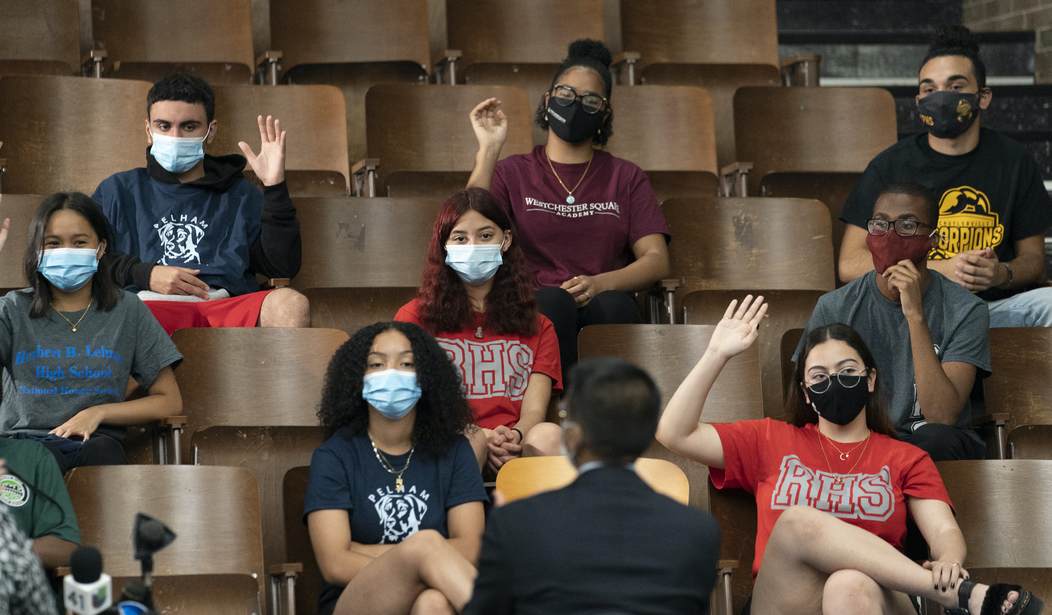
Enrollment in college and university has declined for the third straight year, according to data from a national report published Thursday.
The report from the National Student Clearinghouse Research Center found that undergraduate enrollment dropped 1.1 percent this fall, leading to a total two-year decline of 4.2 percent since 2020.
“After two straight years of historically large losses, it is particularly troubling that numbers are still falling, especially among freshmen,” Doug Shapiro added. “Although the decline has slowed and there are some bright spots, a path back to pre-pandemic enrollment levels is growing further out of reach.”
A press release from the Center pointed out that undergraduate enrollment declined across all sectors, especially four-year institutions:
Undergraduate enrollment declines this fall are evident across all sectors especially among four-year institutions, with a drop of 1.6% at public four-years; 0.9% at private nonprofits; and 2.5% at private for-profits. Declines at community colleges have slowed, with only a 0.4% enrollment loss compared to fall 2021, driven by an 11.5% jump in dual-enrolled high school students.
The 18- to 20-year-old age group grew at community colleges by 1.4 percent, with traditional age freshman making up one-third of them.
“I certainly wouldn’t call this a recovery,” Doug Shapiro, the research center’s executive director, said in a statement. “We’re seeing smaller declines, but when you’re in a deep hole, the fact that you’re only digging a tiny bit further is not really good news.”
Colleges across the country are worried that the trend in declines will reduce the revenue they need to keep up with inflation, The Washington Post noted.
"We're not seeing a return of what we might call the lost freshmen of fall 2020 and fall 2021," Shapiro said, adding that “there’s not a lot of evidence in these numbers that they’re coming back now.”
Among 42 states with available data, undergraduate enrollment declined in 27 states compared to last fall. The largest declines were seen in Alaska, Michigan, Kansas, Missouri and Nevada. New Hampshire, New Mexico, and South Carolina saw an increase in enrollment.
“There was hope that would-be undergraduates who chose to take a year off in 2020 and in 2021, would return to college, especially given the expanded opportunities for in-person learning this fall. That didn't happen,” NPR noted.
Townhall covered this month how a professor at New York University was fired after students in his classes complained that his organic chemistry class was too hard. However, the professor told the New York Times that students seemed like they had a “loss of focus” and that their scores “fell off a cliff” once the pandemic hit. Students pushed back, saying that their scores were not a reflection of “time and effort” put into the class.
In September, a federal report from the National Assessment of Education Progress found that reading scores fell by the biggest margin in over 30 years over the two years that students’ learning was disrupted during the pandemic. Townhall covered how low academic performance, chronic absenteeism and mental health challenges have become prevalent since the onset of COVID-19.
Join the Conversation
VIP members get the ability to comment on articles.