


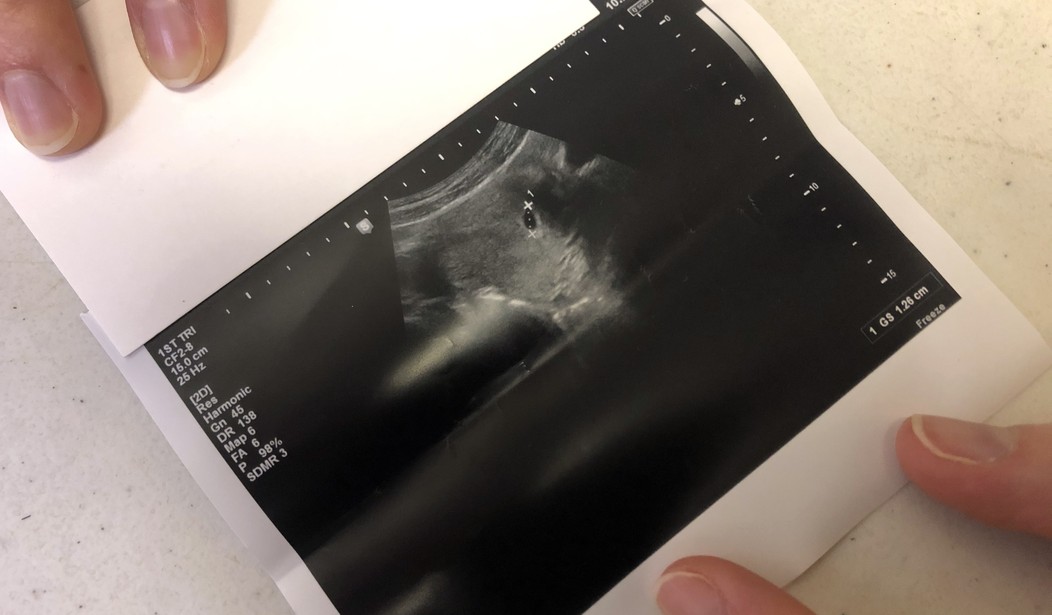
The Republican nominee for U.S. Senate in Washington said in an interview on Sunday that she supports a law in the state allowing abortion up to fetal viability.
Tiffany Smiley made the remark in an interview on CNN’s “State of the Union” with Dana Bash. In the interview, Bash pressed Smiley on her views on a state law, enacted in 1991, that allows abortion until the fetus is deemed viable, which is generally around 23-24 weeks.
“I do,” Smiley said in support of the law. “I respect the voters of Washington state. They long decided where they stand on the issue.”
Washington’s state law on abortion says “the state may not deny or interfere with a pregnant individual's right to choose to have an abortion prior to viability of the fetus, or to protect the pregnant individual's life or health.”
Smiley added that she does not support a federal ban on abortion. Senate Minority Leader Mitch McConnell (R-KY) said after the Supreme Court overturned Roe v. Wade that a national abortion ban is “possible.”
"I look forward to ensuring that women have access to health care, contraception, that in a time of crisis here in Washington state, that they have every resource that they need to make the best choice," Smiley told Bash.
In one of Smiley’s campaign ads, she claims she’s “pro-life” but does not support a federal ban on the procedure.
Recommended

“As an OB-GYN triage nurse, I have seen the heartbreak and the tears. I am pro-life, but to be clear, I will oppose a federal abortion ban,” she said.
Smiley is challenging Democratic Sen. Patty Murray, who is pro-abortion. When SCOTUS overturned Roe, she said in a statement that “Republicans dragged this country backwards by half a century” and “ripped away our rights.”
“Every American needs to understand that this is a real crisis that will affect millions of people across this country,” she added. “But we aren’t going to stand idly by while they rip away abortion rights, or go after birth control next.”
"My opponent Patty Murray has spent millions trying to paint me as an extremist," Smiley wrote in a recent tweet. "What’s really extreme is @MurrayCampaign’s position of taxpayer-funded abortions up until the point of birth!"
In the Supreme Court’s majority opinion, the justices wrote that the U.S. Constitution does not protect the right to abortion and that Roe and Casey were on a “collision course” the days they were decided.
“The Constitution does not confer a right to abortion; Roe and Casey are overruled; and the authority to regulate abortion is returned to the people and their elected representatives,” the opinion stated.
“Like the infamous decision in Plessy v. Ferguson, Roe was also egregiously wrong and on a collision course with the Constitution from the day it was decided. Casey perpetuated its errors, calling both sides of the national controversy to resolve their debate, but in doing so, Casey necessarily declared a winning side. Those on the losing side—those who sought to advance the State’s interest in fetal life—could no longer seek to persuade their elected representatives to adopt policies consistent with their views. The Court short-circuited the democratic process by closing it to the large number of Americans who disagreed with Roe.”









Join the conversation as a VIP Member