
Federal Aviation Administration head Mike Whitaker told lawmakers Tuesday that the agency will hold Boeing accountable for safety regulation violations.
"We will have more boots on the ground closely scrutinizing and monitoring production and manufacturing activities," he told the aviation subcommittee of the House Transportation and Infrastructure Committee on Tuesday. "Boeing employees are encouraged to use our hotline to report any safety concerns."
Whitaker, who took the helm on Oct. 25, 2023, fielded a number of questions from lawmakers concerned about the safety of Boeing planes following an incident on Jan. 5 when an emergency door panel on an Alaska Airlines plane blew off mid-flight.
He said the FAA is looking at two questions:
“One, what is wrong with this airplane? But two, what’s going on with the production at Boeing?” he told lawmakers. “There have been issues in the past. They don’t seem to be getting resolved, so we feel like we need to have a heightened level of oversight.”
Whitaker said the FAA is halfway through a six-week audit that has involved placing “about two dozen” inspectors in Boeing’s 737 plant in Renton, Washington, and “maybe half a dozen” at a Wichita, Kansas, plant where supplier Spirit AeroSystems makes the fuselages for 737s.
The inspectors are looking for gaps in the quality of work during the manufacturing process that might have contributed to a door plug blowing off an Alaska Airlines Max 9 at 16,000 feet over Oregon.
Whitaker said he expects the FAA will keep people in the Boeing and Spirit factories after the audit is done, but he said the numbers haven’t been determined. (AP)
Lawmakers were critical of the FAA’s longstanding practice of relying on aircraft manufacturers to oversee safety checks—a system that came under fire following Boeing Max 8 crashes in 2018 and 2019.
Whitaker acknowledged “the current system is not working” and said perhaps it’s time to “look at the incentives to make sure safety is getting the appropriate first rung of consideration that it deserves.”
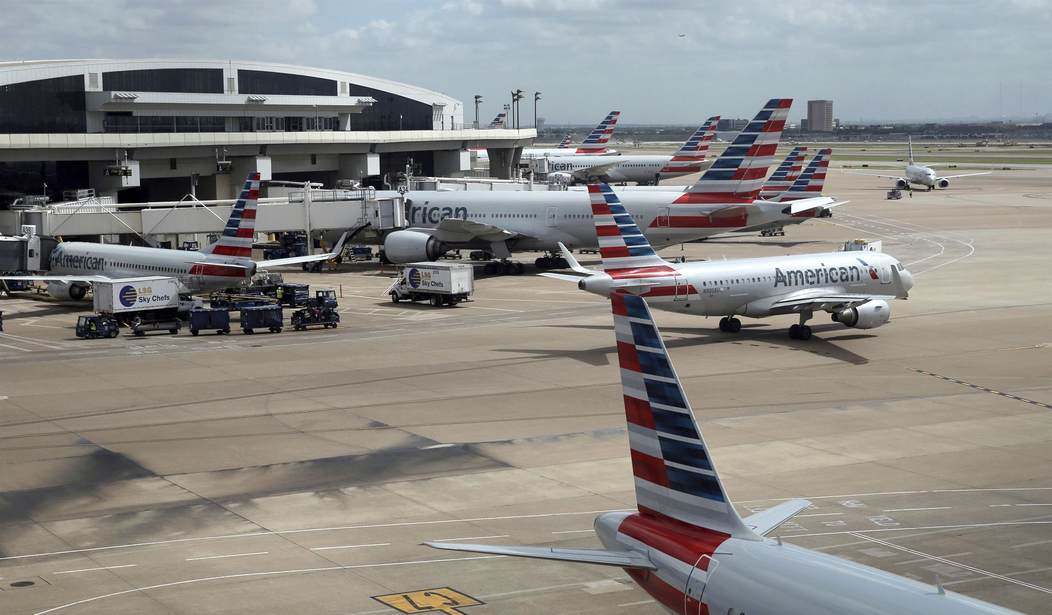
Other issues that came up during the hearing involved the housing of illegal immigrants in airports across the country.
Pointing to FAA documents which say that airports are restricted in their ability to use buildings for non-aeronautical purposes, or, if they do wish to do so they must have FAA approval, Rep. Scott Perry (R-PA) asked whether the FAA has given any approvals for such use.
The FAA does approve requests for community use, Whitaker explained, but when pressed for how such activities "promote safety or utility or efficiency in these airports," the FAA chief said the question was "out of my area of expertise."
"How does walling off portions of the airport to house unvetted, illegal foreign nationals...promote safety or utility or efficiency in these airports!?"
— RNC Research (@RNCResearch) February 6, 2024
Biden FAA Admin. Michael Whitaker: "You're out of my area of expertise. I'm not familiar with that." pic.twitter.com/QgvWWjZnVk
Rep. Bruce Westerman (R-AR) and Rep. Jeff Van Drew (R-NJ) also pressed him on the issue.
Whitaker emphasized, “We don’t own the airports."
In a statement provided to NewsNation, an FAA spokesperson explained how approvals to use airports for this purpose are secured.
"A municipality or state government may work with an airport to seek permission from the FAA to allow temporary use of airport property for non-aviation purposes," the spokesperson said. "In cases where FAA approval to do this is required, a number of objective factors are considered, including safety and whether the property might be needed for aviation-related purposes. If approved, the requestor is responsible for all costs associated with the operation, including security.”
Van Drew requested FAA issue a policy to address the use of airports for housing illegal immigrants.