





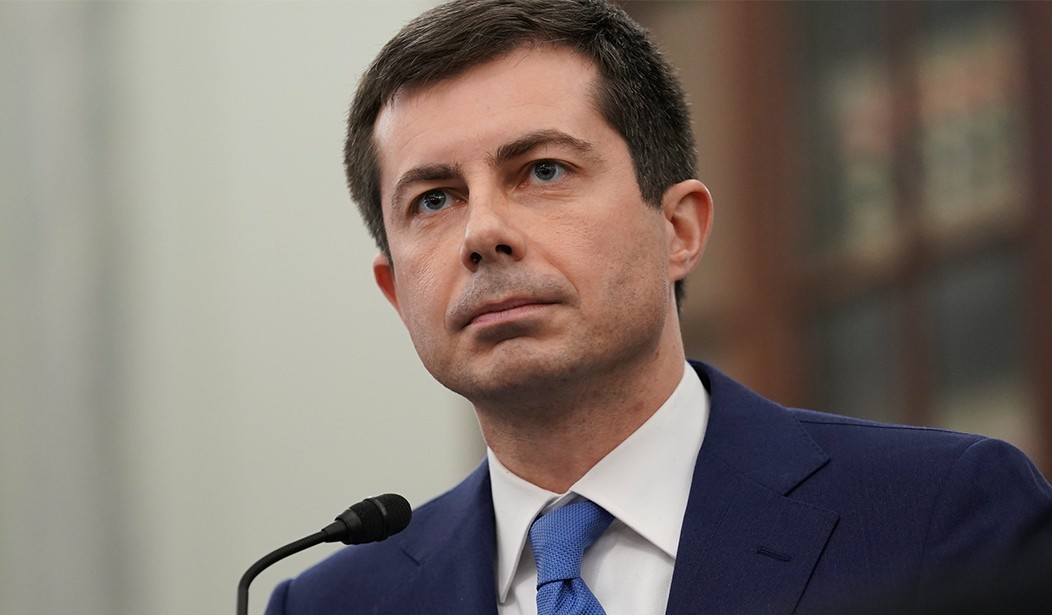
Rep. Thomas Massie (R-KY) explained to Transportation Secretary Pete Buttigieg on Tuesday how President Biden’s “impractical electric car policies” will hurt middle America.
Massie began by explaining that he has driven an electric vehicle for 10 years and even has solar panels on his home, but that the administration’s push for a rapid transformation of our energy sector is unrealistic given the U.S.’s current infrastructure.
Massie, an MIT graduate, ran through some numbers, quizzing the Transportation Secretary about how much electricity charging an electric vehicle would use compared to other household items.
“The average household uses 1,870 kWh/year for air conditioning,” Massie said.
“Numbers are important,” the Republican lawmaker continued. “It would take four times as much electricity to charge the average household's cars as the average household uses on air conditioning. Do you think that could be -- so, if we reach the goal by 2030 that Biden has of -- of 50 percent adoption instead of 100 percent adoption, that means the average household would use twice as much electricity charging one of their cars as they would use for all of the air conditioning that they use for the entire year.”
Massie pressed Buttigieg to answer how that would impact the grid.
The former South Bend mayor acknowledged the current grid would not be able to handle it but said work is being done to “map out some of the needs.”
“You aptly used the word ‘need.’ You could say ‘want’ as well,” Massie said. “There’s needs and wants to make this fantasy work by 2030, but the reality is the capability is not going to be there.”
The lawmaker was referring to President Biden’s executive order calling for 50 percent of vehicles sold in the U.S. by 2030 to be electric.
“The numbers and the rate of adoption has been developed using political science, not engineering, they’re impractical and if we blindly follow these goals that Biden has set out it will cause pain and suffering for the middle class,” Massie stated.
If we blindly follow Joe Biden's impractical electric car policies, it will cause pain for middle class Americans. pic.twitter.com/GKUeaEq9UN
— Thomas Massie (@RepThomasMassie) July 19, 2022


Join the Conversation
VIP members get the ability to comment on articles.