





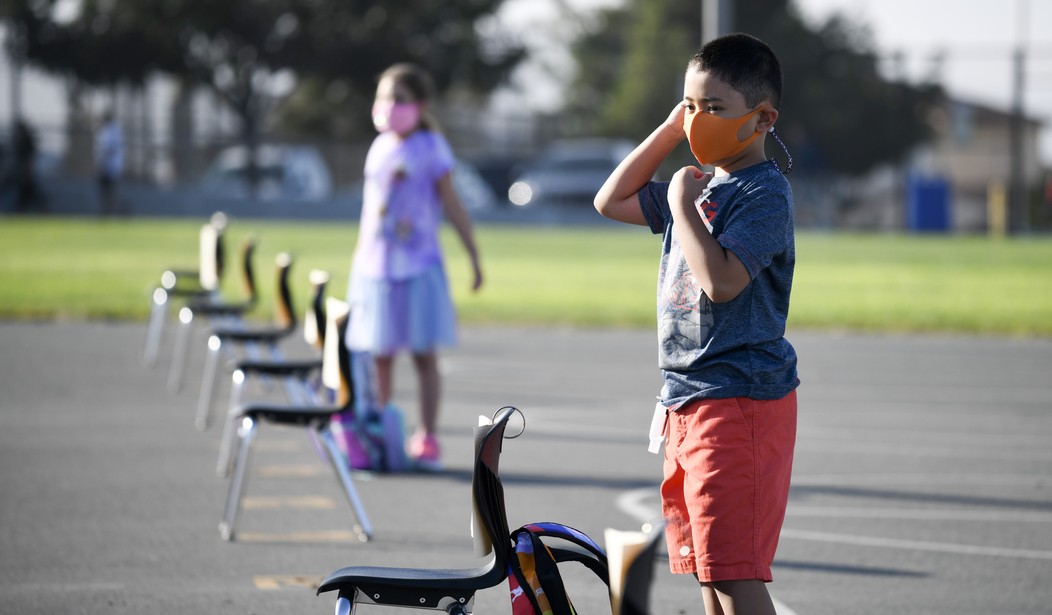
The Lancet, a world-renown medical journal, is out with a new study debunking a highly-cited CDC study that was used to support mask mandates in schools.
Specifically, the study not only replicates the CDC study, which found a “negative association” between masks and pediatric cases of Covid-19, it also extends the study to include more districts over a longer period of time. In the end, the new study had nearly “six times as much data as the original study.”
“Replicating the CDC study shows similar results; however, incorporating a larger sample and longer period showed no significant relationship between mask mandates and case rates,” the study finds. “These results persisted when using regression methods to control for differences across districts. Interpretation: School districts that choose to mandate masks are likely to be systematically different from those that do not in multiple, often unobserved, ways. We failed to establish a relationship between school masking and pediatric cases using the same methods but a larger, more nationally diverse population over a longer interval. Our study demonstrates that observational studies of interventions with small to moderate effect sizes are prone to bias caused by selection and omitted variables. Randomized studies can more reliably inform public health policy.”
This study demonstrates how the CDC was cherry-picking data to support their school mask dogma. The article states that CDC's MMWR journal rejected publishing this re-analysis. Most likely because it exposed the CDCs salami-slicing of data & use of science as political propaganda
— Marty Makary MD, MPH (@MartyMakary) May 29, 2022
This week, 12 large US school districts re-instated mandatory cloth masking for all children (regardless of immune status). They should consider this important study & the others showing the futility of school mask mandates summarized here by @ifihadastick https://t.co/ioBBihQaFa
— Marty Makary MD, MPH (@MartyMakary) May 29, 2022
Recommended

Chandra and Hoeg, Lancet, no benefit of school public masking in ecological analysis. No difference in pediatric cases which are characteristically mild and easily managed even in high risk cases or those with rare severe symptoms. pic.twitter.com/z3OVsmiISO
— Peter McCullough, MD MPH (@P_McCulloughMD) May 30, 2022
Important Lancet paper: replicates a CDC study claiming student masking is effective, but the conclusion doesn't hold if expanded to a larger, more thorough analysis. Consistent trend: the higher quality the study, the more the mask benefit disappears. https://t.co/55G6030RQu
— Scott J Balsitis (@DrScottBalsitis) May 31, 2022













Join the conversation as a VIP Member