





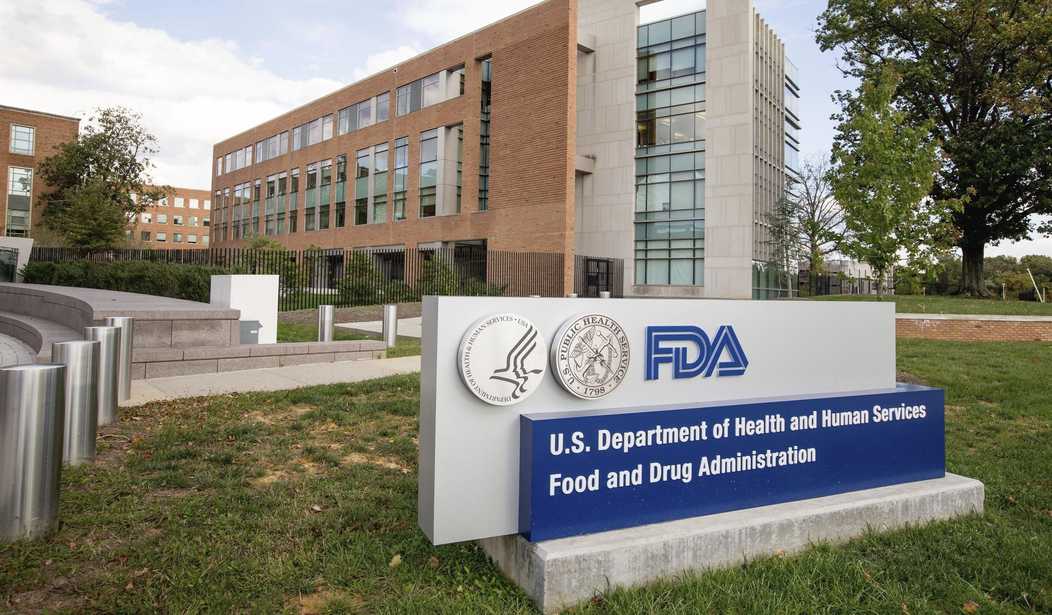
The nonprofit Public Health and Medical Professionals for Transparency scored a major win after a federal judge denied the Food and Drug Administration's request to only release hundreds of pages per month of the data Pfizer submitted for its vaccine to be licensed. Attorney Aaron Siri, whose firm filed the lawsuit against the FDA on behalf of the organization, noted this would've taken 75 years, or until 2096, when most people alive now would be dead.
The judge said the FDA must instead produce 55,000 pages per month.
"This is a great win for transparency and removes one of the strangleholds federal 'health' authorities have had on the data needed for independent scientists to offer solutions and address serious issues with the current vaccine program," Siri said. "[I]ssues which include waning immunity, variants evading vaccine immunity, and, as the CDC has confirmed, that the vaccines do not prevent transmission."
As the judge's order explains:
“Open government is fundamentally an American issue” – it is neither a Republican nor a Democrat issue.[2] As James Madison wrote, “[a] popular Government, without popular information, or the means of acquiring it, is but a Prologue to a Farce or a Tragedy; or, perhaps, both. Knowledge will forever govern ignorance: And a people who mean to be their own Governors, must arm themselves with the power which knowledge gives.”[3] John F. Kennedy likewise recognized that “a nation that is afraid to let its people judge the truth and falsehood in an open market is a nation that is afraid of its people.”[4] And, particularly appropriate in this case, John McCain (correctly) noted that “[e]xcessive administrative secrecy . . . feeds conspiracy theories and reduces the public’s confidence in the government.”[5]
Echoing these sentiments, “[t]he basic purpose of FOIA is to ensure an informed citizenry, [which is] vital to the functioning of a democratic society.” NLRB v. Robbins Tire & Rubber Co., 437 U.S. 214, 242 (1977). “FOIA was [therefore] enacted to ‘pierce the veil of administrative secrecy and to open agency action to the light of public scrutiny.’” Batton v. Evers, 598 F.3d 169, 175 (5th Cir. 2010) (quoting Dep’t of the Air Force v. Rose, 425 U.S. 352, 361 (1976)). And “Congress has long recognized that ‘information is often useful only if it is timely’ and that, therefore ‘excessive delay by the agency in its response is often tantamount to denial.’” Open Soc’y Just. Initiative v. CIA, 399 F. Supp. 3d 161, 165 (S.D.N.Y. 2019) (quoting H.R. REP. NO. 93-876, at 6271 (1974)). When needed, a court “may use its equitable powers to require an agency to process documents according to a court-imposed timeline.” Clemente v. FBI, 71 F. Supp. 3d 262, 269 (D.D.C. 2014).
Here, the Court recognizes the “unduly burdensome” challenges that this FOIA request may present to the FDA. See generally ECF Nos. 23, 30, 34. But, as expressed at the scheduling conference, there may not be a “more important issue at the Food and Drug Administration . . . than the pandemic, the Pfizer vaccine, getting every American vaccinated, [and] making sure that the American public is assured that this was not [] rush[ed] on behalf of the United States . . . .” ECF No. 34 at 46. Accordingly, the Court concludes that this FOIA request is of paramount public importance.
I am pleased to report a federal judge rejected the FDA's request to produce the Pfizer Covid vaccine data at 500 pages per month and instead ordered a rate of 55,000 pages per month! Everyone should read the Judge's excellent 3-page decision available at https://t.co/ziqCs9fA9J
— Aaron Siri (@AaronSiriSG) January 6, 2022



Join the Conversation
VIP members get the ability to comment on articles.